

One question that’s probably making quite the splash in your mind is, “How many fish can be in a 30-gallon tank?”
It’s a question that’s as old as the hobby itself, and today, we’re going to unravel this mystery of the deep.
Why is it important to get this right, you ask? Well, imagine living in a cramped apartment with a dozen roommates.
Stressful, isn’t it? It’s no different for our finned friends.
Overcrowding can lead to stress, disease, and a tank that’s harder to maintain. We don’t want that, do we?
So, what’s the magic number? How many fish can live comfortably in your 30-gallon tank?
Let’s dive straight in and find out!
How Many Fish Can Be In a 30 Gallon Tank?
When looking at the trusty one-inch-per-gallon rule, we’d theoretically be able to house thirty 1-inch fish.
But remember, this rule is more like a pirate’s code—more what you’d call “guidelines” than actual rules.
In reality, the number of fish you can comfortably house in a 30-gallon tank depends on factors like the species of fish, their adult size, behavior, and activity level.
So, you could be looking at anywhere from 15 to 30 small, peaceful fish like neon tetras, or a family of 5-6 larger, more active fish like angelfish.
The Inch-per-Gallon Rule
The “One Inch Per Gallon Rule” – It’s a simple concept, really. For every gallon of water in your tank, you add one inch of fish. Sounds easy, doesn’t it?
Well, hold your seahorses, because we’re about to dive beneath the surface of this time-honored rule.
First, let’s get to know our friend, the “One Inch Per Gallon Rule”. Born out of a desire to simplify the complex world of fish stocking, this rule offers beginners a quick and easy guideline.
Got a 30-gallon tank? That’s room for thirty one-inch fish, right? Not so fast, my fish-loving friends!
While this rule offers a great starting point, it’s not without its flaws. You see, fish aren’t just defined by their length.
Think about it. A slim, sleek neon tetra is quite different from a chunky, boisterous goldfish, even if they’re the same length.
Using the “One Inch Per Gallon Rule” for both would be like saying a greyhound and a bulldog need the same amount of living space because they’re the same height.
So, while the “One Inch Per Gallon Rule” provides a rough guideline, it’s not the be-all and end-all of fish stocking.
How To Apply The Rule To a 30-Gallon Tank
So, how do you apply this rule to a 30-gallon tank? Start with the inch-per-gallon rule as a baseline.
Then, factor in the adult size of your fish, their behavior, and their compatibility with other species.
Maybe you decide on a small school of 15 neon tetras, a few guppies, and a couple of dwarf gouramis.
Or perhaps you choose to make your 30-gallon tank a home for a small group of angelfish.
The key is to ensure that your fish have enough space to swim, hide, and live comfortably.
Types of Fish Suitable for a 30-Gallon Tank
All right, fellow aquarists, we’ve navigated the vast ocean of fish stocking and are now ready to cast our nets. But what fish are we hoping to catch?
Allow me to introduce you to some fantastic finned candidates that would feel right at home in a 30-gallon tank.
Neon Tetras

These little fellas are like the twinkling stars of your aquatic cosmos. Small, peaceful, and schooling in nature, they add a dash of dazzling color to your tank.
Just remember, they prefer to swim in groups, so make sure you bring home a little constellation of these celestial swimmers.
- Benefits: Neon Tetras are peaceful, schooling fish that add a vibrant splash of color to your tank. They’re small, which means you can have a good number in a 30-gallon tank.
- Care Needs: Neon Tetras prefer slightly acidic water (pH 5.5-6.5) and temperatures around 70-80°F. They need a varied diet of quality flake food, brine shrimp, or daphnia.
Guppies

Oh, the guppy! This lively little livebearer is a joy to behold. With their vibrant colors and active behavior, guppies are the life of any aquarium party.
Plus, they’re easy to care for, making them ideal for both beginners and seasoned aquarists.
- Benefits: Guppies are hardy, active, and come in a variety of colors. They’re livebearers, which means you might get to see baby guppies in your tank!
- Care Needs: Guppies do well in a wide range of water conditions, but prefer a pH between 6.8-7.8. They’re omnivorous, so a mix of plant-based food and protein like brine shrimp works well.
Honey Gouramis

These gentle giants of the 30-gallon tank are a beautiful addition. Their serene demeanor and honey-gold hue are truly soothing to the soul. And guess what?
They’re not fussy eaters or demanding tenants. Just provide them with a varied diet and some hiding spaces, and they’ll be as happy as a clam at high water!
- Benefits: Honey Gouramis are peaceful and have beautiful, calming colors. They can also breathe air, which is a neat trick to observe!
- Care Needs: Honey Gouramis prefer slightly acidic to neutral pH (6.0-7.5) and warm temperatures around 72-82°F. Provide them with a varied diet including flakes, frozen, and live foods.
Corydoras Catfish
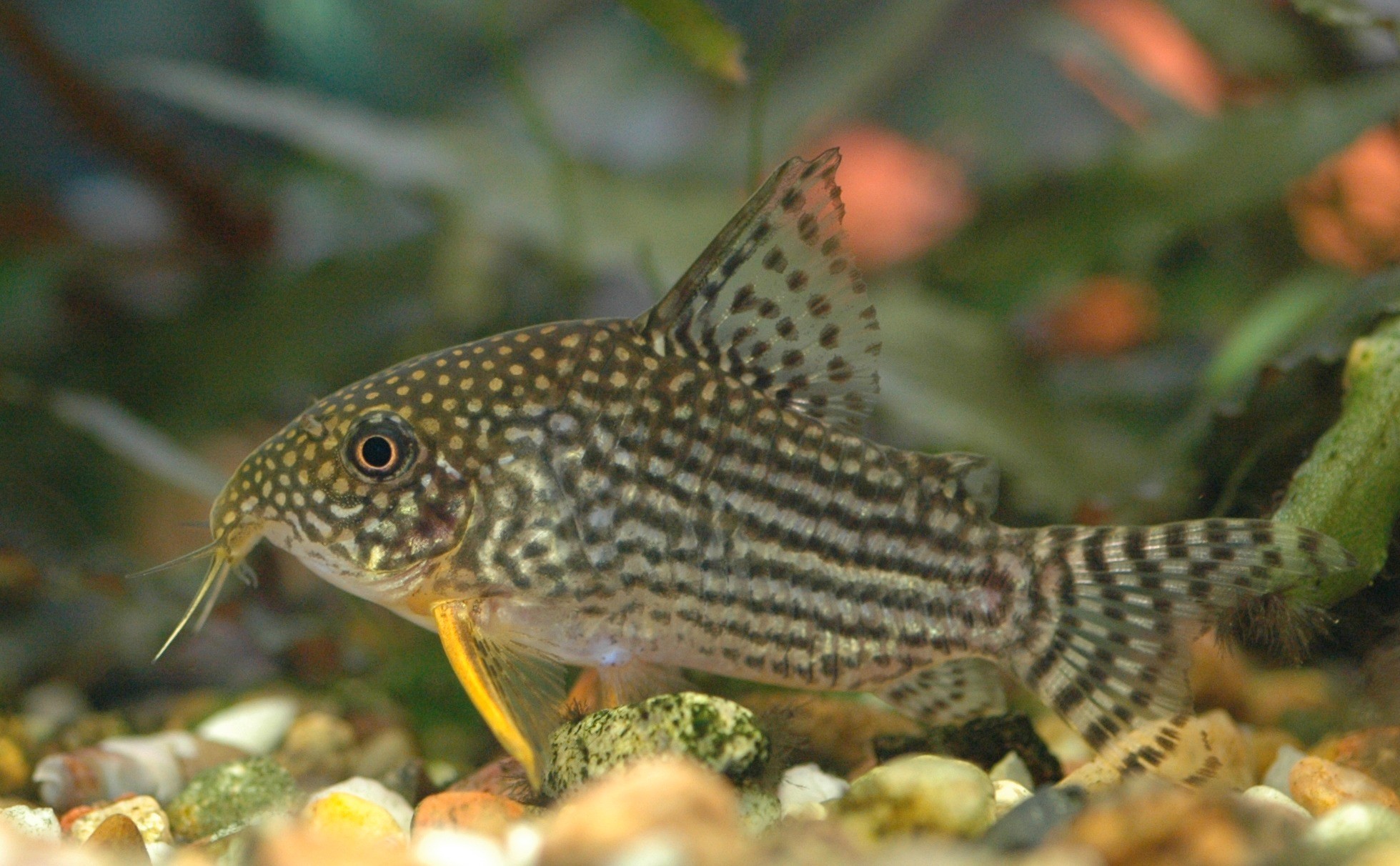
Here’s a fish that’s more than just a pretty face. Corydoras catfish are the sanitation crew of your tank, helping keep the substrate clean.
These bottom dwellers are peaceful, sociable, and they come in various species – each more interesting than the last.
- Benefits: Corydoras Catfish help keep the tank clean by eating leftover food from the substrate. They’re peaceful and enjoy the company of their own kind.
- Care Needs: Corydoras prefer slightly acidic to neutral pH (6.0-7.0) and temperatures around 72-78°F. They’re bottom feeders and do well with sinking pellets, but also appreciate occasional live or frozen foods.
Angelfish

With their distinctive shape and elegant fins, angelfish are like the aquatic equivalent of royalty.
These fish are a bit more demanding in terms of care, but their regal presence is well worth it. Just remember: they can be a bit territorial, so make sure they have enough space to claim as their kingdom.
- Benefits: Angelfish are stunningly beautiful and have a regal presence in the tank. They are active swimmers and engaging to watch.
- Care Needs: Angelfish prefer slightly acidic to slightly alkaline pH (6.0-7.5) and warm temperatures around 78-84°F. They’re omnivorous, requiring a varied diet of flakes, pellets, and live or frozen foods.
Each of these species brings a unique flavor to your aquatic ensemble. Some are peaceful and laid-back, while others are active and vibrant.
Some help clean your tank, while others grace it with their regal presence. But they all share one thing in common: they can thrive in a 30-gallon tank.
Now, remember, while these fish are suitable for your 30-gallon home, they each have their care needs. From the right diet to the perfect water parameters, keeping your fish happy and healthy requires a bit of know-how.
Tank Setup and Maintenance for a 30-Gallon Tank

Time to navigate the exciting waters of setting up and maintaining a 30-gallon aquarium! Ready? Set sail!
Step 1: Picking the Perfect Spot
First up, let’s find a spot for your aquatic masterpiece. Remember, stability is key.
Find a sturdy, level surface that can handle the weight of a filled tank. Avoid direct sunlight or drafts to prevent temperature fluctuations.
Step 2: The Great Aquarium Setup
Now, let’s roll up our sleeves and get that tank ready. Start with a clean slate – rinse your tank with warm water.
No soap, mind you! We don’t want any residue messing with our fishy friends.
Next, let’s lay down some substrate. Gravel, sand, pebbles – your call. Just rinse it thoroughly before adding.
Now, how about some decorations? Plants, rocks, caves – let your creativity swim free, but remember, each fish species has its own preferences.
Step 3: Installing the Equipment
Time to install the essentials. A filter is non-negotiable – it keeps the water clean and oxygenated.
A heater, too, if you’re keeping tropical species. And let’s not forget lighting – it not only showcases your tank but also helps live plants thrive.
Step 4: The Water
Time to add water! But hold your seahorses, we can’t just pour it in. Place a plate on your substrate and pour onto the plate to avoid messing up your setup.
And don’t forget to treat the water with a dechlorinator before adding fish.
Step 5: Cycle Your Tank
Before we welcome our fishy guests, we need to establish a healthy bacterial colony to break down waste.
This is called cycling and it’s critical for a healthy tank. Patience, my friends, patience.
Step 6: Fishy Time!
Once your tank is cycled, slowly introduce your chosen fish. But don’t dump them all at once!
Add them gradually, observing their behavior and health.
Maintaining the Tank
Regular water changes, usually 10-25% every week, keep your water quality high.
Test your water parameters regularly to make sure everything’s shipshape. Keep that filter clean, but don’t scrub it raw – we need those beneficial bacteria.
How Many Fish Can Be In a 30 Gallon Tank Conclusion
So, here we are, my fellow aquarists, you now know how many fish can be in a 30 gallon tank.
Just like a good book, setting up a 30-gallon tank has its chapters. We start with the introduction, understanding the space we have.
Next, we ponder over the rule that’s as old as time itself – the one-inch-per-gallon rule, that mysterious, elusive guideline that’s not quite as black-and-white as it seems.
We’ve voyaged beyond the rule, examining the myriad factors that shape our aquatic utopia.
From the behavior of your chosen species, to the pH of your water, to the decor that makes your fishes feel at home, it’s a balance.
So, as we wrap up this journey, remember this: your 30-gallon tank is not just a container of water. It’s a world.
A world you’ve created, nurtured, and maintained. A world full of life, color, and movement. A world that depends on you.
Here’s to many happy, healthy years for your 30-gallon aquarium and all its inhabitants.
Do you have a 30-gallon tank? Let us know your experience in the comments below.
Other Guides That May Interest You
