

Fast growing aquarium plants are a game-changer for any aquatic enthusiast.
Right at the outset, it’s essential to understand the transformative power these plants hold.
Not only do they infuse your tank with a burst of greenery and color, but they also play a pivotal role in maintaining a balanced and healthy aquatic environment.
From acting as natural filters that enhance water clarity to offering refuge for your aquatic pets, these plants are multifunctional wonders.
In this comprehensive guide, we’ll delve deep into the world of fast growing aquatic plants. You’ll discover the top choices to consider for your aquarium, each with its unique aesthetic and functional benefits.
But it doesn’t stop there. We’ll also equip you with essential care tips, from lighting to propagation, ensuring that your plants not only survive but thrive.
So, whether you’re setting up a new tank or looking to revamp an existing one, this post promises a wealth of knowledge.
By the end, you’ll be well on your way to creating an underwater haven, with fast growing aquarium plants as your trusted allies.
Introduction
Having an aquarium is a delightful experience. It’s not just about the vibrant fish swimming around but also about the environment we curate for them.
Plants play a pivotal role in this. They add color, texture, and a natural vibe to the aquarium.
But why specifically fast growing plants? Let’s delve into that.
Why Fast Growing Aquarium Plants?
The world of aquarium plants is vast, with each species having its unique charm and requirements.
However, fast-growing plants stand out for several reasons, both aesthetic and functional.
Benefits for the Aquarium
Fast-growing plants are a boon for any aquarium. Firstly, they provide a dynamic look to the tank. As they grow and spread, the appearance of the aquarium evolves, giving it a fresh look every few weeks.
Moreover, these plants are excellent for maintaining water quality. They absorb excess nutrients, especially nitrates, which are harmful in large quantities.
By doing so, they starve algae of these nutrients, preventing algal blooms which can be a nightmare for any aquarist.
Another advantage is their ability to oxygenate the water.
During photosynthesis, plants absorb carbon dioxide and release oxygen, which is beneficial for the fish.
Benefits for the Fish
For our aquatic buddies, these plants are more than just decorations. They offer a sanctuary.
The dense growth of these plants provides hiding spots, essential for fish to feel safe, especially in community tanks where there might be territorial disputes.
Furthermore, these plants can serve as a food source. Some species of fish love to nibble on the soft leaves.
Even if they don’t eat them, the plants can trap microorganisms that the fish can feed on.
Lastly, for species that lay eggs on plants, like certain tetras and cichlids, fast-growing plants provide an excellent nursery, ensuring the next generation has a good start in life.
List of 17 Best Fast Growing Aquarium Plants
Aquarium plants come in various shapes, sizes, and growth rates.
Here, I’ve curated a list of some of the best fast-growing plants that have graced my tanks over the years.
1. Water Wisteria
- Scientific Name: Hygrophila difformis
- Skill Level: Easy
- Lighting: Moderate to High
- Size: Up to 20 inches
- Tank Placement: Mid-ground and background
- Growth Rate: Fast
- CO2 Requirement: Beneficial but not mandatory
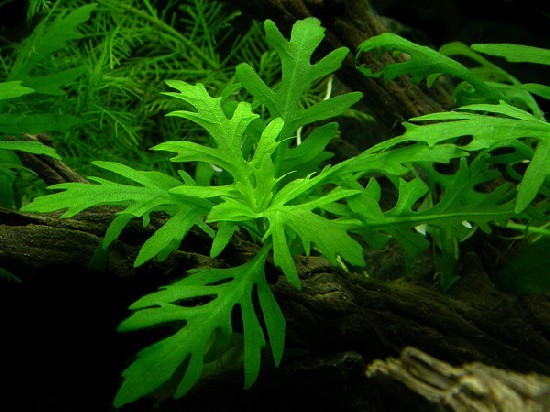
Water Wisteria, or Hygrophila difformis, is a favorite among both novice and seasoned aquarists.
Native to the Indian subcontinent, this plant boasts beautiful lace-like leaves that can vary in form based on lighting and water conditions.
In a high light setting, the leaves become more intricate, while in low light, they’re broader. This adaptability is what makes Water Wisteria a joy to have.
It’s not just about the aesthetics; this plant is also a hardy species that can tolerate a range of water parameters.
Planting Water Wisteria is straightforward. You can either plant it in the substrate or let it float.
When planted, its roots dig deep, and it can grow up to 20 inches, making it suitable for background placement.
2. Hornwort

- Scientific Name: Ceratophyllum demersum
- Skill Level: Easy
- Lighting: Low to Moderate
- Size: Up to 10 feet
- Tank Placement: Floating
- Growth Rate: Very Fast
- CO2 Requirement: Not necessary
Hornwort, scientifically known as Ceratophyllum demersum, is a versatile plant. It’s a free floater, meaning it doesn’t root in the substrate but instead drifts around the tank.
This mobility allows it to access nutrients from the water column efficiently.
Its needle-like leaves form a dense bush, providing an excellent refuge for fish and invertebrates. Besides its aesthetic and ecological roles, Hornwort is known for its allelopathic properties.
It releases chemicals that inhibit the growth of blue-green algae, ensuring your tank remains clear and healthy.
3. Duckweed

- Scientific Name: Lemna minor
- Skill Level: Easy
- Lighting: Low to High
- Size: 0.1 to 0.2 inches
- Tank Placement: Surface (Floating)
- Growth Rate: Very Fast
- CO2 Requirement: Not necessary
Often dubbed the “bane of aquarists,” Duckweed, or Lemna minor, is a polarizing plant. While some loathe its rapid spread, others, like me, appreciate its benefits.
Duckweed forms a green carpet on the water surface. This carpet acts as a natural barrier, reducing water evaporation and light penetration.
The latter can be especially useful if you have fish species that prefer dimmer environments.
On the ecological front, Duckweed is a powerhouse. It’s a super-efficient nitrate remover, ensuring the water remains pristine.
However, a word of caution: Duckweed spreads rapidly. If you don’t want it taking over your tank, regular removal might be necessary.
4. Amazon Sword

- Scientific Name: Echinodorus grisebachii
- Skill Level: Intermediate
- Lighting: Moderate
- Size: Up to 20 inches
- Tank Placement: Mid-ground and background
- Growth Rate: Moderate
- CO2 Requirement: Beneficial
The Amazon Sword, Echinodorus grisebachii, is a centerpiece plant. With its broad, lance-shaped leaves, it’s a sight to behold.
Native to the Amazon Basin, as its name suggests, this plant can grow up to 20 inches, making it perfect for mid to background placement.
Amazon Swords are heavy root feeders. This means they extract most of their nutrients from the substrate rather than the water column.
Therefore, a nutrient-rich substrate or root tabs can help them flourish.
5. Java Moss

- Scientific Name: Taxiphyllum barbieri
- Skill Level: Easy
- Lighting: Low to Moderate
- Size: 3 to 4 inches
- Tank Placement: Foreground or attached to decor
- Growth Rate: Moderate
- CO2 Requirement: Not necessary
Java Moss, Taxiphyllum barbieri, is an unassuming yet invaluable plant.
It doesn’t have the flashy leaves of the Amazon Sword or the intricate patterns of the Water Wisteria. Instead, it offers versatility.
Java Moss can attach to almost any surface, be it rocks, driftwood, or decorations. Over time, it forms a lush green carpet, providing a natural look to the tank.
It’s also a favorite for breeders. The dense growth offers a safe haven for fry, protecting them from potential predators.
6. Anacharis

- Scientific Name: Elodea densa
- Skill Level: Easy
- Lighting: Moderate
- Size: Up to 3 feet
- Tank Placement: Mid-ground and background
- Growth Rate: Fast
- CO2 Requirement: Recommended
Anacharis, or Elodea densa, is a staple in many aquariums and for a good reason. This submerged plant has long stems covered in whorls of slender leaves, giving it a feathery appearance.
Native to North and South America, Anacharis is known for its rapid growth and adaptability.
One of the significant benefits of Anacharis is its oxygenating capability.
During the day, it absorbs carbon dioxide and releases oxygen, aiding in maintaining a balanced environment for your aquatic pets.
Additionally, its dense growth offers shelter to smaller fish and invertebrates, making it a functional and aesthetic addition to your tank.
7. Cabomba

- Scientific Name: Cabomba caroliniana
- Skill Level: Intermediate
- Lighting: Moderate to High
- Size: Up to 3 feet
- Tank Placement: Mid-ground and background
- Growth Rate: Fast
- CO2 Requirement: Recommended
Cabomba, often referred to as fanwort, is a visually striking plant. Its fan-shaped leaves are its defining feature, giving it a unique appearance in the aquarium.
Native to the Americas, Cabomba thrives in well-lit conditions with a gentle flow.
While it’s undoubtedly beautiful, Cabomba also plays a role in water purification. Its fast growth allows it to absorb excess nutrients, preventing algal blooms.
Moreover, its intricate leaves trap debris, helping in maintaining water clarity.
8. Vallisneria
- Scientific Name: Vallisneria spiralis
- Skill Level: Easy
- Lighting: Moderate
- Size: Up to 3 feet
- Tank Placement: Background
- Growth Rate: Fast
- CO2 Requirement: Not necessary
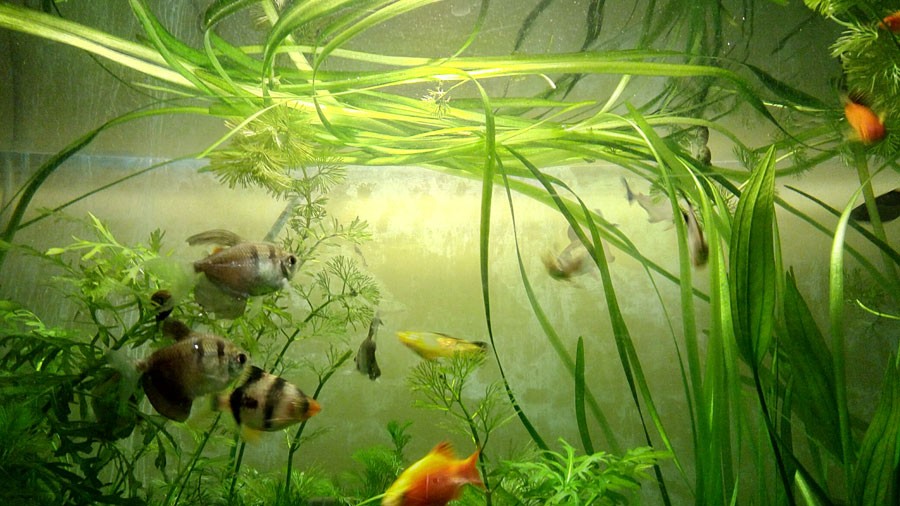
Vallisneria, or eelgrass, is a tall, grass-like plant that sways gracefully with the water current. It’s a perfect background plant, creating a verdant backdrop for your aquarium.
Native to tropical and subtropical regions, Vallisneria is a robust plant, tolerating a range of water conditions.
One of the fascinating aspects of Vallisneria is its reproduction method. It sends out runners that develop into new plants, allowing it to form a dense carpet over time.
This growth pattern can be especially mesmerizing in larger tanks, where it creates a waving underwater meadow.
9. Water Sprite

- Scientific Name: Ceratopteris thalictroides
- Skill Level: Easy
- Lighting: Moderate
- Size: Up to 12 inches
- Tank Placement: Floating or rooted
- Growth Rate: Fast
- CO2 Requirement: Beneficial but not mandatory
Water Sprite, or Ceratopteris thalictroides, is a versatile plant that can be either planted or left floating.
Its delicate, fern-like leaves provide a contrasting texture in the aquarium, making it a favorite among aquascapers.
Beyond its beauty, Water Sprite is a refuge for many aquatic creatures. Its intricate leaves are a haven for fry and shrimp, offering them protection from larger inhabitants.
Additionally, as a fast grower, it’s efficient in nutrient absorption, ensuring your tank remains balanced and healthy.
10. Rotala Rotundifolia

- Scientific Name: Rotala rotundifolia
- Skill Level: Intermediate
- Lighting: Moderate to High
- Size: Up to 15 inches
- Tank Placement: Mid-ground and background
- Growth Rate: Fast
- CO2 Requirement: Recommended
Rotala Rotundifolia is a stem plant known for its beautiful color variations.
Under intense lighting, its leaves can turn from green to a stunning reddish-pink hue. Native to Southeast Asia, this plant can grow both submerged and emersed.
In the aquarium, Rotala Rotundifolia serves both aesthetic and functional purposes. Its colorful appearance adds vibrancy to the tank, while its rapid growth helps in nutrient uptake.
Moreover, its bushy growth can be trimmed and shaped, allowing aquarists to create stunning underwater landscapes.
11. Hygrophila Polysperma
- Scientific Name: Hygrophila polysperma
- Skill Level: Easy
- Lighting: Moderate
- Size: Up to 12 inches
- Tank Placement: Mid-ground
- Growth Rate: Fast
- CO2 Requirement: Beneficial but not mandatory
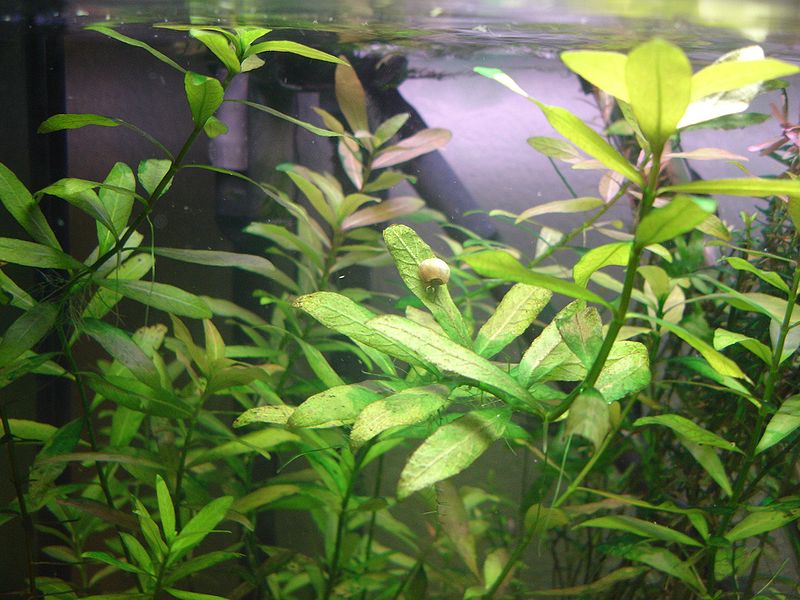
Hygrophila Polysperma, commonly known as Dwarf Hygro, is a robust and adaptable plant.
Originating from South-East Asia, it’s characterized by its light green leaves that can attain a pinkish hue under strong lighting.
Dwarf Hygro is particularly appreciated for its ability to adapt to various water conditions. Whether you have soft or hard water, low or high pH, this plant thrives.
Its rapid growth helps in outcompeting algae, making it a valuable addition to any tank aiming for ecological balance.
12. Pennywort

- Scientific Name: Hydrocotyle leucocephala
- Skill Level: Easy
- Lighting: Moderate
- Size: Up to 24 inches
- Tank Placement: Mid-ground or floating
- Growth Rate: Fast
- CO2 Requirement: Not necessary
Pennywort, with its round, coin-like leaves, is a delightful addition to any aquarium. It can be grown both as a floating plant or rooted in the substrate.
When allowed to float, it forms a beautiful canopy, providing shade and shelter for aquatic inhabitants.
Native to the Americas, Pennywort is not just decorative but also functional.
Its roots, when floating, absorb nutrients directly from the water column, helping in maintaining water quality.
13. Ludwigia Repens
- Scientific Name: Ludwigia repens
- Skill Level: Intermediate
- Lighting: Moderate to High
- Size: Up to 20 inches
- Tank Placement: Mid-ground and background
- Growth Rate: Fast
- CO2 Requirement: Beneficial
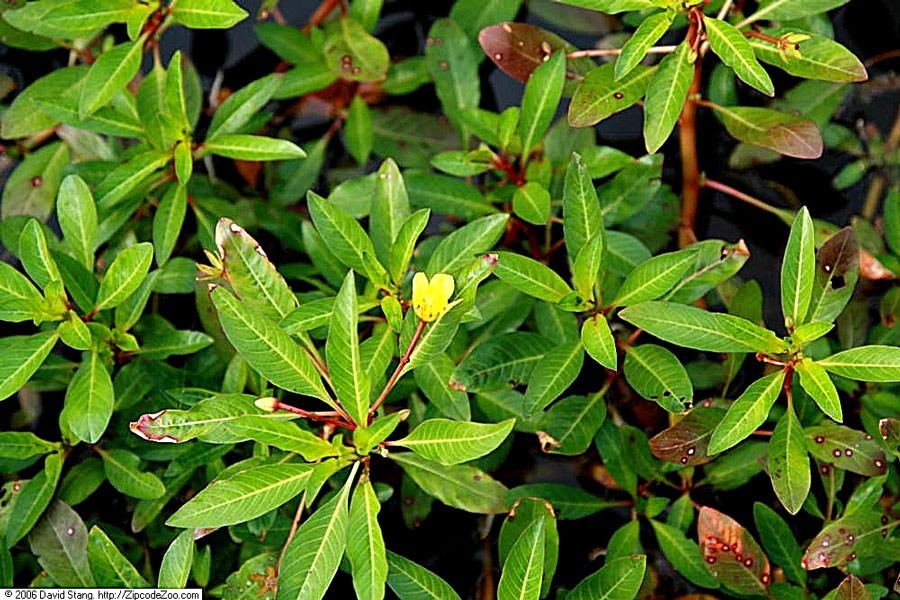
Ludwigia Repens, often referred to as Red Ludwigia, is a striking plant known for its vibrant red and green leaves.
Native to North and Central America, this stem plant can grow tall, making it suitable for mid to background placement.
Under optimal conditions, with good lighting and nutrient supply, Ludwigia Repens exhibits an intense red coloration, adding a splash of color to your aquarium.
It’s also a favorite among aquascapers for creating contrasting plant groupings.
14. Water Lettuce

- Scientific Name: Pistia stratiotes
- Skill Level: Easy
- Lighting: Low to Moderate
- Size: 2 to 10 inches (diameter)
- Tank Placement: Surface (Floating)
- Growth Rate: Moderate
- CO2 Requirement: Not necessary
Water Lettuce, or Pistia stratiotes, is a floating plant with soft, velvety leaves. It forms rosettes that resemble small lettuce heads, hence the name.
This plant is an excellent choice for open-top aquariums, where its unique texture can be fully appreciated.
Beyond its aesthetic appeal, Water Lettuce is known for its purifying capabilities. Its extensive root system absorbs excess nutrients, preventing algal growth.
However, it’s essential to ensure it doesn’t cover the entire water surface, as this can hinder gas exchange.
15. Bacopa Monnieri
- Scientific Name: Bacopa monnieri
- Skill Level: Intermediate
- Lighting: Moderate to High
- Size: Up to 12 inches
- Tank Placement: Mid-ground
- Growth Rate: Moderate
- CO2 Requirement: Beneficial
Bacopa Monnieri, commonly known as Moneywort, is a versatile stem plant with small, round leaves.
Native to wetlands worldwide, it’s a hardy plant that can thrive in a variety of conditions.
Moneywort is often used in aquascaping for its vertical growth and bright green coloration.
It’s also known to have medicinal properties and has been used in traditional medicine for centuries.
16. Water Nymph
- Scientific Name: Najas indica
- Skill Level: Easy
- Lighting: Moderate
- Size: Up to 30 inches
- Tank Placement: Mid-ground and background
- Growth Rate: Fast
- CO2 Requirement: Not necessary
Water Nymph, or Najas indica, is a delicate-looking plant with fine, feathery leaves.
Despite its fragile appearance, it’s a hardy plant that grows rapidly, especially in well-lit conditions.
Water Nymph is an excellent choice for breeding tanks, as its dense growth provides shelter for fry.
Additionally, it’s a favorite among shrimp keepers, as its intricate leaves trap microorganisms that shrimp love to feed on.
17. Pogostemon Stellatus
- Scientific Name: Pogostemon stellatus
- Skill Level: Advanced
- Lighting: High
- Size: Up to 20 inches
- Tank Placement: Mid-ground and background
- Growth Rate: Moderate
- CO2 Requirement: Highly recommended
Pogostemon Stellatus, often referred to as Eusteralis, is a visually striking plant known for its star-shaped leaves.
Native to Southeast Asia, this plant can attain a beautiful pinkish-red hue under intense lighting.
Eusteralis is a favorite among advanced aquascapers for its unique appearance and growth pattern.
It requires a bit more care compared to other plants on this list, especially in terms of lighting and nutrient needs, but the results are well worth the effort.
How to Care for Fast Growing Tank Plants
Caring for fast-growing tank plants can be both rewarding and challenging. Their rapid growth rate means they have specific needs that, when met, can lead to a lush and vibrant aquarium.
Here’s a breakdown of the care requirements:
Feeding
Just like fish, plants need food too. Their primary source of nutrition comes from the water in the form of dissolved minerals and compounds.
However, with fast growers, their rapid growth can quickly deplete these resources.
- Liquid Fertilizers: These are added directly to the water and are quickly absorbed by plants. They usually contain a mix of essential nutrients like nitrogen, phosphorus, and potassium.
- Root Tabs: These are solid fertilizers that are placed in the substrate near the roots of plants. They’re especially beneficial for heavy root feeders like Amazon Swords.
CO2 Injection
Carbon dioxide is crucial for plant growth. While there’s naturally occurring CO2 in aquariums, fast-growing plants can benefit from additional CO2.
- CO2 Systems: These systems inject CO2 directly into the tank, ensuring plants have a steady supply. It’s essential to monitor CO2 levels to ensure they’re optimal for both plants and fish.
- Liquid Carbon: For those not ready to invest in a CO2 system, liquid carbon can be an alternative. It provides carbon in a form that plants can use, though not as effective as direct CO2 injection.
Propagation
One of the joys of having fast-growing plants is watching them multiply. Most propagate easily, ensuring you always have a fresh supply of plants.
- Cuttings: For stem plants, simply cut a section of the stem and replant it in the substrate. In no time, it’ll establish roots and grow.
- Runners: Plants like Vallisneria send out runners. These are horizontal stems from which new plants sprout. Simply allow them to grow, and once they’re large enough, they can be separated and replanted.
Tank Maintenance
Fast growers can sometimes be a handful. Their rapid growth can lead to overcrowding, and they can quickly consume nutrients.
- Regular Trimming: This not only keeps the plants in check but also encourages bushier growth. Trimmed sections can be replanted or shared with fellow aquarists.
- Water Changes: Regular water changes ensure that nutrient levels are balanced. It also helps in removing any toxins that might build up due to decaying plant matter.
Tank Mates
Fast-growing plants are generally hardy, making them compatible with a wide range of tank mates.
However, some considerations can ensure both plants and animals thrive.
- Fish: While most fish are compatible, some species love nibbling on plants. Species like Goldfish and some Cichlids might uproot or eat plants. On the other hand, Tetras, Guppies, and Rasboras are excellent choices as they coexist peacefully with plants.
- Invertebrates: Shrimps and snails can be beneficial. Shrimps, especially Amano and Cherry Shrimps, feed on algae, keeping plants clean. Snails, like the Nerite snail, also feed on algae but be cautious with species like the Apple Snail, which might feed on the plants themselves.
- Other Plants: Fast growers can be combined with slow-growing plants. Just ensure that the fast growers don’t overshadow the slow growers, depriving them of essential light.
Fast Growing Aquarium Plants FAQs
- How do I control the growth of fast-growing plants?
- Regular trimming is essential. This not only controls growth but also promotes bushier and healthier plants.
- Do fast-growing plants require CO2 supplementation?
- While CO2 can boost their growth, many fast-growing plants do well without it.
- How do I prevent algae growth in a tank with fast growers?
- Ensure your plants get adequate light and nutrients. Healthy plants outcompete algae for resources.
- Can I mix fast growers with slow-growing plants?
- Absolutely! Just ensure both types get their specific care requirements.
- How often should I fertilize my fast-growing plants?
- This depends on the specific plants and the existing nutrient levels in your tank. Start with once a week and adjust based on plant response.
Fast Growing Aquarium Plants Conclusion
In wrapping up our deep dive into the world of fast growing aquarium plants, it’s evident that these vibrant greens are more than just decorative elements.
They breathe life into our tanks, offer sanctuary to aquatic life, and play a crucial role in maintaining a balanced ecosystem.
Through this guide, we’ve journeyed from understanding the top choices for your aquarium to mastering the art of their care.
The science behind their rapid growth and their symbiotic relationship with the aquatic environment underscores their significance.
As you venture forward in your aquascaping journey, let the knowledge from this post be your compass.
Remember, the right plant choices coupled with proper care can transform your tank into a thriving aquatic paradise.
And while every plant has its unique charm and requirements, the universal truth remains: a well-tended aquarium resonates with harmony and beauty.
Here’s to lush, vibrant, and ever-growing underwater gardens!
