

In this post, we are going to look at the best floating aquarium plants.
Floating plants are low-maintenance, beginner friendly, have many great benefits for your aquarium (which we will cover), and they also look fantastic!
This is why they are so popular among newbie aquarists.
You can find a variety of options when it comes to these aquatic beauties, but not all of them will work well with your fish or other inhabitants.
You will learn about the best floating aquarium plants, advantages and benefits, and how to decide which floating plants are best for you and your aquarium.
Advantages & Benefits Of Floating Plants
There are many advantages to having floating plants in your aquarium. Let’s take a look.
Low-Maintenance
Floating plants are low-maintenance and easy to grow, which makes them a great choice for beginners.
They do not require substrate or fertilizers and they will survive in most water conditions without any problems.
You can find floating plants that tolerate all kinds of lighting conditions.
From low light ones like the Amazon Frogbit (Limnobium laevigatum) up to bright sunlight species such as Giant Duckweed (Spirodela polyrhiza).
Just make sure you know what kind of lights your specific plant needs before introducing it into your tank!
Floating plants are also good at hiding ugly equipment inside their foliage.
Oxygenates The Water
Floating aquatic plants act as an air circulation system, and adds oxygen into the tank. This is especially important if you want to keep fish but don’t like having an air pump on.
Not only will more oxygen allow your fish to breath, but it will also safeguard against toxins inside of the tank.
Provides Shade
These kind of plants influence how much light enters the aquarium, which means they are great at providing shade.
This is especially handy if you have a certain species of fish that needs a lot of shade, or if you have an aquarium with lots of taller plants on the back side that need protection from being burned by too much light.
Easy to Grow
One of the best things about these types of plants is that they are extremely easy to grow.
Even if you’re a beginner and new to keeping an aquarium, it’s very likely that your success rate with growing floating aquarium plants will be high!
In addition, most people have had great luck when they try growing them in their fish tanks.
A Cleaner Tank And More Stable Water Chemistry
Floating plants can also absorb pestilent gases and soften the water, making it more suitable for your aquatic buddies.
While this isn’t as relevant in planted tanks where nitrates and phosphates are kept low by plant growth, floating plants will still contribute to a cleaner tank with no algae outbreaks.
The mass of leaves they produce will trap all kinds of dirt before sinking down into the substrate, so make sure you clean them every now and then!
You’ll know when that happens as their color changes from greenish brown back to its usual light yellow-green tint. Make sure not to pull off any roots while doing so though.
Provides Hiding Places
It is extremely important to provide a number of hiding places for your fish, to give them somewhere to retreat if they feel threatened.
This is especially important in a community aquarium, where fish may become stressed by the presence of other species.
Some good hiding places include rock caves and coconut shell halves (they also look like natural driftwood).
Floating plants plants are also an excellent choice to provide hiding places, that will keep stress levels in fish very low.
Food For Fish
Floating plants provide a great snack for certain species of fish to nibble on, which can provide additional vitamins and nutrients.
Some fish are omnivores, and some enjoy nibbling on plants and algae to supplement their diet on top of their regular food.
Just make sure you do not have a species of fish that is going to scoff the entire plant.
A Natural Look For Your Aquarium
Having floating plants in your aquarium can give your tank a natural look, and can be used to make it feel more like a small pond.
Not only does it replicate the natural habitat of the fish, but it also provides an aesthetically pleasing, natural look for yourself, which makes for a beautiful aquarium.
The Best Floating Aquarium Plants
So now you know all of the advantages to floating keeping floating plants, let’s now take a look at the best floating aquarium plants.
1. Live Duckweed Plants (Lemna Minor)

This plant is an extremely fast grower and spreads out quickly across the water.
This makes it a perfect option for beginners, as you can use this in your aquarium without worrying about whether or not they will survive in there because of how forgiving these plants are when it comes to keeping them alive.
Though at their worst Duckweed can become invasive if kept untouched for too long.
But with proper care and maintenance, it shouldn’t be much trouble to keep under control before becoming a problem.
With that said though, if you plan on getting rid of excess duckweed from time to time then all you have to do is drain some water out into another container.
This should cause most of the duckweed floating around in there to die off within a few days.
Click here to read our full Duckweed guide
2. Hornwort (Ceratophyllum dermersum)

Not only does this plant look fantastic, but it is also very easy to care for. Hornwort is a very hardy plant and it can survive in almost any freshwater aquarium setup.
It’s a very safe option as you can pair it with pretty much most species of fish. It’s still always a good idea to do your research first.
We adore the atmosphere this plant creates in a tank. It has a beautiful deep green color that can significantly improves the lighting and atmosphere of an aquarium.
One of the most notable features about Hornwort is that at times, depending on its growth rate; this aquatic plant will start to take over your aquarium if not monitored properly.
This isn’t necessarily an issue though because you could just simply prune off excess pieces when they appear in order to keep things looking good and tidy.
For the most part however, If you’re looking for a great looking floating fish tank decoration without having to worry too much about care then Hornwort should be right up your alley!
3. Water Wisteria (Hydrophila difformis)
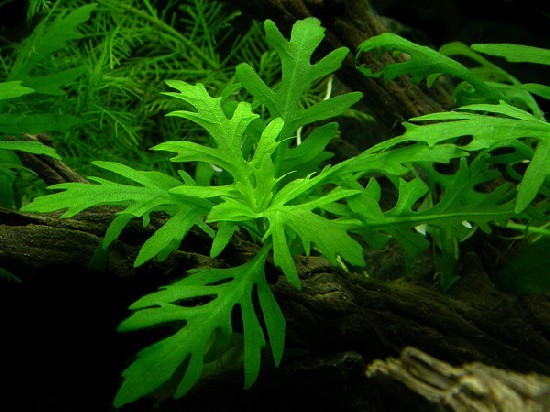
Another fantastic looking plant that can be both floated and rooted.
Water Wisteria is a very popular plant choice for aquariums because it’s so easy to grow, quite beautiful and has a nice leafy appearance.
The only downside is that these plants do not float naturally as other floating aquatic plants will, but you can easily attach them with fishing line or string if this floats your boat!
Also be aware that this plant has a very fast growth rate, and can end up taking over the tank if not monitored and cared for correctly.
Click here to read our full Water Wisteria guide
4. Water Sprite (Ceratopteris thalictroides)

Water Sprite is one of the most popular and go to plants for many aquarists.
Water Sprite is a very popular plant choice for aquariums because it’s so easy to grow, quite beautiful and has a nice leafy appearance.
The only downside with this plant is that even though you can attach them with fishing line or string they will not stay floating as easily as other plants such as the Water Wisteria, but if left alone these roots do sink down into the substrate over time.
This plant has a very fast growth rate, and can easily take over the tank if not kept on top of.
As long as you have a regular trimming schedule then you should be fine.
It makes a great addition to tanks with shy or small fish as it provides great cover and spots to hide if they feel threatened.
Click here to read our full Water Sprite guide
5. Java Moss (Taxiphyllum barieri)

Newbie aquarists make the mistake of thinking that Java Moss can only be planted, but this is not true.
This plant is a great option because it works well with a variety of species, and it will thrive in pretty much any environment.
Java Moss offers a lot of benefits to your tank.
It will provide shelter for shrimp and fish fry, it helps keep the water clean by trapping debris floating in the aquarium, and some plants use this moss as a food source too.
In fact, if you ever want to breed dwarf shrimp then Java Moss is one of the best ways to go about doing that!
You’ll need something to anchor this pl
ant in order for it to float.
Click here to read our full Java Moss guide
6. Amazon Frogbit (Limnobium Laevigatum)

Amazon Frogbit is a fast-growing floating plant that can be used as an alternative to hornwort or duckweed.
The roots of this plant are rather lengthy and create a fascinating visual impact in a tank with a little bit of movement. The leaves are robust, broad, and quite flat.
One of the main benefits is that this frogbit grows quickly which means you won’t have to wait long before your aquarium has a fully established population of plants growing in the water column!
As this plant doesn’t require much effort to look after, it is highly recommended for beginners who do not want the hassle of keep maintaining plants.
7. Dwarf Water Lettuce (Pistia stratiotes)

With large leaves and very pretty to look at, this plant will make a great addition to your tank.
The Dwarf Water Lettuce plant is very low maintenance and easy to grow in an aquarium environment which makes it perfect for beginners.
This plant can be used as a background or mid-ground addition, but will also do well when attached to driftwood or rocks in your tank. You could even use this plant in the substrate if you wanted too!
As with most aquatic plants, they are highly adaptable have no specific water parameters that need consideration making them great for people who don’t want to worry about their tanks all of the time.
If you’re looking at getting some underwater greenery into your tank then Dwarf Water Lettuce should be one of the first plants on your list!
8. Cabomba (Cabomba carolinia)
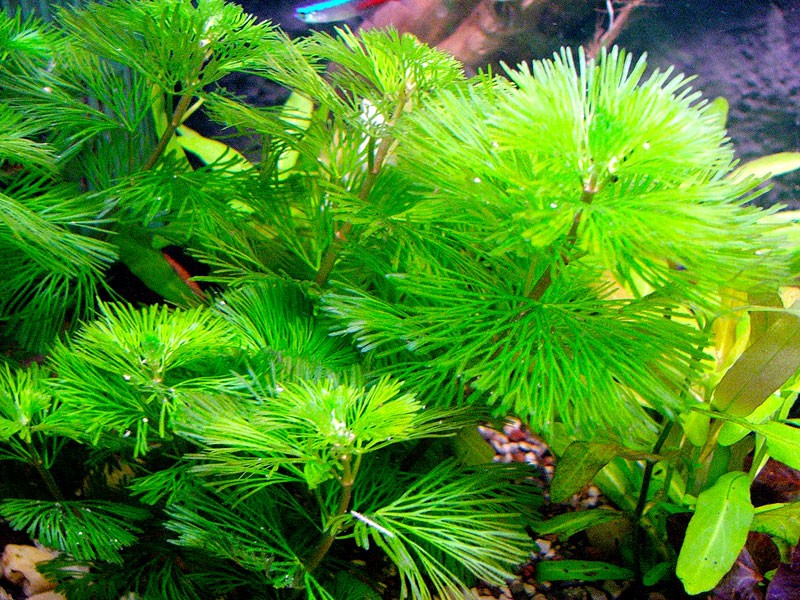
Native to America and commonly known as Carolina fanwort, Cabomba is a very popular submerged aquatic plant.
It is so popular because it is a hardy plant that will thrive in most environments.
Cabomba’s stem and leaves are rigid, so they stand tall in the water column with their fan-like leaves flowing back into the current.
Like many other plants on this list, Cabomba grows very fast, but also provides excellent cover for shy fish.
9. Water Spangles (Salvinia minima)

Water Spangles is a great floating plant that is native to South America and Africa.
This very hardy plant can grow in low light conditions, but it will also do well if you provide high lighting too.
Just like Cabomba, Water Spangles has an attractive feather-like appearance with bright red stems contrasting against the green leaves.
As well as doing a great job of preventing algae, they also provide great cover for your fish.
10. Azolla (Mosquito Fern)
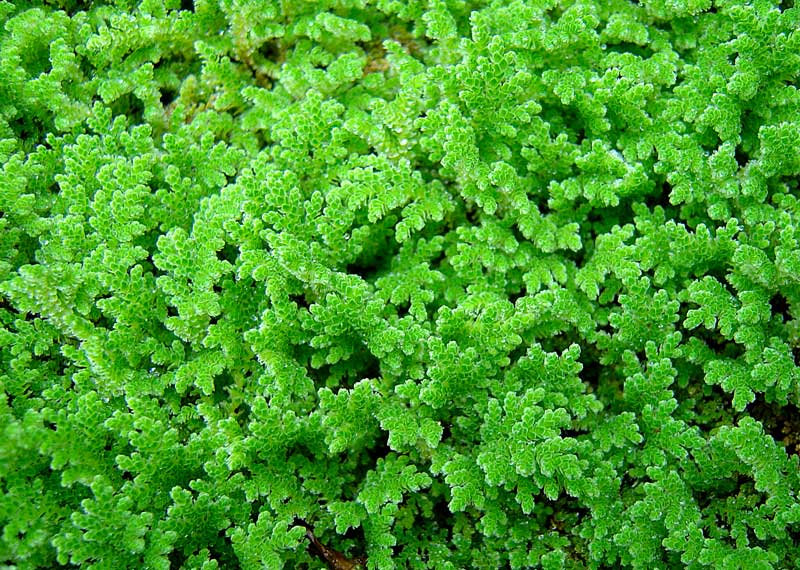
Also known as Mosquito Fern, Azolla is a low maintenance floating plant which attaches itself to the surface of your tank with its roots.
It can be easily kept in any aquarium and is often used as fodder for betta fish fry.
This floating plant does not require much light, but it will do well if you provide some additional lighting too.
Azolla also thrives when it has access to nutrients from fertilizer or dirt substrate added into the water column.
Like many plants on this list, it will need to be trimmed and maintained to prevent it from taking over your tank.
11. Brazilian Pennywort (Hydrocotyle leucocephala)

Brazilian Pennywort has has large circular leaves that float on the surface of your aquarium.
The leaves are a bright green color that is topped with small flowers in order to attract attention from any fish swimming around it.
Due to the size of the leaves, not only does it create an eye-catching pattern, but it also allows light in-between the gaps of the pattern.
Brazilian Pennywort can also be grown along the water’s edge, but make sure there’s enough room for your fish to swim through or around if they want too!
The growth rate of this plant is determined by how much light it receives.
12. Red Root Floater (Phyllanthus Fluitans)

Originating from South America, the Red Root Floater is a very common and popular plant in the aquarium hobby.
It’s been known to be one of the fastest-growing plants that can be kept, which is why it has become so well-known as an excellent source for food.
The name comes from the leaves of the plant, which are able to alter almost completely red if exposed to a lot of light.
The leaves are what give them such a sharp appearance, even though the roots and base of the plant are generally colored red.
Though you may find this plant somewhat difficult to grow at first, once it starts growing it will continue expanding exponentially!
This aquatic plant often grows out from its roots into open water where they form dense mats on top of the surface tension layer.
Eventually these floating islands break apart and drift away with currents or movement from passing fish or humans – leaving behind only trails of tiny red root fragments scattered throughout your tank!
13. Floating Bladderwort (Utricularia gibba)
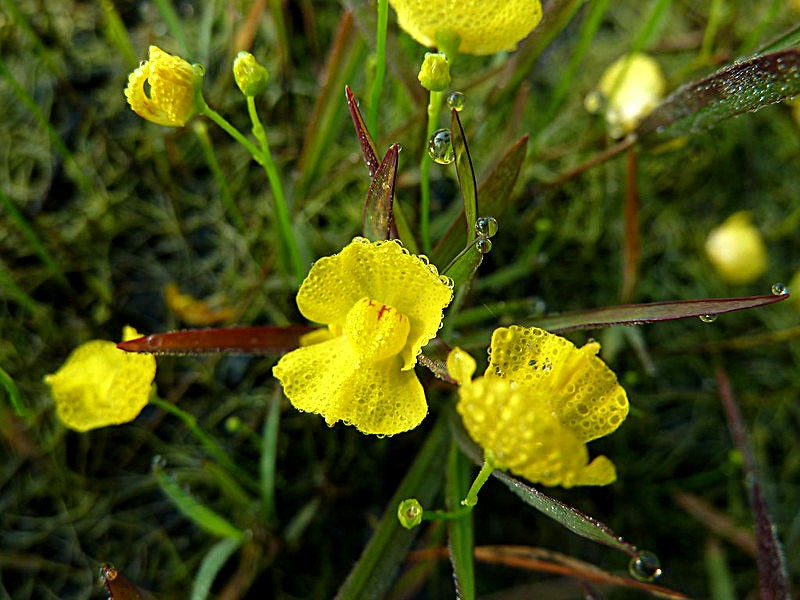
Floating Bladderwort is one of the most beautiful and easy to grow floating plants in an aquarium! The roots are long, slender stems that can spread throughout your tank.
Emerging from these dark red root strands you’ll find tiny green leaves with golden-red accents at their base – giving them a very sharp appearance.
In fact, don’t be surprised if the plant appears out of nowhere overnight as it spreads quickly by sending runners under water or through open space into neighboring areas.
These fine root fragments will reattach themselves onto any surface they encounter such as rocks or driftwood making this plant excellent for tanks without substrate where its growth may otherwise become limited.
The aquarium plant will eliminate microorganisms from the water, but it is safe for inverts and fish.
14. Anacharis (Egeria densa)

The Anacharis is a great choice for aquarists of all levels.
It is very versatile in that it can be placed in a variety of different water temperatures, and it doesn’t need much light.
One thing to be aware of is that this plant can grow quite large, and some work is required to trim it down to the size of your tank.
On the plus side, Anarcharis does an excellent job of oxygenating the water of a tank, and is one of the most effective out of all of the floating plants.
15. Rotala Indica (Rotala Indica)

Rotala Indica looks very different to many other floating plants.
It has a very long and thin stem, and each leaf is composed of many smaller leaflets.
This plant will slowly grow upwards, so it works best when placed in the middle or front of your tank where you can appreciate its unique shape.
Rotala Indica also does an excellent job at oxygenating the water as well as producing more than enough natural nutrients for live plants to thrive.
It’s great for beginners because it doesn’t need be kept in high light conditions, just keep away from direct sunlight that may cause algae growth on leaves.
16. Ludwigia Repens (Creeping primrose-willow)
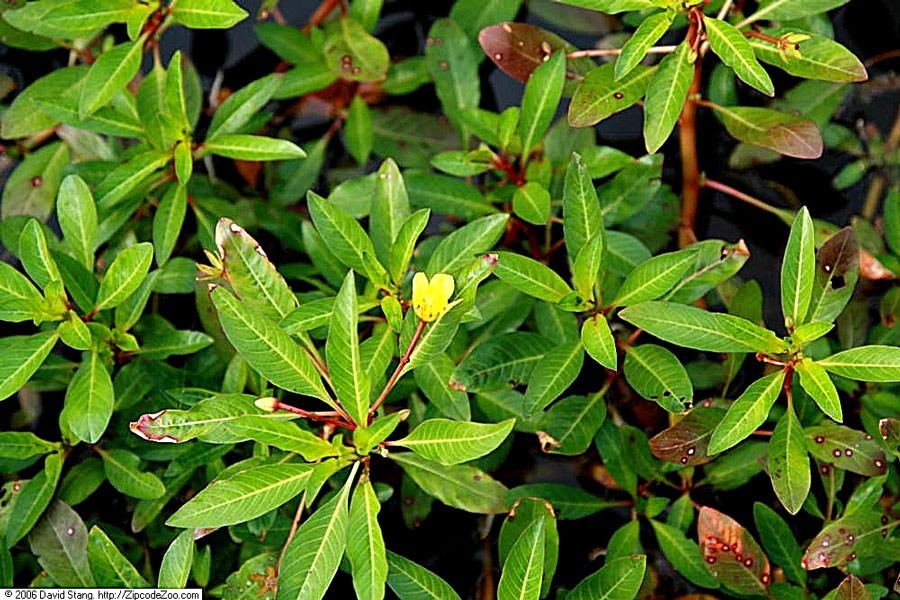
Also known as Creeping Primrose-Willow, Ludwigia Repens is a stem plant with narrow, long leaves and small pink flowers.
It grows much like the Amazon Sword in that it propagates by runners underneath the substrate to produce new plants.
The Creeping Primrose-Willow is not as picky about light conditions; however, keep away from direct sunlight because this will cause algae growth on its leaves.
It does well when planted at either end of your aquarium or along driftwood where you can see its full beauty and unique shape develop over time.
When placed in high lighting conditions Ludwigia Repens produces large amounts of oxygen while creating natural nutrients for live plants to thrive which makes it one great option for planted tanks.
How to Decide Which Floating Plants Are Best For You
What’s Other Plants And Fish Are in your Aquarium?
Consider both the plants and fish you already have in your fish tank and the kinds of plants that would be ideal for them before purchasing floating plants.
If you have species of fish in your tank that are shy, then floating plants that provide good cover would be ideal.
If you have fish species in your tank that are more aggressive, then less dense and bushy varieties of floating aquarium plants will work best for them.
The Size Of Your Aquarium
As most floating plants have a rapid growth rate, it is important to choose the correct sized aquarium.
If you have a small tank, then your main concern should be to choose floating plants that will not overtake the other species in your tank.
Plants that are too large for your tank will crowd out your fish and create stress, while smaller ones could be pruned.
If your tank is rather big, you may add a small number of floating plants and fast-growing plants will not be an issue.
Lighting
You will also need to consider how much lighting is needed inside of your tank when choosing floating plants.
If you are looking for plants that can naturally grow in low-light conditions, then choose floating plants like the Amazon Frogbit.
These types of plants will survive with very little light and they should be able to live inside your tank without any issues.
On the other hand, if you do not have sufficient lighting within your aquarium, it would be best to go with a different option such as Java Moss or Riccia Fluitans which both require at least medium levels of lighting to thrive properly.
The Growth Rate Of The Plant
If you do not want the hassle of having a regular trimming process, then it’s best not to choose a plant that has a rapid growth rate.
The Best Floating Aquarium Plants Conclusion
The best floating aquarium plants. With so many options for floating plants, it can be difficult to choose.
However, these are the best ones out there and will provide you with a lush aquatic environment that is sure to please any plant enthusiast!
We’ve covered everything from what types of floating plants are available, the advantages of floating plants, and how to decide which plants are best for your aquarium.
Whether you want to keep things simple with just one plant variety or have an entire aquatic garden on display, we hope that this article has helped answer all your questions!
Do you own any of the plants on this list? If you do, let us know your thoughts in the comments section below.
