

Well, hello there, fellow fish aficionados! In this post we are going to look into the captivating and sometimes confounding world of aquarium algae.
Those greenish, slimy, and somewhat unsightly plants that can make the difference between a thriving aquatic paradise and a murky, uninviting swamp.
There’s so much more to these green guys than just being a nuisance.
You see, algae are a crucial part of any aquatic ecosystem, our darling fish tanks included.
They play a vital role in maintaining the delicate balance of life beneath the water’s surface.
Contributing to oxygen production, nutrient recycling, and even serving as a tasty snack for some of our finned friends!
Not to mention, they can add a dash of natural beauty to our underwater landscapes when they’re kept in check.
So while they might be a bit of a headache at times, algae are our allies, not our adversaries.
But, as with all good things, it’s all about moderation.
That’s why we’re here, embarking on this algae adventure together, to explore the exciting world of these microscopic marvels and learn how to maintain that delicate balance in our tanks.
Let’s dive right in!
Where Does Algae Come From?
“Where does this green goblin of the underwater world come from?”
It’s a question that has puzzled many an aquarist, from the newbie staring in horror at their once-pristine tank to the seasoned veteran who has seen it all.
First off, let me assure you, you didn’t do anything wrong. Algae spores are practically omnipresent.
They’re sneaky little critters, making their way into our aquariums through various avenues.
They can hitch a ride on new plants, decorations, or even the water you use to fill your tank.
In fact, they’re floating around in the air as you’re reading this!
It’s like a never-ending magic trick – they appear out of nowhere and voilà!
But here’s the thing: algae need certain conditions to thrive, much like your favorite aquatic plants.
And what might these conditions be, you ask? Let’s take a look in the next section.
What Causes Aquarium Algae Overgrowth?
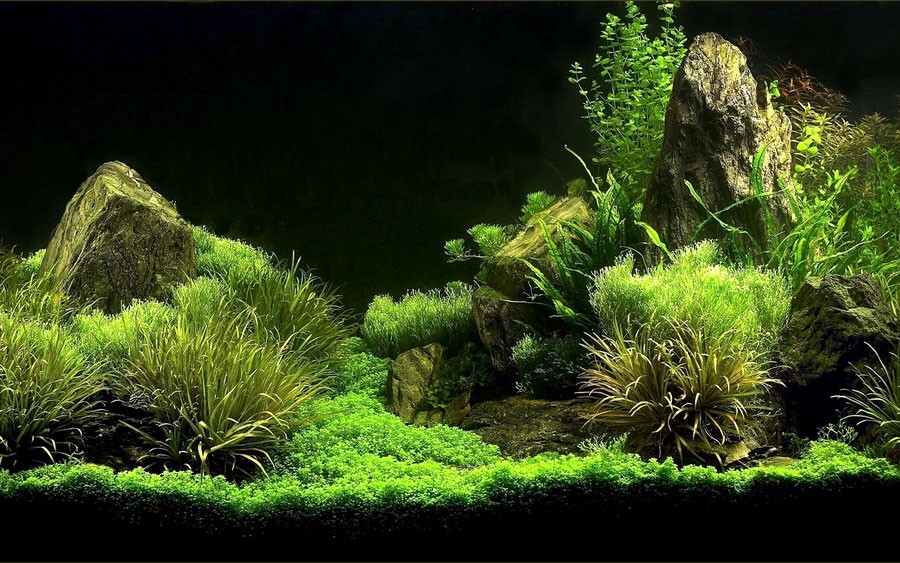
What causes the algae to throw a party in your tank and invite all their spore friends? Let’s break it down.
Excessive lighting
First up, light. Algae are like moths to a flame when it comes to light, especially if it’s available in surplus.
You know that beautiful, sunlit corner of your living room where you’ve placed your tank?
Well, it might just be the perfect stage for algae to strut their stuff. Or maybe you’ve left the tank lights on for too long.
Either way, algae are basking in the glow and growing like nobody’s business.
Nutrient Imbalance
Now, onto nutrients. You’ve been feeding your fish, right? Of course, you have!
But here’s the kicker: any uneaten food or fish waste that’s left to decay in the tank adds to the nutrient load in the water.
And guess who loves a nutrient-rich buffet? Yep, algae.
They gobble up those extra nutrients and grow faster than you can say “algae bloom”.
Competition
Last but not least, let’s talk about competition. Algae are the ultimate opportunists.
If there’s a vacancy – say, a lack of other plants or algae-eating creatures to keep them in check – they’ll seize the chance and spread like wildfire.
Types of Aquarium Algae: Identification and Characteristics
Brown Algae In Fish Tank
Also known as diatoms, brown algae often crash the party in new tanks.
They’re like the houseguest who overstays their welcome, coating your tank in a dusty brown layer.
But don’t fret! Brown algae are harmless and easily wiped off.
As your tank matures and finds its balance, these temporary tenants typically pack their bags and leave.
A handy gravel vacuum can help expedite their departure during water changes.
Blue-Green Algae In Fish Tank
Don’t be fooled by the name; blue-green algae aren’t algae at all! They’re cyanobacteria, and they can be quite the troublemakers.
They spread rapidly, creating a slimy layer that can be difficult to control.
If your tank is a hotspot for these blue-green rascals, it’s usually a sign of excess nitrate and phosphate in the water.
But fear not, good water care and targeted treatments can help keep them in check.
Red Algae In Fish Tank
Red algae, or beard algae, are the tough guys of the algae world.
They’re stubborn and can be challenging to remove, often appearing on your plants.
But like every tough guy, they have their weakness: a dip in a weak bleach solution can often take them down a notch.
Green Algae In Fish Tank
Ah, green algae, the ubiquitous residents of our tanks. They come in various forms – hair, thread, spot – you name it!
They’re a normal part of a healthy tank, and as long as your tank is well cared for, they won’t overgrow.
Bonus: your algae-eating fish love them!
Black Algae In Fish Tank
Now we’re getting into the stubborn territory.
Black algae, or black brush algae, are known for their tough, hair-like structures that cling to hard surfaces.
They’re tough to remove but fear not! Some fish and invertebrates, like the Siamese Algae Eater, are known to snack on them.
White Algae In Fish Tank
White algae often show up as a cotton-like growth on your tank’s decor and even on your fish.
This is usually a fungus, not actual algae, and is a sign that something’s amiss in your tank.
Best to consult a vet if your fish are affected!
Green Water
Ever looked at your tank and felt like you’re peering through a thick green fog?
Welcome to the world of green water, caused by microscopic algae suspended in the water.
They’re like tiny green clouds, refusing to be wiped or scraped off.
Water changes often don’t help much either, as the remaining algae quickly multiply.
But don’t lose heart! A diatomic filter or UV sterilizer can help clear the green haze.
Ways to Control and Prevent Aquarium Algae

1. Perform Water Changes
Water changes – they’re simple, they’re effective, and they’re essential.
They’re like mini-reset buttons for your aquarium, helping maintain the delicate balance of water chemistry.
The magic of water changes lies in their power to dilute the nutrients that algae feast on.
Think of it as taking away the algae’s buffet, reducing the chance of a food-induced growth spurt.
Imagine this: you’re at a party, the food keeps coming out, and you can’t help but go back for seconds, thirds… Who’s counting, right?
Well, that’s the algae in your tank. They love the nutrients in the water, and they’ll keep munching away if you let them.
So, how do you stop the party? You start taking away the food.
By replacing a portion of your aquarium water every week, you’re effectively reducing the nutrient levels in the water.
This means less food for the algae, making it harder for them to overgrow. It’s a simple, yet powerful way to keep algae in check.
How much water should you change?
A good rule of thumb is to change 10 to 15 percent of your aquarium water every week.
This regular refresh helps remove the nitrate that accumulates in aquariums, one of the primary nutrients that algae thrive upon.
Remember, consistency is key. Regular water changes are a proactive step towards preventing algae overgrowth and ensuring your tank stays healthy and balanced.
It’s a small price to pay for a beautiful, thriving aquarium.
2. Reduce Lighting
Lights, camera, algae! No, that’s not quite the blockbuster we’re aiming for in our aquariums.
When it comes to lighting, the right balance is crucial for a healthy tank.
Let’s illuminate the importance of controlling light to prevent our sneaky green nemesis – algae.
If your aquarium were a stage, your fish and plants would be the stars, and light – their spotlight.
Light is their life force, guiding their growth, mood, and overall well-being.
But here’s the plot twist – algae, too, crave the limelight.
Like an uninvited guest, they thrive under excessive lighting, turning your aquarium from a serene aquatic Eden to a rampant green forest.
How To Control Lighting
So, how do you ensure your fish get the light they need without handing over a VIP pass to algae?
The answer is surprisingly simple – control the lighting.
It’s all about timing and intensity. Think of it like managing the curtains on our aquarium stage.
When the curtains are drawn for too long, our algae friends start to party.
You don’t want that, right? That’s why it’s crucial to limit the amount of light your aquarium gets.
How Long To Keep On The Aquarium Lights
The ideal time frame for keeping your aquarium lights on is around 8 to 10 hours a day.
This gives your plants and fish enough time under the spotlight without inviting the algae to join the show.
Here’s a pro tip – use a timer!
It’s a simple tool that can make a world of difference, maintaining the perfect day-night rhythm for your tank.
More Lighting Tips
Keep your aquarium away from direct sunlight. Sunlight is like a grand buffet for algae – they’ll feast on it and grow out of control.
Instead, opt for artificial lighting that you can control.
3. Test Your Water
Testing your water is the Sherlock Holmes part of fish-keeping, where you play detective, unraveling the mysteries of your aquarium’s watery world.
Why Test The Water?
Picture your aquarium as a mini-planet. Just like Earth, it has its own climate, its own life forms, and its own delicate balance.
And the water? It’s the atmosphere. It’s what sustains life, circulates nutrients, and yes, sometimes, harbors the seeds of algae.
Just as a meteorologist would study the air to predict the weather, we test the water to understand the health of our aquarium.
We’re looking for clues – the pH level, the nitrate and nitrite levels, the hardness of the water, the presence of ammonia.
These are all puzzle pieces that tell a story – the story of your tank’s health.
Elements Of Water Testing
High nitrate levels? That’s a red flag. It means your tank’s waste management system might be off-balance.
Overfeeding your fish or neglecting water changes could be the culprits. And guess who loves high nitrates? Yes, you got it – algae.
What about phosphate? Another significant player in our algae story.
Phosphates are like candy for algae, and if your water tests high for them, it’s like you’re throwing an all-you-can-eat buffet for the algae. Not good.
pH levels. Too high or too low, and you’re creating an environment where algae can thrive, and your fish and plants struggle.
Testing your water isn’t just about sticking a test strip in and reading the results.
It’s about understanding what these results mean for your aquarium.
It’s about making connections, adjusting your habits, and preemptively tackling issues like algae growth.
So, grab your test kit, play detective, and unlock the secrets of your water.
4. Feed Less
Yes, feeding! It’s not just about sprinkling some flakes into the tank and calling it a day. There’s a science to it!
A balance. And getting it wrong? Well, that’s an open invitation to our green foe, algae.
Here’s the thing. Every uneaten morsel of food in your tank, every little flake that goes unnoticed by your fish, it doesn’t just disappear.
It decays, it adds to the nutrient load of your water, providing a feast for algae. Not ideal, right?
How Much Should I Feed My Fish?
Think small when it comes to portion sizes. Your fish should be able to eat all the food you provide within a few minutes.
If there’s food left after that time, you’re overfeeding. Simple as that.
Here’s a pro tip: Watch your fish when they eat. Get to know their habits, their appetites. If they’re leaving food behind, cut back a little.
Read our full guide on how long can fish go without food.
Remove Uneaten Food
Also, be vigilant about removing uneaten food. If you see leftovers, scoop them out. Don’t let them linger and become algae food.
5. Live Plants
Live plants, they’re not just for decoration. They’re hard workers, diligent helpers in our quest for a clean, balanced aquarium.
Imagine your tank as a bustling city, and nutrients in the water – they’re the currency. Everyone’s after them. The fish, the algae, and yes, the plants.
When you’ve got live plants in your tank, they’re competing with algae for those precious nutrients.
They’re gobbling up nitrates, phosphates, all the good stuff that algae love.
Less nutrients in the water means less fuel for algae overgrowth. A win for our leafy friends!
Live plants also produce oxygen during photosynthesis, promoting a healthy, vibrant aquatic environment.
Plus, they provide cover and enrichment for your fish, making your tank a more interesting and natural habitat.
And let’s not forget, they’re beautiful!
A well-planted tank is a sight to behold. It’s like having a slice of the Amazon or a piece of the Great Barrier Reef right in your living room.
Add some live plants to your tank. Anubias, Java Fern, Water Wisteria – there’s a plant for every tank, every skill level.
6. Tank Maintenance: Cleaning Methods
Think about it. You wouldn’t let your house get dirty, would you? Same goes for your fish’s home.
So, you’ve got algae starting to creep up on your tank glass, taking hold of your rocks, maybe even sneaking into your gravel.
It’s like an uninvited guest at a party. No worries, though. We’ve got the tools and the know-how to send them packing.
How To Clean Your Aquarium
- Glass: Now, you could just roll up your sleeves and get scrubbing with a sponge, but where’s the fun in that? Instead, consider an algae magnet. It’s like magic – one part inside the tank, the other on the outside. Slide it around and watch as the algae vanishes. Plus, no wet hands!
- Rocks: If they’re removable, take them out for a good scrub. Use a brush and some elbow grease. For stubborn algae, a bit of vinegar can help, but remember to rinse thoroughly.
- Gravel: Get yourself a gravel vacuum. It’s a nifty gadget that cleans your gravel and changes your water at the same time. It sucks up the detritus, the fish waste, and any food remains that could lead to algae growth.
- Filters, heaters, decorations: They all need a clean every so often. Soak them in a vinegar solution, scrub off any algae, and rinse well.
Remember, cleanliness is next to godliness, especially when it comes to aquariums.
Regular maintenance prevents algae from getting a foothold, keeps your water crystal clear, and makes your fish happier and healthier.
Read our full guide on How To Clean Your Aquarium here.
Algae-Eating Fish
Right, onto one of the more fun, fascinating, and life-filled methods of algae control. And yes, you guessed it – we’re talking about algae-eating fish.
These wonderful little critters not only add a dash of charm to your aquarium but they also serve a mighty purpose.
Siamese Algae Eaters
First on our list are the diligent Siamese Algae Eaters. These guys are like the industrious housekeepers of your tank.
They’re not picky eaters, consuming most types of algae with gusto.
They’ll zip around your tank, scouring surfaces for their next meal. Their energy is infectious!
Otocinclus
Next, we have the Otocinclus. Small but mighty, these pint-sized algae lovers are an ideal addition to any aquarium.
Despite their size, they’ve got quite the appetite.
One word of caution, though – these fellows prefer softer algae, so they might need some supplementing if your tank is dominated by tougher varieties.
Plecostomu
Then there’s the Plecostomus, or “Pleco” for short. These are the heavy-duty guys in the world of algae-eating fish.
They can grow quite large and handle a fair share of algae.
But remember, with great size comes great responsibility, and these big boys require a larger tank to be truly happy.
Shrimp And Snails
Lastly, let’s not forget the shrimp and snails.
Okay, okay, they’re not fish, but they are excellent algae eaters.
The Amano shrimp is a particularly voracious algae eater, and Nerite snails are well known for their appetite for algae.
Algae-eating fish (and invertebrates) are a fantastic, natural solution to your algae problem.
They’ll help keep your tank clean while also adding a new level of interest and complexity to your underwater world.
Aquarium Algae Conclusion
Remember, aquarium algae isn’t inherently evil.
It’s just a plant doing its thing, basking in the abundance of water, light, and nutrients.
But like that one guest who overstays their welcome at a party, it’s all fun and games until it becomes too much.
That’s when it’s time to step in and lay down the law.
In our crusade against algae overgrowth, we’ve discussed the importance of reducing lighting, feeding less, testing your water, performing regular water changes, and even inviting some algae-eating guests to the party.
We’ve also touched on the beauty and utility of live plants in your aquarium, and the significance of regular tank maintenance.
A healthy aquarium is a balance of elements. It’s a symphony, with each part playing its role.
Algae, fish, water, light – they all have their parts to play.
Your role, as the maestro of this underwater symphony, is to ensure that each section is in harmony with the others.
Keep those tanks clean, those fish happy, and that passion for fish-keeping alive.
Have you struggled with aquarium algae? Let us know in the comments below.
