

Welcome, fellow fish enthusiasts, to an exciting exploration of the types of fish for your aquarium.
Whether you're a seasoned aquarist or a curious beginner, this blog post will serve as your ultimate resource, providing valuable insights into the captivating realm of aquarium fish.
In this comprehensive guide, we will embark on an exploration of various types of fish, examining their scientific names, care levels, temperaments, swimming levels, origins, adult sizes, minimum tank sizes, optimal water temperatures, and pH requirements.
Whether you prefer the tranquility of a freshwater aquarium or the vibrant marine landscapes, this guide will provide you with the essential knowledge needed to make informed decisions about the fish species that best suit your preferences and aquarium setup.
Types Of Fish: Freshwater Fish
Let's get up close and personal with some of our freshwater friends.
Loaches
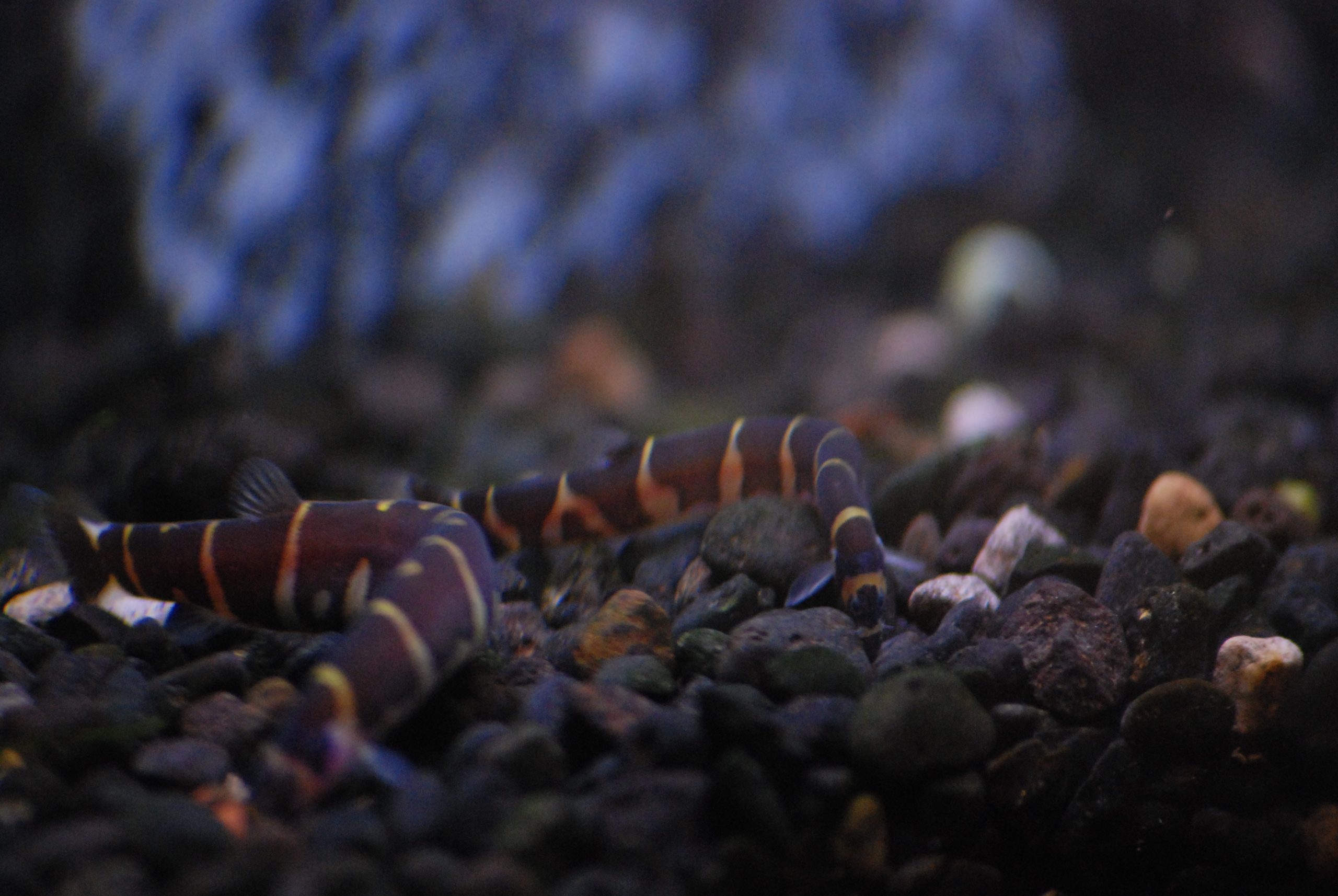
- Scientific Name: Various species, such as Botia, Pangio, and Schistura
- Care Level: Moderate to Experienced
- Temperament: Peaceful, but some may be semi-aggressive
- Swimming Level: Bottom
- Origin: Various regions in Asia and Europe
- Adult Size: Varies depending on species, but most are 2 to 6 inches (5 to 15 cm)
- Minimum Tank Size: 20 gallons (75 liters) or larger, depending on the species
- Water Temperature: 72°F to 82°F (22°C to 28°C)
- pH: 6.0 to 7.5
These bottom-dwellers, with their peculiar elongated bodies and whisker-like barbels, are a hoot to watch. They're the vacuum cleaners of the aquatic world, constantly rooting around for food.
Pros:
- Excellent scavengers, helping to keep the tank clean.
- Interesting behaviors, such as burrowing and playing.
- Can be kept in a community tank with compatible species.
Cons:
- Some species may be aggressive towards smaller fish.
- Some loaches require a larger tank due to their size and activity level.
- Some species are sensitive to water conditions and require specific care.
Gouramis
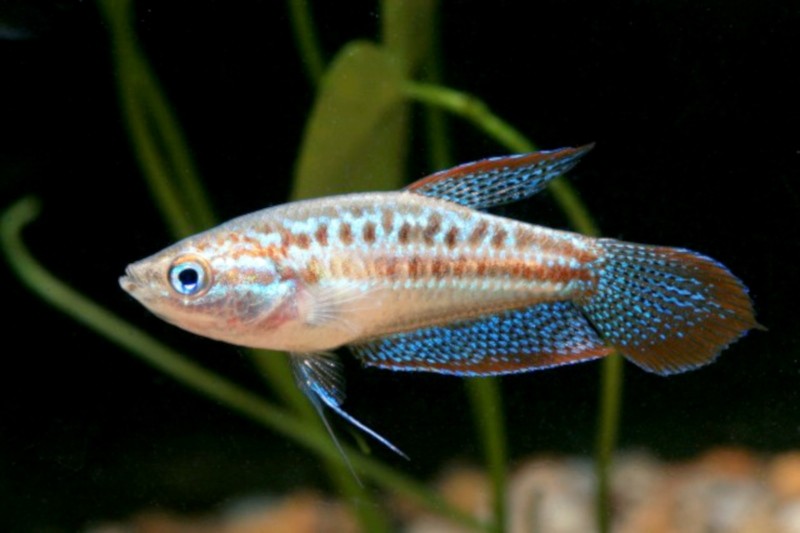
- Scientific Name: Various species, including Trichogaster, Colisa, and Osphronemus
- Care Level: Easy to Moderate
- Temperament: Can vary, but generally peaceful
- Swimming Level: Top to Middle
- Origin: Southeast Asia and India
- Adult Size: Varies depending on species, but most are 2 to 6 inches (5 to 15 cm)
- Minimum Tank Size: 20 gallons (75 liters) or larger, depending on the species
- Water Temperature: 72°F to 82°F (22°C to 28°C)
- pH: 6.0 to 7.5
Ah, the elegant Gouramis. Their labyrinth organ, an extraordinary adaptation for breathing air, allows them to survive in low-oxygen water. Quite the survivalists, wouldn't you say?
Pros:
- Beautiful and vibrant colors make them visually appealing.
- Labyrinth organ allows them to breathe air, making them adaptable to various water conditions.
- Some species, like the Dwarf Gourami, have interesting behaviors and make great centerpiece fish.
Cons:
- Male gouramis can be territorial, leading to aggression towards other males.
- Some species may nip at the fins of other fish.
- Certain species can be sensitive to water quality, requiring consistent maintenance.
Barbs
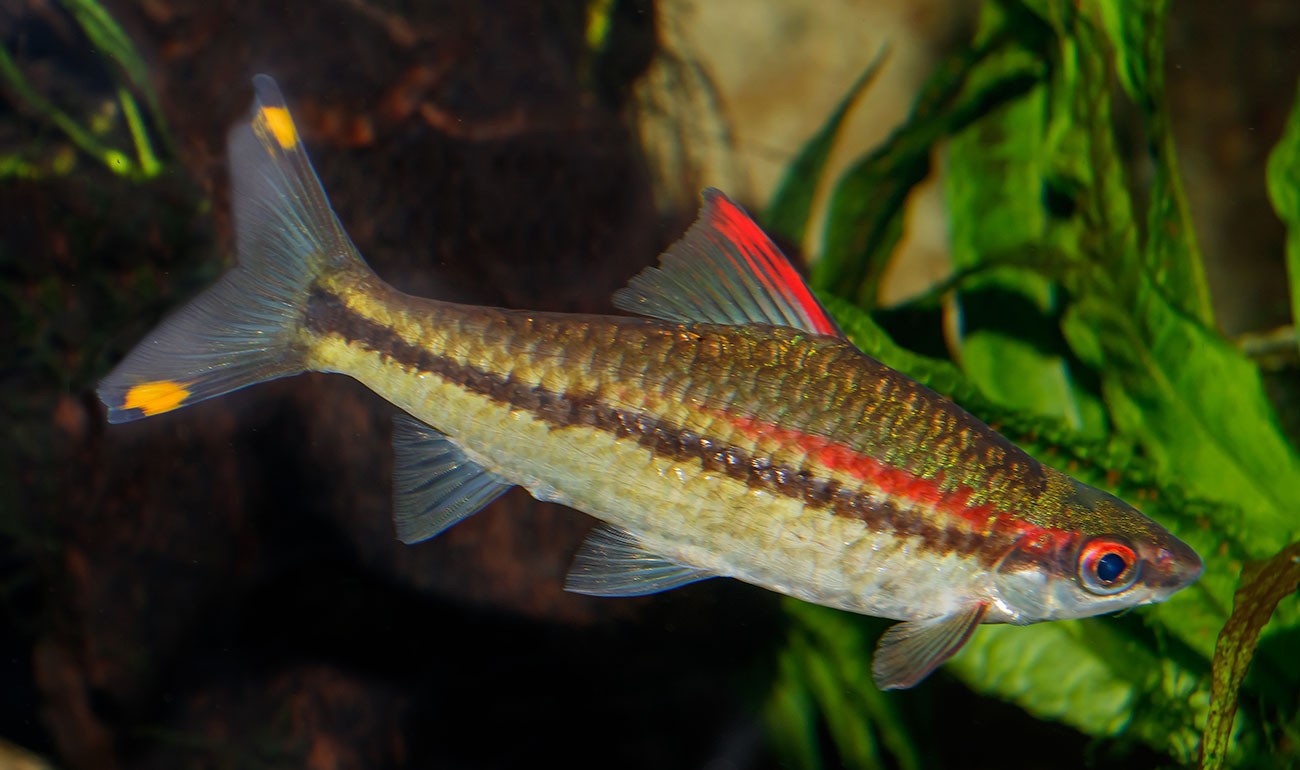
- Scientific Name: Various species, such as Puntius, Barbus, and Dawkinsia
- Care Level: Easy to Moderate
- Temperament: Can vary, but some species can be semi-aggressive
- Swimming Level: Middle to Top
- Origin: Various regions in Asia and Africa
- Adult Size: Varies depending on species, but most are 2 to 6 inches (5 to 15 cm)
- Minimum Tank Size: 20 gallons (75 liters) or larger, depending on the species
- Water Temperature: 72°F to 82°F (22°C to 28°C)
- pH: 6.0 to 7.5
Lively and colorful, Barbs are the life of the party in any aquarium. Especially the Tiger Barb, with its striking bands, brings an undeniable energy and vibrancy to the tank.
Pros:
- Active and lively swimmers, adding energy to the tank.
- Wide range of colors and patterns available, making them visually striking.
- Can be kept in schools, displaying shoaling behavior.
Cons:
- Some species can be fin nippers, particularly if not kept in large enough groups.
- Certain barb species may exhibit aggressive behavior.
- Some species require a well-maintained aquarium with appropriate water parameters.
Hatchetfish
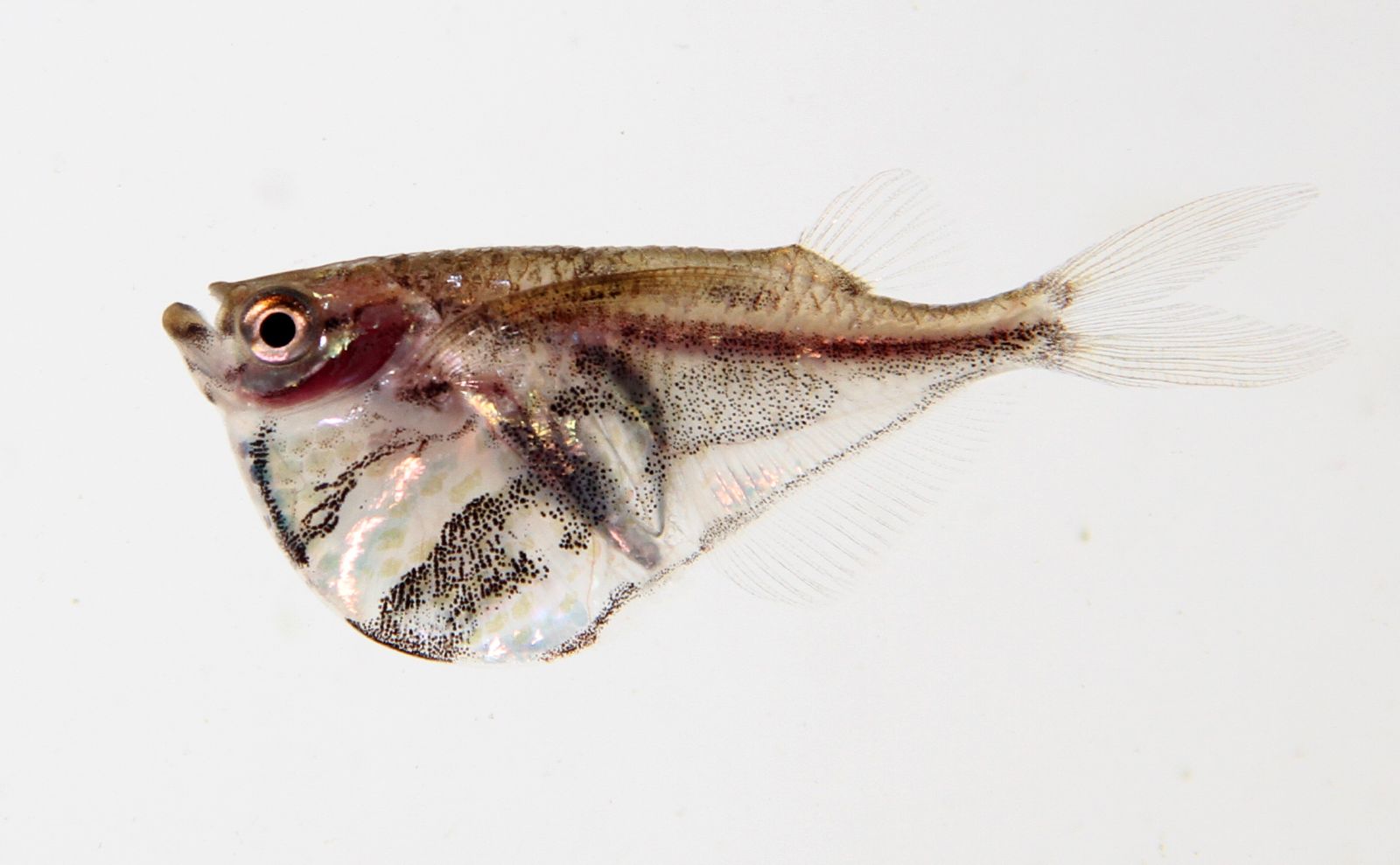
- Scientific Name: Various species, including Gasteropelecus and Carnegiella
- Care Level: Moderate to Experienced
- Temperament: Peaceful
- Swimming Level: Top
- Origin: South America
- Adult Size: Varies depending on species, but most are around 1 to 3 inches (2.5 to 7.5 cm)
- Minimum Tank Size: 20 gallons (75 liters) or larger, depending on the species
- Water Temperature: 72°F to 82°F (22°C to 28°C)
- pH: 6.0 to 7.5
Named for their unique hatchet-shaped bodies, these fish are a marvel of evolution. They're top-dwelling species, spending most of their time near the water's surface. Did you know they can even leap out of the water to escape predators?
Pros:
- Unique body shape and ability to jump out of the water, adding excitement to the tank.
- Peaceful nature makes them suitable for community tanks.
- Their reflective bodies create a mesmerizing effect when light shines on them.
Cons:
- Require a tightly covered tank to prevent them from escaping.
- Can be sensitive to water quality, requiring clean and well-maintained conditions.
- Some species have specific dietary needs, including live or frozen foods.
African Cichlids
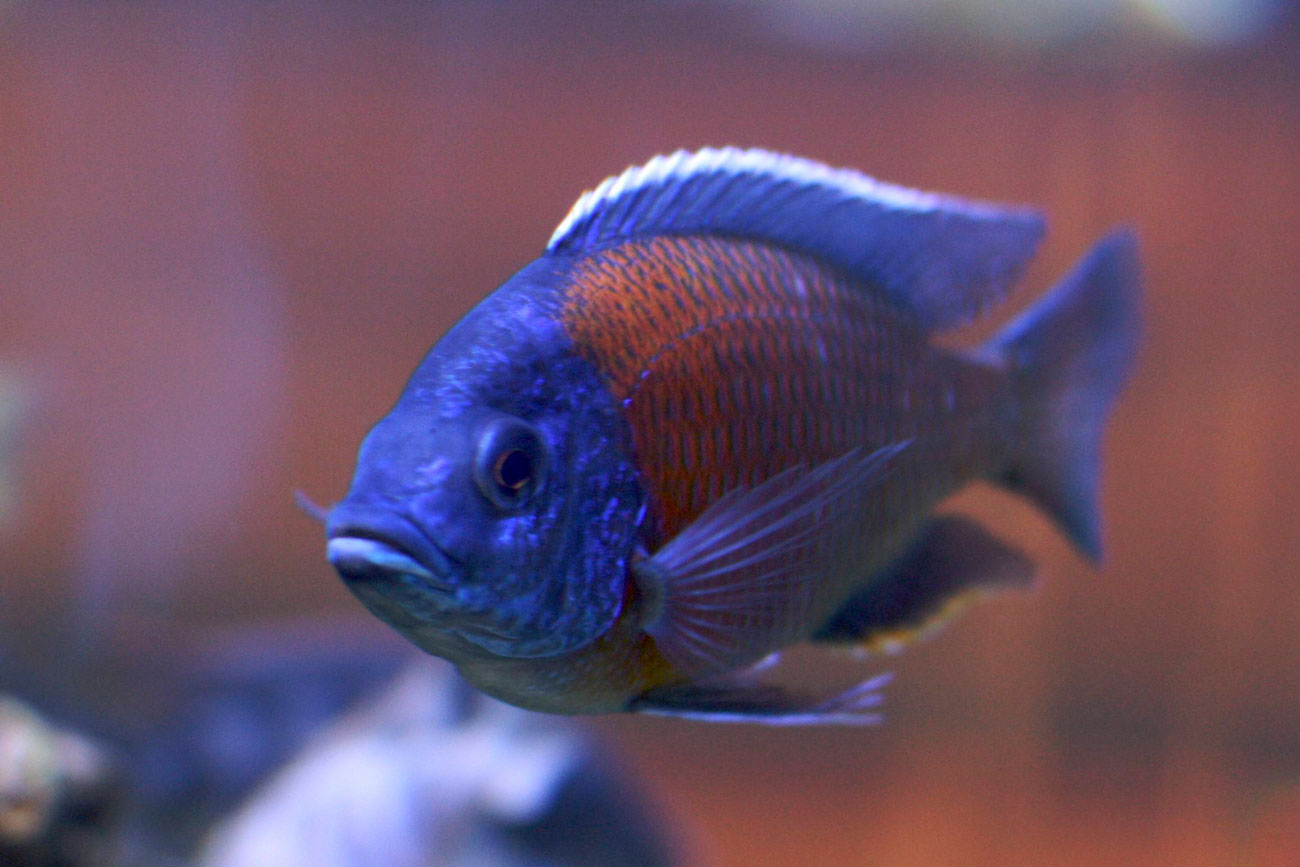
- Scientific Name: Various genera, such as Cichlasoma, Melanochromis, and Pseudotropheus
- Care Level: Moderate to Experienced
- Temperament: Can vary, but some species can be aggressive
- Swimming Level: Middle to Bottom
- Origin: Various lakes and rivers in Africa, including Lake Malawi and Lake Tanganyika
- Adult Size: Varies depending on species, but most are 3 to 8 inches (7.5 to 20 cm)
- Minimum Tank Size: 30 gallons (113 liters) or larger, depending on the species
- Water Temperature: 72°F to 82°F (22°C to 28°C)
- pH: 7.8 to 8.6
These are the true gems of the freshwater world. With a staggering variety of colors and patterns, African Cichlids are a testament to the beauty of aquatic life.
Pros:
- Wide variety of vibrant colors and patterns, making them visually stunning.
- Fascinating social behavior, including complex hierarchies and territorial displays.
- Can thrive in both community tanks and species-specific setups.
Cons:
- Some species can be aggressive, especially during breeding and territorial disputes.
- Require a larger tank with ample hiding places and rocky formations.
- Water chemistry needs to match their specific requirements, including high pH and hardness.
Angel Fish

- Scientific Name: Pterophyllum scalare
- Care Level: Moderate
- Temperament: Generally peaceful, but can be semi-aggressive during breeding
- Swimming Level: Middle
- Origin: South America (Amazon River basin)
- Adult Size: 4 to 6 inches (10 to 15 cm)
- Minimum Tank Size: 20 gallons (75 liters) or larger for a single fish, larger for a group
- Water Temperature: 74°F to 84°F (23°C to 29°C)
- pH: 6.8 to 7.8
These serene beauties, with their striking wing-like fins and calm demeanor, are like the angels of the aquarium world. They're a favorite among hobbyists due to their graceful movements and intriguing social behaviors.
Pros:
- Graceful and elegant appearance, adding a touch of beauty to the tank.
- Wide range of color variations available, including marbled and veil-tail varieties.
- Can be kept in community tanks with appropriate tank mates.
Cons:
- Some angel fish can be aggressive, especially when establishing territory.
- Require a larger tank with plenty of vertical space for their tall fins.
- Prone to certain health issues, such as gill flukes and swim bladder problems.
Cory Catfish

- Scientific Name: Corydoras species
- Care Level: Easy
- Temperament: Peaceful and social, best kept in groups
- Swimming Level: Bottom
- Origin: South America
- Adult Size: Varies depending on species, but most are around 2 to 3 inches (5 to 7.5 cm)
- Minimum Tank Size: 20 gallons (75 liters) or larger for a small group
- Water Temperature: 72°F to 78°F (22°C to 26°C)
- pH: 6.0 to 7.8
The perfect addition to a peaceful community tank. These little armored catfish are diligent cleaners, spending their days sifting through the substrate for tasty morsels. They're quiet, hardworking, and downright charming!
Pros:
- Excellent bottom dwellers that help keep the tank clean by eating leftover food and detritus.
- Peaceful and compatible with a wide range of tank mates.
- Active and playful behavior, making them entertaining to watch.
Cons:
- Some species may be sensitive to water conditions, requiring regular maintenance.
- Prefer to be kept in groups, so a larger tank may be needed.
- Sharp spines on their pectoral fins can cause injuries if mishandled.
Plecos
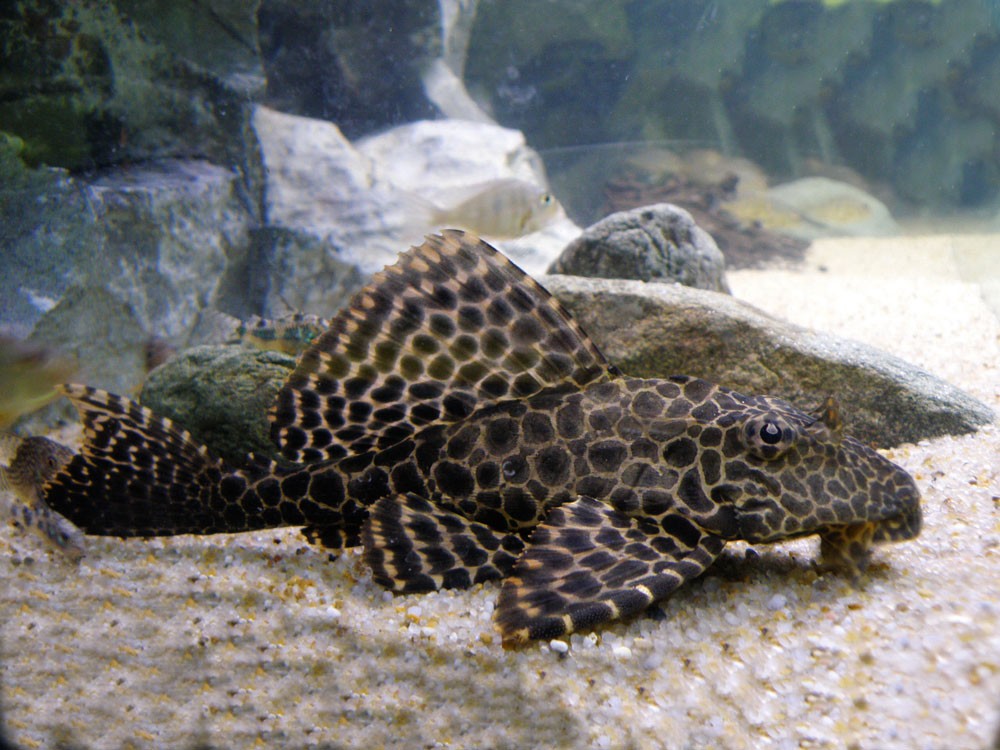
- Scientific Name: Various species, including Pterygoplichthys and Hypostomus
- Care Level: Easy to Moderate
- Temperament: Generally peaceful, but some species can be territorial
- Swimming Level: Bottom
- Origin: South America
- Adult Size: Varies depending on species, but most are 6 to 24 inches (15 to 60 cm)
- Minimum Tank Size:
These are the gentle giants of the freshwater world. With their powerful suckermouth, Plecos can keep your tank spotless. Just make sure they have plenty of space - some species can grow to be quite large!
Pros:
- Effective algae eaters, helping to control algae growth in the tank.
- Unique appearance, with various patterns and body shapes available.
- Can thrive in different water conditions and tolerate a wide range of temperatures.
Cons:
- Some plecos can grow quite large, requiring a spacious tank as they mature.
- Can produce a significant amount of waste, necessitating proper filtration.
- Certain species, like the Common Pleco, can become territorial and aggressive.
Freshwater Shrimp
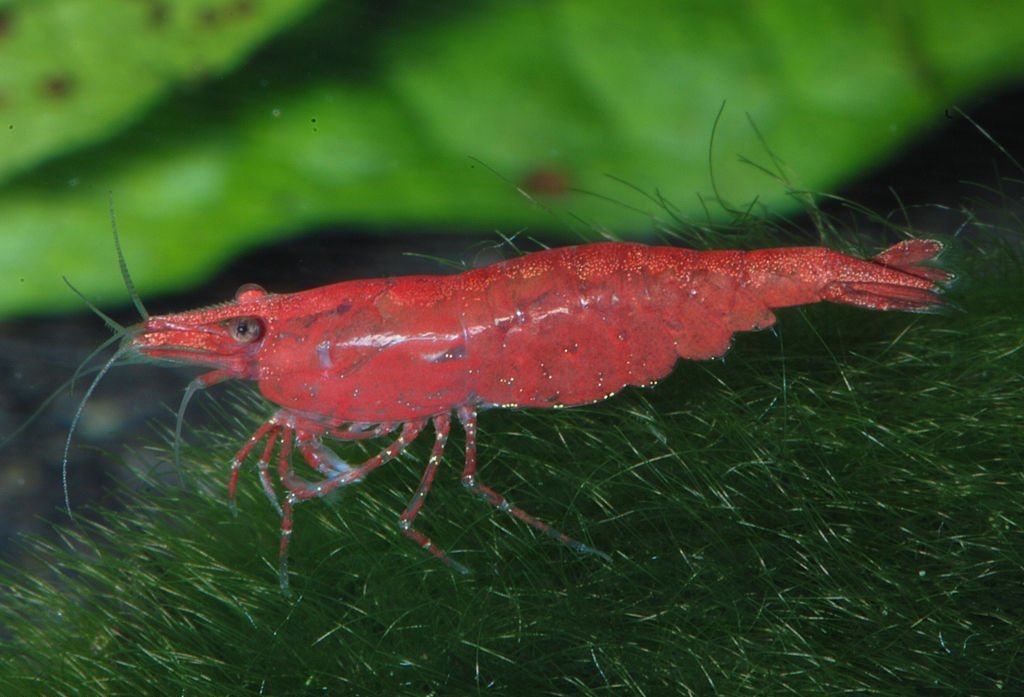
- Scientific Name: Neocaridina and Caridina species (e.g., Neocaridina davidi, Caridina multidentata)
- Care Level: Easy
- Temperament: Peaceful and non-aggressive
- Swimming Level: Bottom (benthic)
- Origin: Various regions in Asia, including Japan and Taiwan
- Adult Size: Varies depending on species, but most are around 1 to 2 inches (2.5 to 5 cm)
- Minimum Tank Size: 5 gallons (19 liters) or larger for a small group
- Water Temperature: 68°F to 78°F (20°C to 26°C)
- pH: 6.5 to 7.5
Ever wanted a pet that's both adorable and industrious? Freshwater shrimp, like the popular Cherry Shrimp, are tiny cleaning crews that add a dash of color and a whole lot of personality to your tank.
Pros:
- Fascinating addition to a tank, with their unique appearance and behaviors.
- Excellent algae eaters and scavengers, aiding in maintaining water quality.
- Can coexist with various peaceful fish species.
Cons:
- Vulnerable to predation, especially by larger or more aggressive tank mates.
- Some shrimp species have specific water parameter requirements.
- Breeding can be challenging, as the young shrimp require specific conditions to survive.
Swordtails
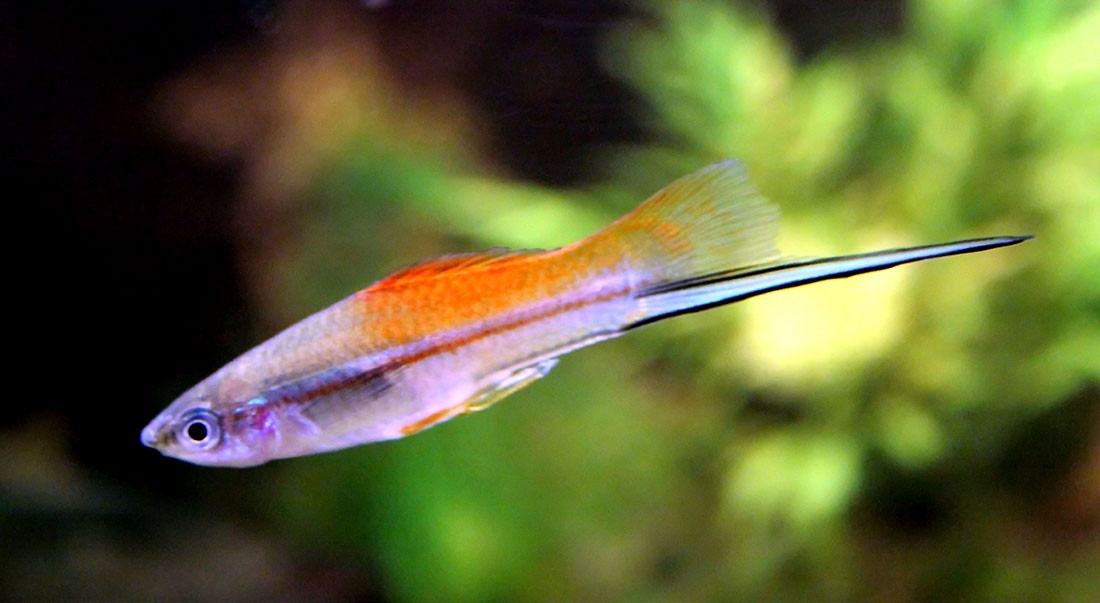
- Scientific Name: Xiphophorus hellerii
- Care Level: Easy
- Temperament: Peaceful, but males may exhibit territorial behavior towards each other
- Swimming Level: Middle
- Origin: Central America (Honduras, Mexico)
- Adult Size: 3 to 4 inches (7.5 to 10 cm) for males, 4 to 6 inches (10 to 15 cm) for females
- Minimum Tank Size: 20 gallons (75 liters) or larger
- Water Temperature: 72°F to 82°F (22°C to 28°C)
- pH: 7.0 to 8.4
Named for the males' distinct, sword-like tail fin, these lively swimmers add an exciting dash of color to any aquarium. Swordtails are hardy, easy to care for, and a joy to watch!
Pros:
- Vibrant colors and distinct sword-like tails make them visually appealing.
- Hardy and adaptable fish, suitable for beginners.
- Can add lively activity to the tank with their playful behavior.
Cons:
- Males can exhibit aggression towards each other and nip at the fins of other fish.
- Breeding can lead to overpopulation if not controlled.
- Require a spacious tank with ample swimming space.
Betta fish
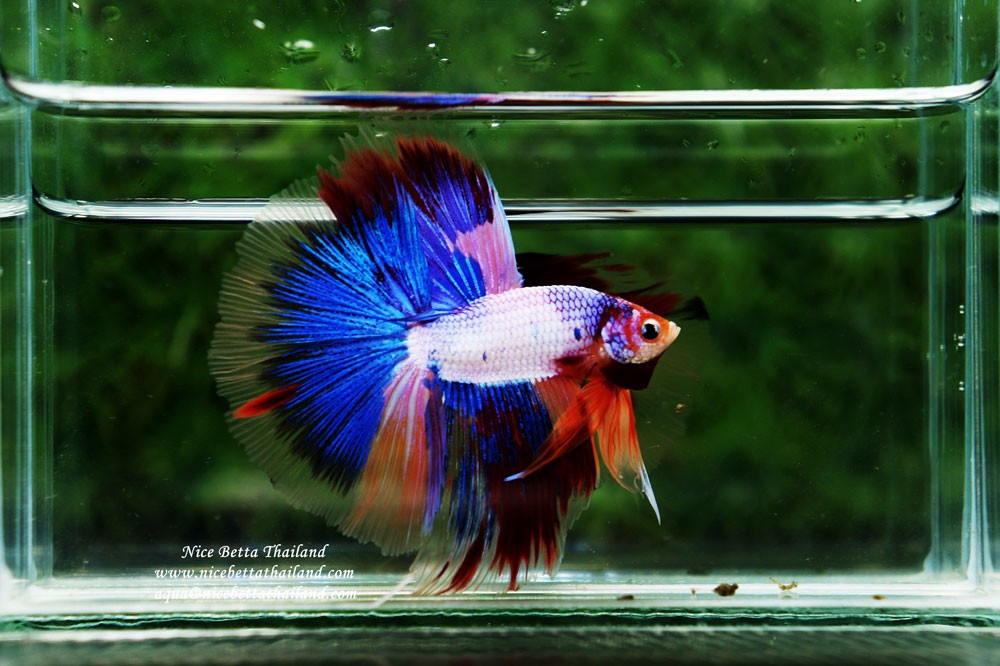
- Scientific Name: Betta splendens
- Care Level: Easy to Moderate
- Temperament: Males are territorial and may fight each other, while females can be kept in groups
- Swimming Level: Top
- Origin: Southeast Asia (Thailand, Cambodia)
- Adult Size: 2.5 to 3 inches (6 to 7.5 cm)
- Minimum Tank Size: 5 gallons (19 liters) or larger for a single male, larger for a group of females
- Water Temperature: 76°F to 82°F (24°C to 28°C)
- pH: 6.0 to 8.0
Ah, the Betta, the jewel of the aquarium with their spectacular flowing fins and vivid colors. But don't let their beauty fool you, they are fierce fighters when it comes to their territory. Single tank living suits them best!
Pros:
- Spectacular colors and flowing fins make them visually captivating.
- Labyrinth organ allows them to breathe air, enabling them to survive in low-oxygen conditions.
- Can be kept in smaller tanks or as solitary fish, reducing the need for a large setup.
Cons:
- Male bettas can be aggressive towards other male bettas and some other fish species.
- Require regular water changes and a well-maintained tank.
- Some long-finned varieties are prone to fin damage and infections.
Arowana
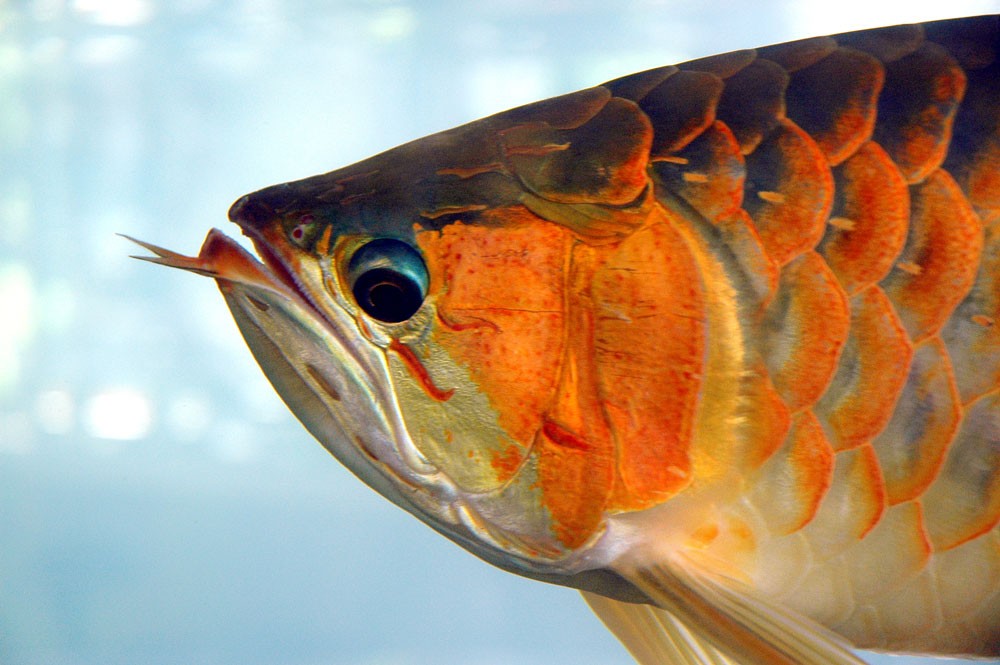
- Scientific Name: Osteoglossum bicirrhosum, Scleropages species (e.g., Scleropages arowana)
- Care Level: Moderate to Experienced
- Temperament: Generally aggressive and predatory
- Swimming Level: Top
- Origin: South America, Southeast Asia, Australia
- Adult Size: Varies depending on species, but most are 24 to 36 inches (60 to 90 cm) or larger
- Minimum Tank Size: 180 gallons (680 liters) or larger for young fish, larger as they grow
- Water Temperature: 75°F to 82°F (24°C to 28°C)
- pH: 6.0 to 7.5
Majestic and imposing, the Arowana is a sight to behold. These "water dragons," as they're often called, can grow quite large and are known for their ability to leap out of the water to catch prey.
Pros:
- Majestic and impressive appearance, resembling a miniature dragon.
- Excellent jumpers with powerful leaps, showcasing their natural behavior.
- Can be kept as a centerpiece fish in large, well-filtered tanks.
Cons:
- Require a large tank with plenty of swimming space and a tight-fitting lid to prevent escapes.
- Prone to specific health issues, such as swim bladder problems.
- Some species, like the Silver Arowana, can grow very large and may outgrow smaller setups.
Dwarf Cichlids
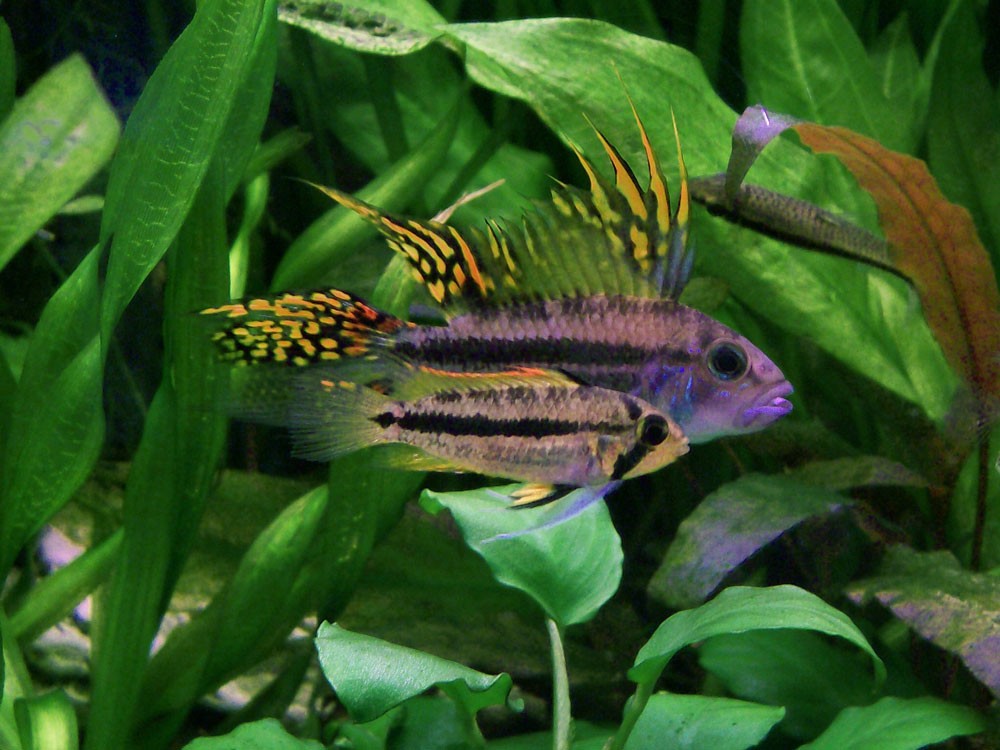
- Scientific Name: Various genera, such as Apistogramma, Mikrogeophagus, and Nanochromis
- Care Level: Moderate to Experienced
- Temperament: Can vary, but many species are peaceful if kept in appropriate conditions
- Swimming Level: Middle to Bottom
- Origin: South America, West Africa
- Adult Size: Varies depending on species, but most are 2 to 4 inches (5 to 10 cm)
- Minimum Tank Size: 20 gallons (75 liters) or larger, depending on the species
- Water Temperature: 72°F to 82°F (22°C to 28°C)
- pH: 6.0 to 7.5
Don't let their size fool you. These small, colorful fish are full of personality and are a pleasure to care for. Dwarf Cichlids can add a splash of color and a whole lot of character to your tank.
Pros:
- Stunning colors and intricate patterns, adding a visual delight to the tank.
- Generally peaceful and suitable for community tanks, especially when kept with compatible tank mates.
- Display interesting behaviors, including courtship rituals and parental care.
Cons:
- Some species can be territorial, especially during breeding and spawning periods.
- Require appropriate hiding spots and plenty of vegetation for a sense of security.
- Water parameters need to match their specific needs, including soft and slightly acidic conditions.
Tetras

- Scientific Name: Various species, including Hyphessobrycon, Hemigrammus, and Paracheirodon
- Care Level: Easy to Moderate
- Temperament: Generally peaceful and best kept in groups
- Swimming Level: Middle
- Origin: South America
- Adult Size: Varies depending on species, but most are around 1 to 3 inches (2.5 to 7.5 cm)
- Minimum Tank Size: 10 gallons (38 liters) or larger for a small group
- Water Temperature: 72°F to 82°F (22°C to 28°C)
- pH: 5.5 to 7.5
These small, schooling fish are the epitome of unity. Watch a group of Tetras glide through the water, and you'll be reminded of an underwater ballet. Neon Tetras, with their vibrant blue and red stripes, are particularly dazzling.
Pros:
- Active and schooling fish, providing a lively display of synchronized swimming.
- Wide range of species and colors available, from the vibrant Neon Tetra to the striking Cardinal Tetra.
- Generally peaceful and suitable for community tanks.
Cons:
- Some tetra species can be fin nippers, particularly if not kept in large enough groups.
- Sensitive to water conditions, requiring stable water parameters and regular maintenance.
- Some larger tetra species may require a spacious tank to accommodate their active swimming habits.
Rainbowfish
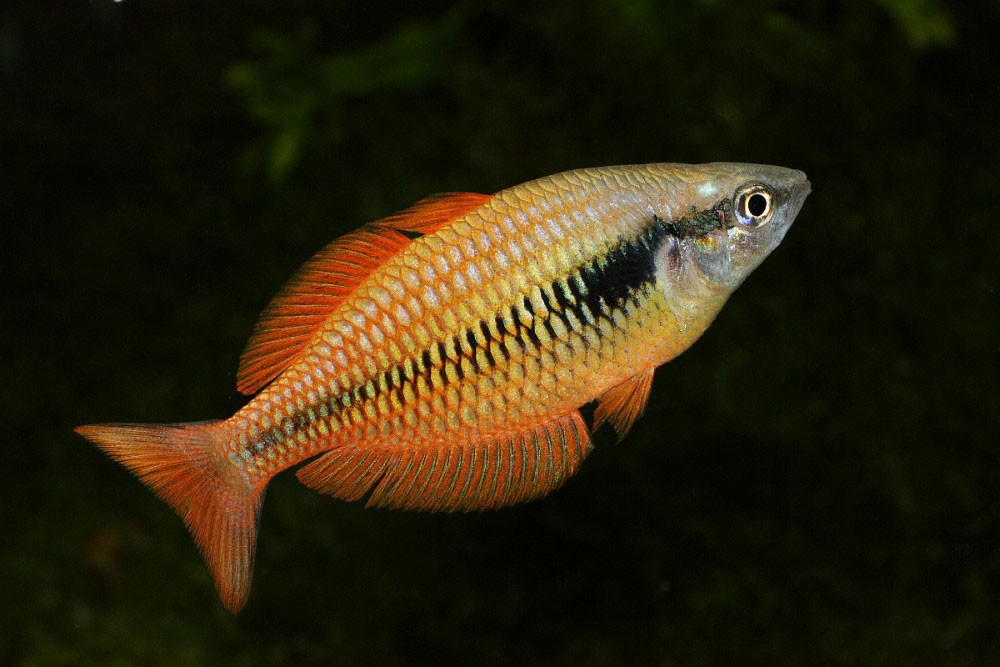
- Scientific Name: Various species, including Melanotaenia, Glossolepis, and Pseudomugil
- Care Level: Easy to Moderate
- Temperament: Generally peaceful and best kept in groups
- Swimming Level: Middle
- Origin: Australia, New Guinea, Southeast Asia
- Adult Size: Varies depending on species, but most are around 2 to 6 inches (5 to 15 cm)
- Minimum Tank Size: 20 gallons (75 liters) or larger, depending on the species
- Water Temperature: 72°F to 82°F (22°C to 28°C)
- pH: 6.5 to 8.0
Just as their name suggests, Rainbowfish are a burst of color in any aquarium setup. Native to Australia and New Guinea, these energetic swimmers require ample swimming space to really shine.
Pros:
- Dazzling colors and iridescent scales, resembling a shimmering rainbow.
- Active swimmers, adding movement and energy to the tank.
- Generally peaceful and suitable for community setups with compatible fish.
Cons:
- Some species can be prone to jumping, so a secure lid is necessary.
- Require a spacious tank with plenty of swimming space.
- Water parameters should be maintained within their preferred range for optimal health.
Freshwater Stingrays
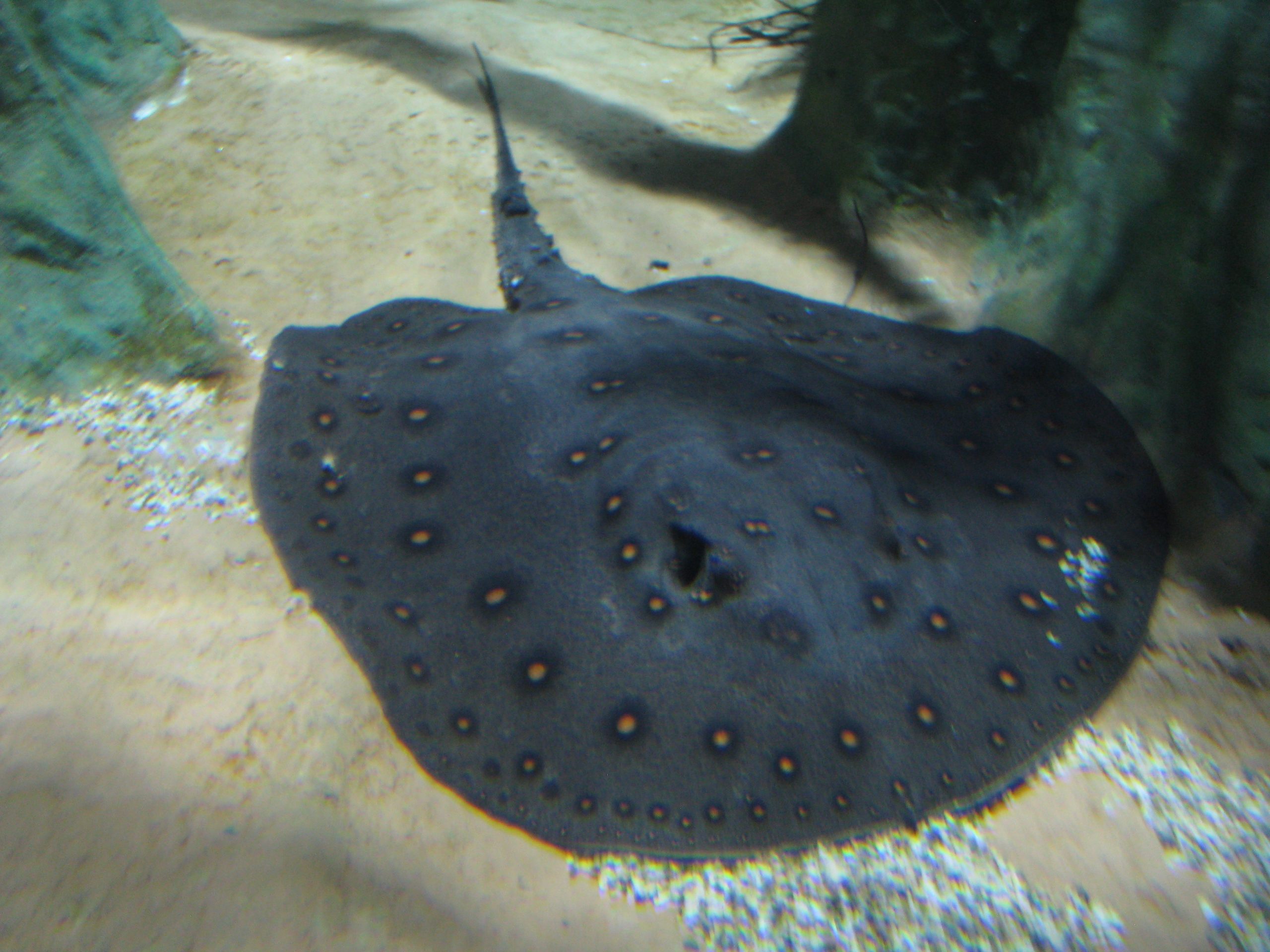
- Scientific Name: Potamotrygonidae family (e.g., Potamotrygon reticulatus)
- Care Level: Expert (Not recommended for beginners)
- Temperament: Generally peaceful, but can be predatory and require specific tankmates
- Swimming Level: Bottom
- Origin: South America (Amazon River basin)
- Adult Size: Varies depending on species, but most are around 12 to 18 inches (30 to 45 cm) or larger
- Minimum Tank Size: 180 gallons (680 liters) or larger for a young ray, larger as they grow
- Water Temperature: 76°F to 82°F (24°C to 28°C)
- pH: 6.5 to 7.5
These exotic creatures are truly one-of-a-kind with their flat, disk-shaped bodies and long, whip-like tails. They're not for the faint-hearted aquarist, though, as they require specialized care and have a mild venom in their tails.
Pros:
- Unique and mesmerizing appearance with their flat, disc-shaped bodies.
- Can be kept in specialized setups for enthusiasts seeking a distinctive challenge.
- Fascinating to observe as they glide across the substrate.
Cons:
- Stingrays require a large tank with a sandy substrate and strong filtration.
- Feeding can be challenging, as they prefer live or frozen foods.
- Stingrays possess venomous spines, requiring caution during handling and maintenance.
New World Cichlids
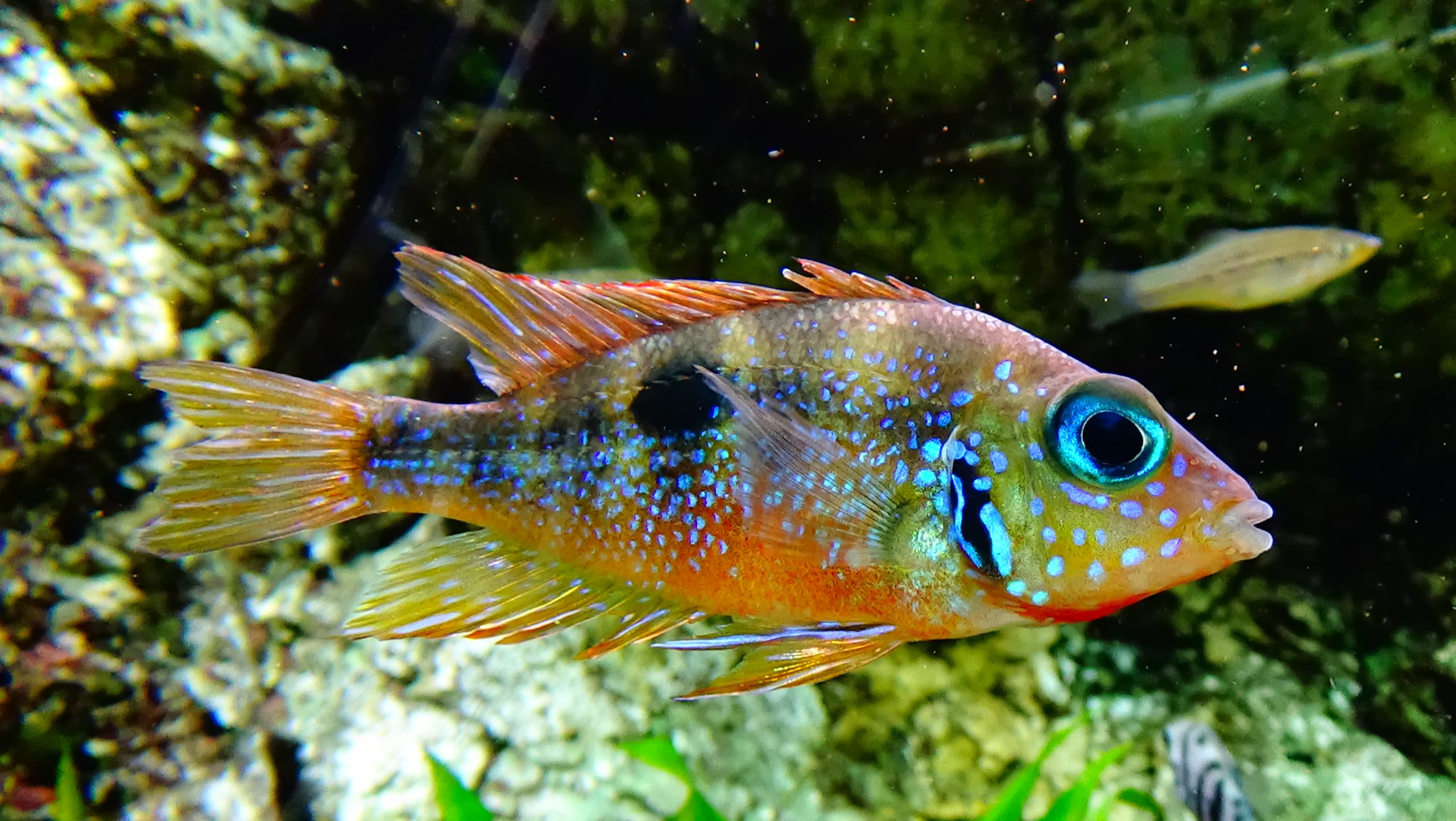
- Scientific Name: Various genera, including Heros, Vieja, and Thorichthys
- Care Level: Moderate to Experienced
- Temperament: Can vary, but many species can be aggressive and territorial
- Swimming Level: Middle to Bottom
- Origin: Central and South America
- Adult Size: Varies depending on species, but most are 3 to 8 inches (7.5 to 20 cm)
- Minimum Tank Size: 30 gallons (113 liters) or larger, depending on the species
- Water Temperature: 72°F to 82°F (22°C to 28°C)
- pH: 6.5 to 8.0
From the vibrant Discus to the entertaining Oscars, New World Cichlids offer a diverse range of fish each with unique characteristics. They're renowned for their intelligence and striking coloration.
Pros:
- Diverse range of species, sizes, and colors, offering a wide array of options.
- Fascinating behaviors, including elaborate courtship displays and parental care.
- Some species, such as the popular Angelfish and Discus, have become staple favorites in the hobby.
Cons:
- Some New World Cichlids can be territorial and aggressive, especially during spawning.
- Require adequate hiding spots and well-structured tank layouts.
- Water parameters should be maintained within their preferred ranges for optimal health and coloration.
Rasboras
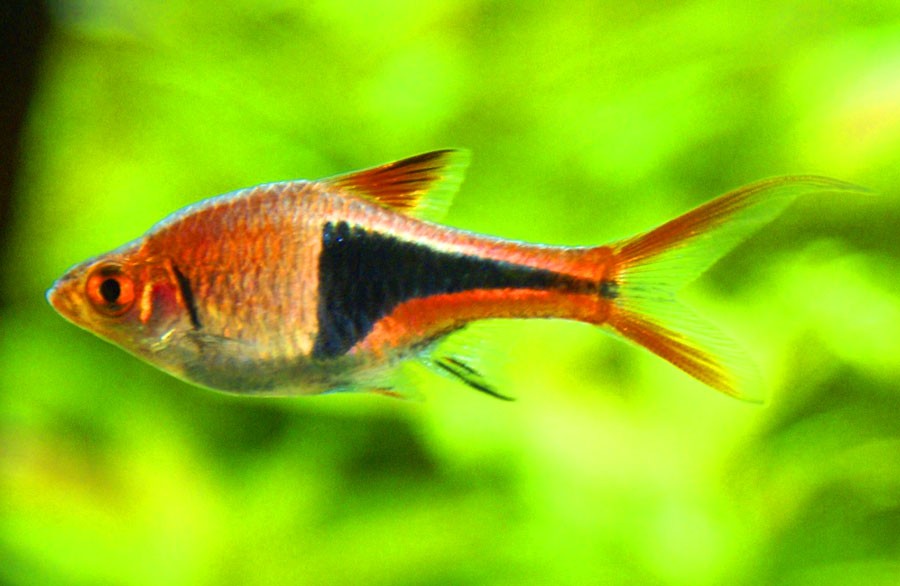
- Scientific Name: Various species, including Rasbora, Trigonostigma, and Boraras
- Care Level: Easy
- Temperament: Peaceful and best kept in groups
- Swimming Level: Middle
- Origin: Southeast Asia
- Adult Size: Varies depending on species, but most are around 1 to 2 inches (2.5 to 5 cm)
- Minimum Tank Size: 10 gallons (38 liters) or larger for a small group
- Water Temperature: 72°F to 82°F (22°C to 28°C)
- pH: 6.0 to 7.5
These small, peaceful schooling fish are ideal for community aquariums. Their vibrant colors and playful nature add a sense of life and movement to any setup.
Pros:
- Peaceful and active shoaling fish, creating a captivating display when kept in groups.
- Varied species with diverse colors, patterns, and sizes available.
- Compatible with a wide range of tank mates in community setups.
Cons:
- Sensitive to water quality, requiring regular maintenance and appropriate filtration.
- Some rasboras may be prone to stress if not kept in sufficient numbers.
- Certain species may be susceptible to fin nipping in aggressive tank environments.
Danios

- Scientific Name: Various species, including Danio, Devario, and Brachydanio
- Care Level: Easy
- Temperament: Active and peaceful, best kept in groups
- Swimming Level: Middle to Top
- Origin: South and Southeast Asia
- Adult Size: Varies depending on species, but most are around 1 to 3 inches (2.5 to 7.5 cm)
- Minimum Tank Size: 10 gallons (38 liters) or larger for a small group
- Water Temperature: 64°F to 75°F (18°C to 24°C)
- pH: 6.0 to 7.5
Ever-active and hardy, Danios are perfect for beginners. The Zebra Danio, with its striking horizontal stripes, is a particular favorite.
Pros:
- Active swimmers that add energy and movement to the tank.
- Hardy and adaptable, making them suitable for beginners.
- Wide range of species, colors, and patterns available.
Cons:
- Can be fin nippers, especially if kept in insufficient numbers or in aggressive environments.
- Appreciate ample swimming space, so a longer tank is preferred.
- Water parameters should be maintained within their preferred range for optimal health.
Catfish
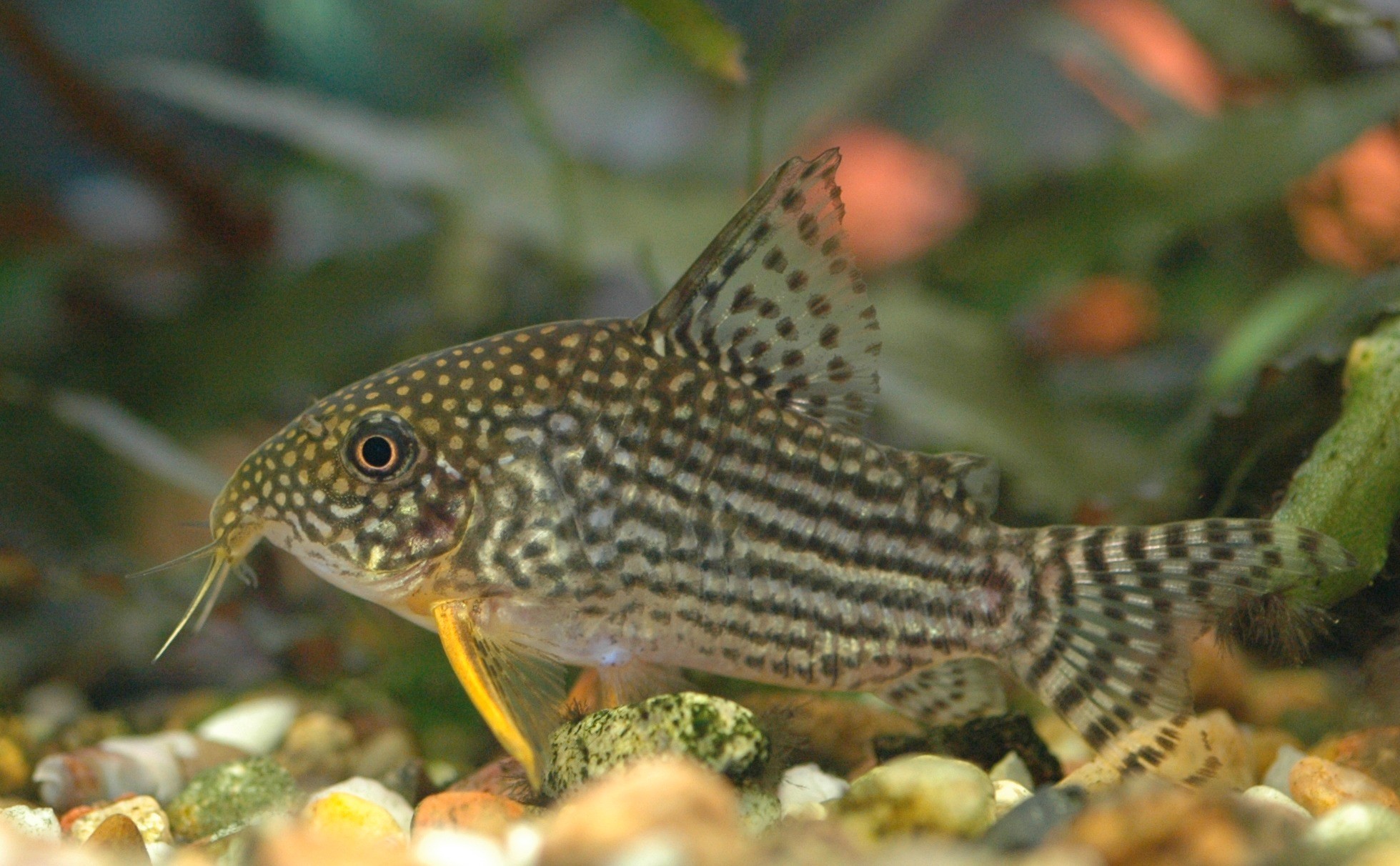
- Scientific Name: Various genera, including Corydoras, Synodontis, and Ancistrus
- Care Level: Easy to Moderate
- Temperament: Generally peaceful and best kept in groups (except for some predatory catfish)
- Swimming Level: Bottom
- Origin: Various regions around the world
- Adult Size: Varies depending on species, but most are 2 to 6 inches (5 to 15 cm)
- Minimum Tank Size: 20 gallons (75 liters) or larger, depending on the species
- Water Temperature: 72°F to 82°F (22°C to 28°C)
- pH: 6.5 to 7.5
A broad group with a variety of species, each unique in its own way. Some are tiny and peaceful, like the Corydoras Catfish, while others, like the Redtail Catfish, can grow to be quite large. All share a common trait - a love for bottom dwelling.
Pros:
- Wide variety of species with diverse sizes, colors, and patterns available.
- Excellent scavengers that help keep the tank clean by consuming leftover food and detritus.
- Many catfish species are peaceful and compatible with a wide range of tank mates.
Cons:
- Some catfish species can grow large and require spacious tanks.
- Certain species may be sensitive to water conditions, requiring specific care.
- Some catfish have sharp spines that can cause injuries if mishandled.
Killifish

- Scientific Name: Various species, including Fundulopanchax, Aphyosemion, and Nothobranchius
- Care Level: Moderate
- Temperament: Peaceful, but males can be territorial during breeding
- Swimming Level: Middle to Top
- Origin: Africa, South America, and Asia
- Adult Size: Varies depending on species, but most are around 2 to 3 inches (5 to 7.5 cm)
- Minimum Tank Size: 10 gallons (38 liters) or larger for a small group
- Water Temperature: 72°F to 78°F (22°C to 26°C)
- pH: 6.0 to 7.5
Known for their spectacular colors and patterns, Killifish are often considered the butterflies of the fish world. They're usually small, making them a perfect choice for nano tanks.
Pros:
- Stunning colors and intricate patterns, making them visually appealing.
- Many species are adaptable to a wide range of water parameters.
- Some killifish are known for their unique reproductive strategies, including annual and non-annual species.
Cons:
- Lifespan can be relatively short for annual species.
- Some killifish have specific dietary needs and may require live or frozen foods.
- Breeding can be challenging due to their unique reproductive behavior and specific environmental conditions required.
Freshwater Puffers
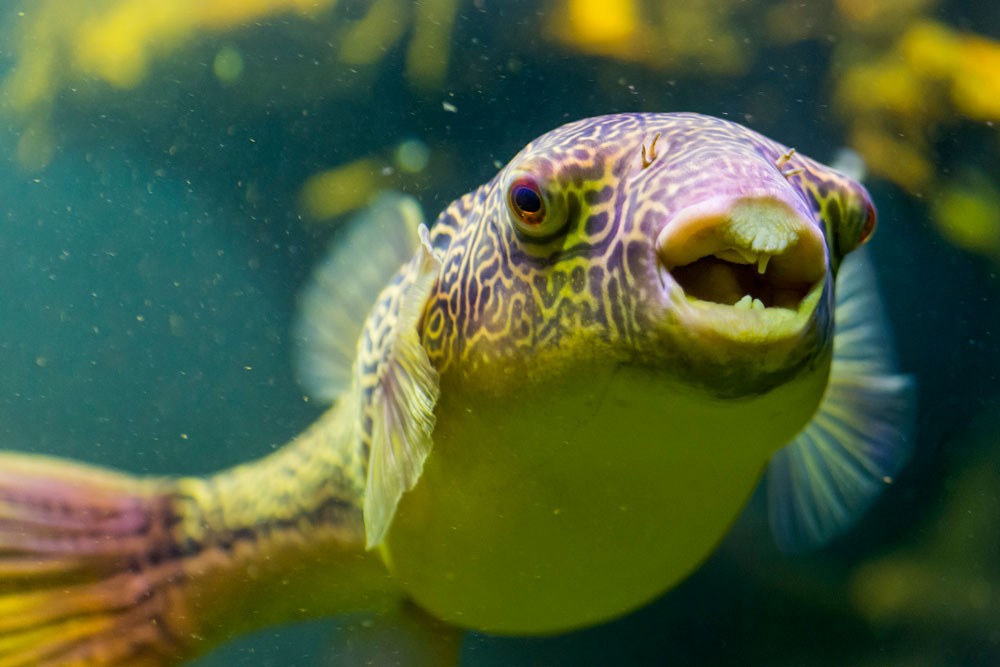
- Scientific Name: Various species, including Carinotetraodon, Tetraodon, and Colomesus
- Care Level: Moderate to Experienced
- Temperament: Can be aggressive and territorial
- Swimming Level: All levels
- Origin: Various regions around the world
- Adult Size: Varies depending on species, but most are around 1 to 6 inches (2.5 to 15 cm)
- Minimum Tank Size: 20 gallons (75 liters) or larger for a small group
- Water Temperature: 74°F to 82°F (23°C to 28°C)
- pH: 7.0 to 8.0
These are the entertainers of the aquarium world! With their curious nature and unique ability to inflate when threatened, Pufferfish are as intriguing as they come.
Pros:
- Unique and charismatic fish, known for their comical expressions and personalities.
- Fascinating behavior, including the ability to inflate themselves when threatened.
- Some species have intriguing dentition, such as the figure-eight puffer's beak-like teeth.
Cons:
- Require a carefully maintained tank with pristine water quality.
- Some species can be aggressive and may nip at the fins of tank mates.
- Diet may include live or frozen foods, including snails and crustaceans.
Freshwater Eels
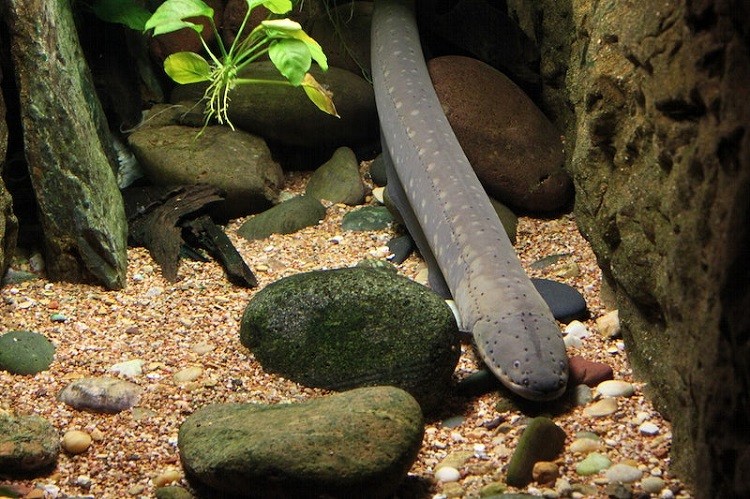
- Scientific Name: Various species, including Gymnothorax, Anguilla, and Macrognathus
- Care Level: Moderate to Experienced
- Temperament: Can be peaceful or aggressive, depending on the species
- Swimming Level: Bottom
- Origin: Various regions around the world
- Adult Size: Varies depending on species, but most are around 6 to 24 inches (15 to 60 cm) or larger
- Minimum Tank Size: 30 gallons (113 liters) or larger for a small species, larger for larger species
- Water Temperature: 74°F to 82°F (23°C to 28°C)
- pH: 6.5 to 7.5
Not quite the typical fish you'd think to add to your aquarium, but a fascinating addition nonetheless. These elongated, nocturnal creatures, like the Tire Track Eel, add a sense of mystery and intrigue to any tank.
Pros:
- Unique and elongated appearance, adding intrigue and curiosity to the tank.
- Some species, like the Fire Eel, exhibit captivating and graceful swimming behavior.
- Can be fascinating to observe as they explore their surroundings.
Cons:
- Require a tank with a tightly fitting lid to prevent escapes.
- Can be sensitive to water conditions, requiring consistent monitoring and maintenance.
- Some species may outgrow smaller tanks as they reach maturity.
Discus
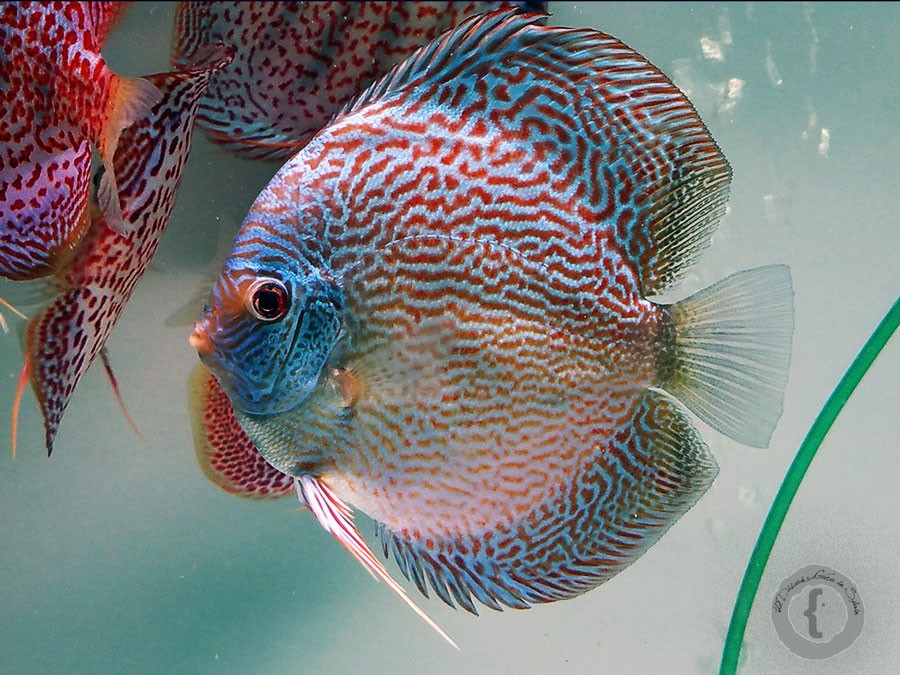
- Scientific Name: Symphysodon species (e.g., Symphysodon aequifasciatus, Symphysodon discus)
- Care Level: Moderate to Experienced
- Temperament: Generally peaceful, but can be sensitive to tank conditions
- Swimming Level: Middle
- Origin: South America (Amazon River basin)
- Adult Size: Varies depending on species, but most are around 6 to 8 inches (15 to 20 cm)
- Minimum Tank Size: 50 gallons (189 liters) or larger for a group
- Water Temperature: 82°F to 86°F (28°C to 30°C)
- pH: 6.0 to 7.5
Often referred to as the "king of the aquarium," Discus fish are renowned for their bright colors and regal presence. They do require a bit of extra care, but their stunning beauty is well worth the effort.
Pros:
- Stunning and vibrant colors, making them highly sought after in the hobby.
- Graceful swimming style and elegant shape, adding a touch of elegance to the tank.
- Display interesting behaviors, including parental care and complex social interactions.
Cons:
- Discus are considered more challenging to keep due to their specific water parameter requirements.
- Require a larger tank with stable water conditions and meticulous maintenance.
- Prone to stress-related diseases if kept in inappropriate conditions.
Molly
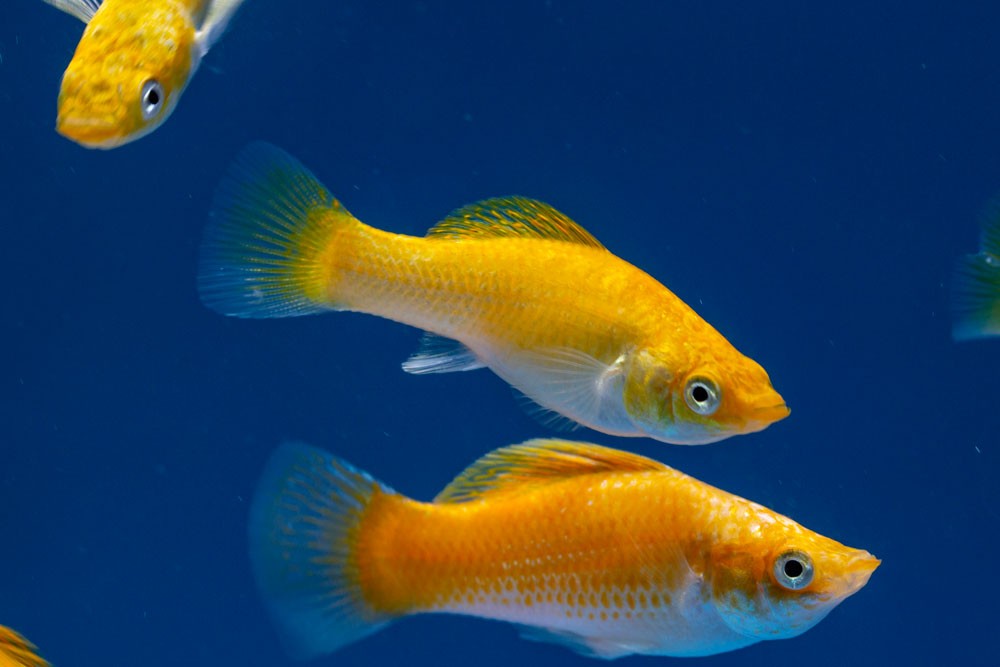
- Scientific Name: Poecilia species, including Poecilia sphenops and Poecilia latipinna
- Care Level: Easy
- Temperament: Peaceful, but can be semi-aggressive during breeding
- Swimming Level: Middle
- Origin: Central and South America
- Adult Size: Varies depending on species, but most are around 3 to 4 inches (7.5 to 10 cm)
- Minimum Tank Size: 20 gallons (75 liters) or larger for a small group
- Water Temperature: 70°F to 82°F (21°C to 28°C)
- pH: 7.0 to 8.5
These are the social butterflies of the aquarium. Mollies are livebearers, known for their peaceful nature and ease of care, making them a great choice for novice aquarists.
Pros:
- Wide range of colors and patterns available, including metallic and dalmatian varieties.
- Hardy and adaptable, making them suitable for beginners.
- Livebearers that can provide an interesting breeding experience.
Cons:
- Males can exhibit aggression towards each other and may harass females.
- Some varieties have a higher likelihood of developing health issues, such as swim bladder problems.
- Require a well-maintained tank with appropriate water conditions for optimal health.
Guppy
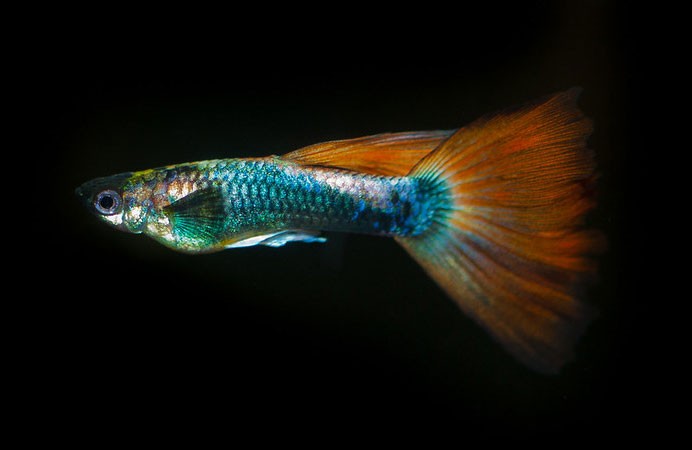
- Scientific Name: Poecilia reticulata
- Care Level: Easy
- Temperament: Peaceful
- Swimming Level: Middle to Top
- Origin: South America (Venezuela, Guyana)
- Adult Size: Males are around 1.2 to 1.6 inches (3 to 4 cm), females are around 2 to 2.4 inches (5 to 6 cm)
- Minimum Tank Size: 10 gallons (38 liters) or larger for a small group
- Water Temperature: 72°F to 82°F (22°C to 28°C)
- pH: 7.0 to 8.5
Oh, the humble Guppy! These vibrant, active little fish are livebearers, often seen darting joyfully around the tank. Their splendid tail fin variations make each one uniquely beautiful.
Pros:
- Vibrant colors, intricate patterns, and flowing fins make them visually striking.
- Hardy and adaptable, making them ideal for beginners.
- Rapid breeders, providing a continuous supply of fry.
Cons:
- Males can exhibit aggression towards each other and may stress females.
- Inbreeding can lead to decreased health and genetic issues.
- Prone to specific diseases, such as fin rot and fungal infections.
Platy
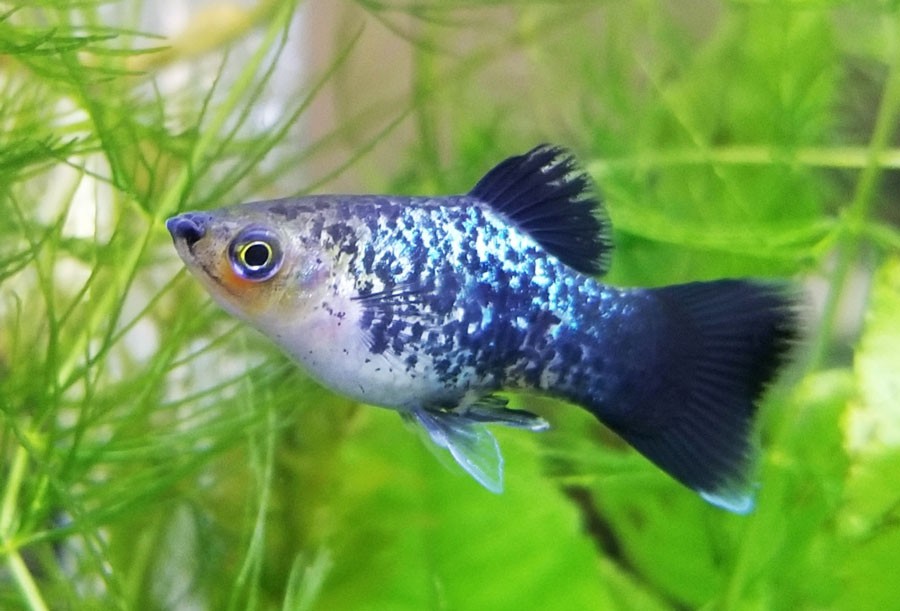
- Scientific Name: Xiphophorus maculatus
- Care Level: Easy
- Temperament: Peaceful
- Swimming Level: Middle
- Origin: Central America (Mexico, Guatemala, Honduras)
- Adult Size: 2.5 to 3 inches (6 to 7.5 cm)
- Minimum Tank Size: 10 gallons (38 liters) or larger for a small group
- Water Temperature: 70°F to 82°F (21°C to 28°C)
- pH: 7.0 to 8.5
Similar to Guppies and Mollies, Platies are livebearers that come in a variety of colors and patterns. They are peaceful, hardy, and perfect for community tanks.
Pros:
- Wide range of colors and patterns available, including solid colors and variegated varieties.
- Hardy and adaptable, making them suitable for beginners.
- Livebearers that can provide an interesting breeding experience.
Cons:
- Males can exhibit aggression towards each other and may harass females.
- Some varieties have a higher likelihood of developing health issues, such as swim bladder problems.
- Require a well-maintained tank with appropriate water conditions for optimal health.
Goldfish

- Scientific Name: Carassius auratus
- Care Level: Easy to Moderate
- Temperament: Peaceful, but produce a lot of waste
- Swimming Level: Middle to Top
- Origin: East Asia (China)
- Adult Size: Varies depending on species and variety, but most are around 4 to 8 inches (10 to 20 cm)
- Minimum Tank Size: 20 gallons (75 liters) or larger for a single fancy goldfish, much larger for comets or commons
- Water Temperature: 65°F to 78°F (18°C to 26°C)
- pH: 6.0 to 8.0
The iconic Goldfish. Often a person's first pet, these hardy fish are more than just a bowl dweller. Given the right conditions, they can grow quite large and live for many years.
Pros:
- Recognizable and iconic fish, often associated with ornamental ponds and aquariums.
- Wide range of colors, body shapes, and fin variations available.
- Can develop unique personalities and form bonds with their owners.
Cons:
- Produce a significant amount of waste, necessitating powerful filtration and regular maintenance.
- Require spacious tanks with ample swimming space and a proper filtration system.
- Some goldfish species can grow quite large and may outgrow smaller setups.
Freshwater Gobies
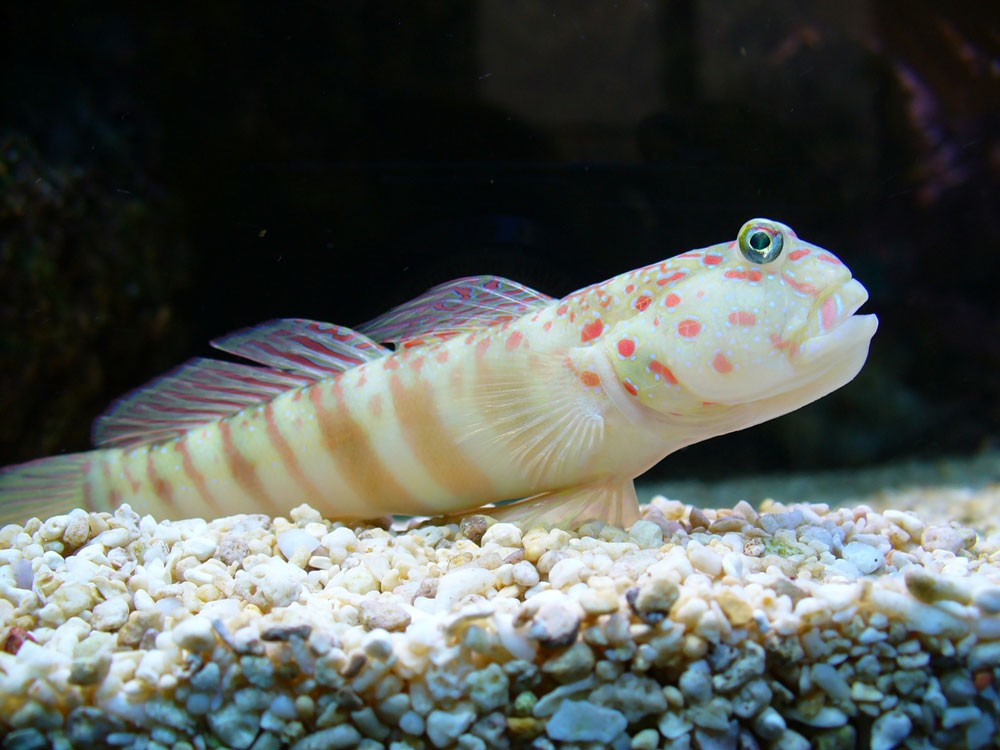
- Scientific Name: Various species, including Gobius, Stiphodon, and Rhinogobius
- Care Level: Easy to Moderate
- Temperament: Generally peaceful
- Swimming Level: Bottom to Middle
- Origin: Various regions around the world
- Adult Size: Varies depending on species, but most are around 1 to 4 inches (2.5 to 10 cm)
- Minimum Tank Size: 10 gallons (38 liters) or larger for a small group
- Water Temperature: 72°F to 78°F (22°C to 26°C)
- pH: 7.0 to 8.0
These quirky bottom-dwellers, with their fused pelvic fins, use suction to adhere to rocks and glass. They're fascinating to watch and can add an interesting dynamic to your tank.
Pros:
- Fascinating and unique appearance, with a wide variety of species available.
- Many gobies are peaceful and suitable for community tanks.
- Exhibit interesting behaviors, such as burrowing or clinging to surfaces.
Cons:
- Some gobies have specific habitat requirements, such as sandy substrate or rocky formations.
- Can be sensitive to water quality and may require consistent monitoring and maintenance.
- Some species may be shy or reclusive, requiring appropriate hiding spots for their comfort.
Types Of Fish: Saltwater Fish
Now, let's set sail and meet our saltwater comrades.
Marine Angelfish
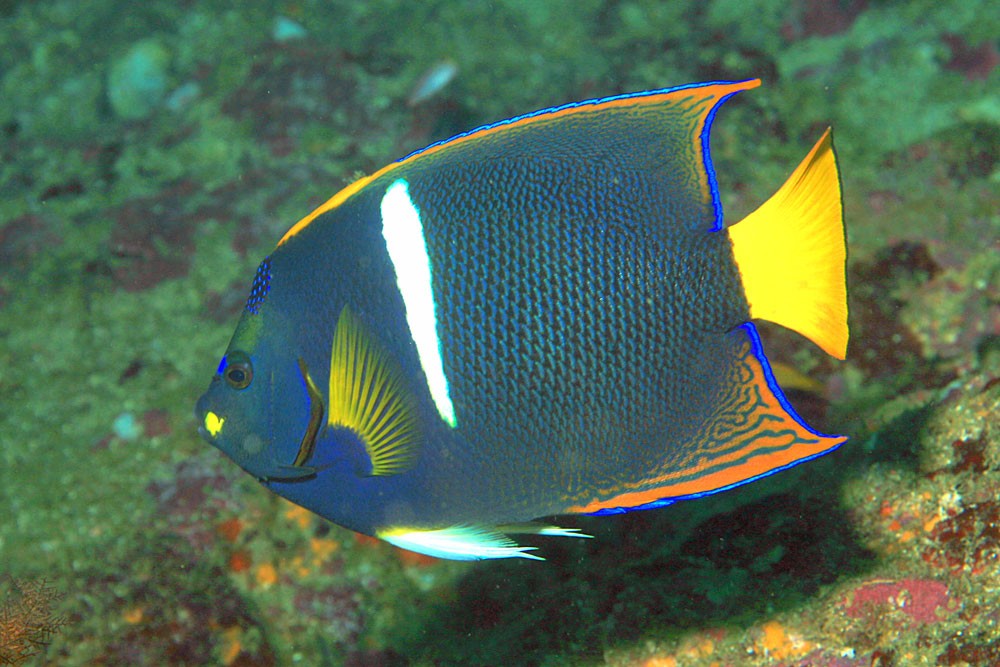
- Scientific Name: Various species, including Pomacanthus, Centropyge, and Holacanthus
- Care Level: Moderate to Experienced
- Temperament: Can be territorial and aggressive towards similar species
- Swimming Level: Middle to Top
- Origin: Various tropical and subtropical regions in the world's oceans
- Adult Size: Varies depending on species, but most are around 4 to 12 inches (10 to 30 cm)
- Minimum Tank Size: 70 gallons (265 liters) or larger, depending on the species
- Water Temperature: 72°F to 82°F (22°C to 28°C)
- pH: 8.1 to 8.4
These are truly the aristocrats of the marine aquarium. With their elegant, flattened bodies and vibrant patterns, Marine Angelfish add a touch of class and color to any saltwater setup.
Pros:
- Stunning and vibrant colors make them visually captivating.
- Unique and elegant body shapes, adding grace to the tank.
- Can become the centerpiece of a well-maintained marine aquarium.
Cons:
- Some species can be territorial and aggressive towards other fish.
- Require larger tanks with ample swimming space.
- Prone to specific health issues, such as lateral line erosion.
Anthias
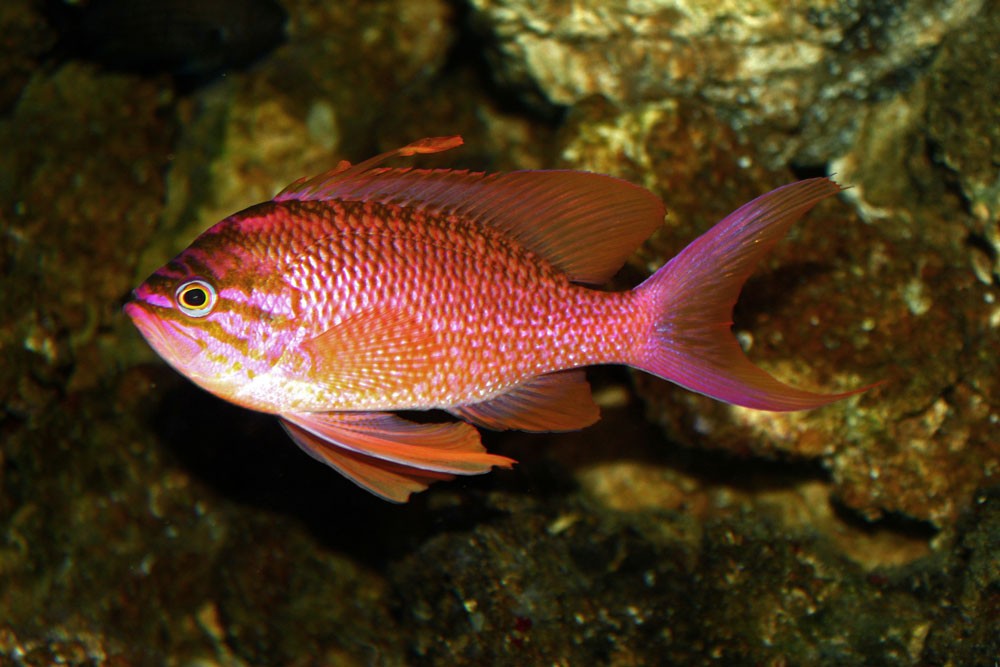
- Scientific Name: Various species, including Pseudanthias, Luzonichthys, and Nemanthias
- Care Level: Moderate to Experienced
- Temperament: Social and best kept in groups, can be timid or aggressive depending on species
- Swimming Level: Middle to Top
- Origin: Indo-Pacific region
- Adult Size: Varies depending on species, but most are around 2 to 4 inches (5 to 10 cm)
- Minimum Tank Size: 70 gallons (265 liters) or larger for a small group
- Water Temperature: 72°F to 80°F (22°C to 27°C)
- pH: 8.1 to 8.4
The dazzling Anthias are known for their vibrant hues and fascinating social structures. They're typically seen in large schools, making them a captivating spectacle as they move in unison.
Pros:
- Dazzling colors and unique social structures make them fascinating to observe.
- Active swimmers, adding energy and movement to the tank.
- Many species display sexual dimorphism, with males and females exhibiting different coloration.
Cons:
- Most Anthias are hermaphroditic, meaning they change sex within a social group.
- Require a well-established tank with stable water conditions.
- Can be challenging to feed, as they usually require a varied diet of live or frozen foods.
Basslets
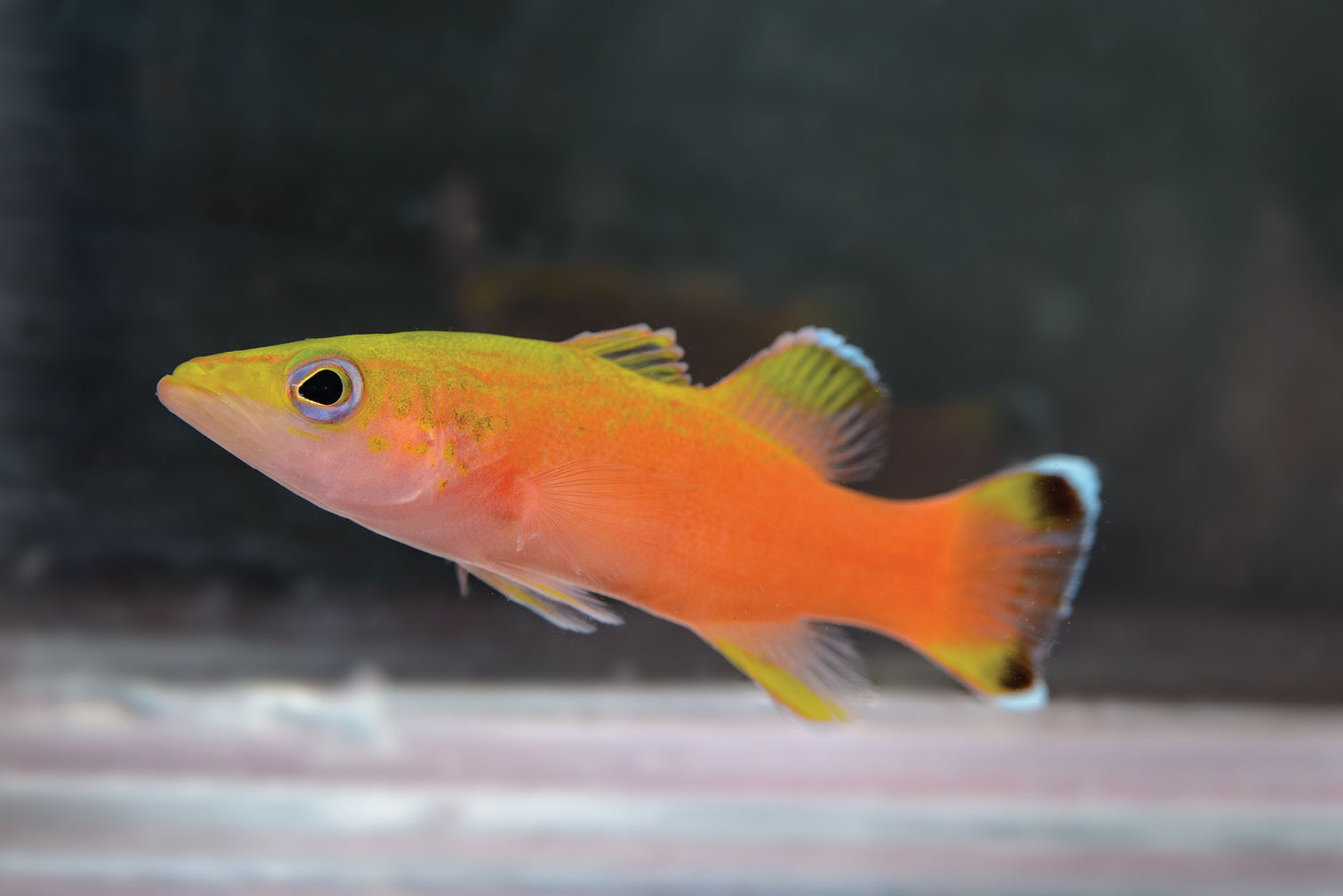
- Scientific Name: Various genera, including Liopropoma, Serranus, and Gramma
- Care Level: Easy to Moderate
- Temperament: Generally peaceful, but some species can be territorial
- Swimming Level: Middle to Bottom
- Origin: Caribbean Sea and tropical regions of the western Atlantic
- Adult Size: Varies depending on species, but most are around 2 to 4 inches (5 to 10 cm)
- Minimum Tank Size: 30 gallons (113 liters) or larger, depending on the species
- Water Temperature: 72°F to 80°F (22°C to 27°C)
- pH: 8.1 to 8.4
Small but mighty, Basslets are a joy to keep. Their compact size and bright colors make them a popular choice for reef tanks. They're also known for their hardiness and unique behaviors.
Pros:
- Vibrant colors and intricate patterns, making them visually striking.
- Suitable for both reef and fish-only marine setups.
- Many species are peaceful and can be kept in community tanks.
Cons:
- Some basslets may be territorial and aggressive towards similar species.
- Require appropriate hiding spots and plenty of swimming space.
- Sensitive to water quality, necessitating consistent monitoring and maintenance.
Blennies
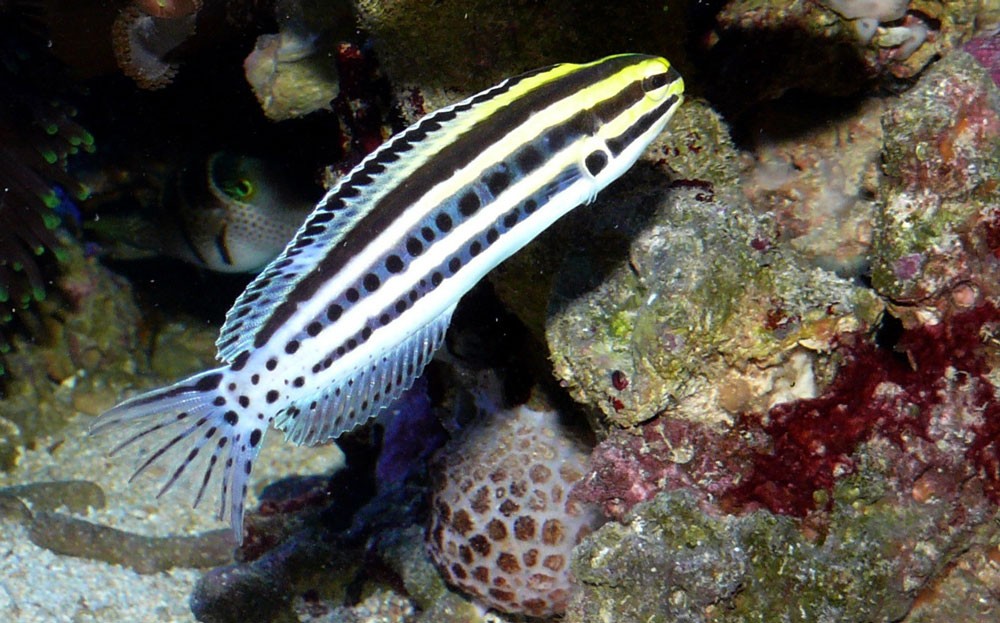
- Scientific Name: Various genera, including Meiacanthus, Ecsenius, and Salarias
- Care Level: Easy to Moderate
- Temperament: Generally peaceful, but some species can be territorial or aggressive
- Swimming Level: Bottom to Middle
- Origin: Various regions in tropical and subtropical oceans
- Adult Size: Varies depending on species, but most are around 2 to 6 inches (5 to 15 cm)
- Minimum Tank Size: 20 gallons (75 liters) or larger, depending on the species
- Water Temperature: 72°F to 80°F (22°C to 27°C)
- pH: 8.1 to 8.4
These quirky little fish are real characters. Blennies have a unique charm with their tentacled head, large eyes, and the comical way they perch on rocks and coral.
Pros:
- Unique appearance with comical expressions and interesting body shapes.
- Many species are excellent algae eaters, helping to control algae growth in the tank.
- Can be kept in smaller tanks and are generally peaceful.
Cons:
- Some blennies can be territorial and aggressive towards similar species.
- Certain species may jump out of uncovered tanks, requiring a secure lid.
- Sensitive to poor water quality and fluctuations in water parameters.
Gobies
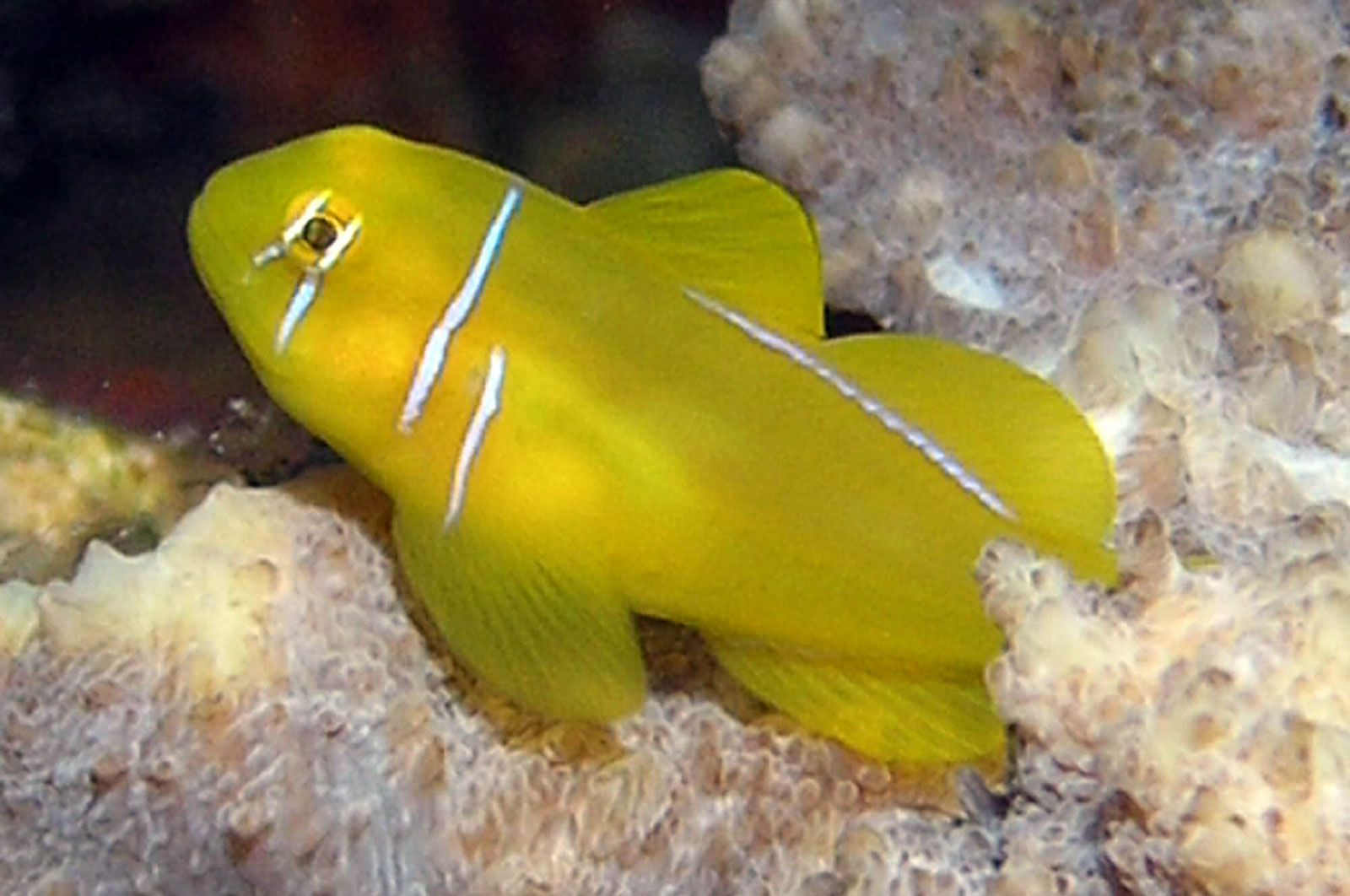
- Scientific Name: Various species, including Gobiodon, Stonogobiops, and Elacatinus
- Care Level: Easy to Moderate
- Temperament: Generally peaceful, some species are territorial and may form symbiotic relationships with other animals
- Swimming Level: Bottom to Middle
- Origin: Various regions in tropical and subtropical oceans
- Adult Size: Varies depending on species, but most are around 2 to 4 inches (5 to 10 cm)
- Minimum Tank Size: 10 gallons (38 liters) or larger for a small group
- Water Temperature: 72°F to 82°F (22°C to 28°C)
- pH: 8.1 to 8.4
One of the largest fish families, marine Gobies are a diverse group. From the sand-sifting Goby to the colorful Mandarin Goby, these fish are unique, useful, and a delight to observe.
Pros:
- Wide variety of species, each with its own unique behavior and appearance.
- Many species are beneficial, as they sift through sand and consume small invertebrates.
- Can be kept in smaller tanks, making them suitable for nano or reef setups.
Cons:
- Some gobies are territorial and may not tolerate other fish in their space.
- Certain species are jumpers, so a tank with a secure lid is necessary.
- Sensitive to poor water quality and require stable water conditions.
Butterflyfish
- Scientific Name: Various species, including Chaetodon, Heniochus, and Forcipiger
- Care Level: Moderate to Experienced
- Temperament: Can be territorial and aggressive towards similar species
- Swimming Level: Middle to Top
- Origin: Tropical and subtropical regions in the world's oceans
- Adult Size: Varies depending on species, but most are around 4 to 8 inches (10 to 20 cm)
- Minimum Tank Size: 70 gallons (265 liters) or larger, depending on the species
- Water Temperature: 72°F to 82°F (22°C to 28°C)
- pH: 8.1 to 8.4
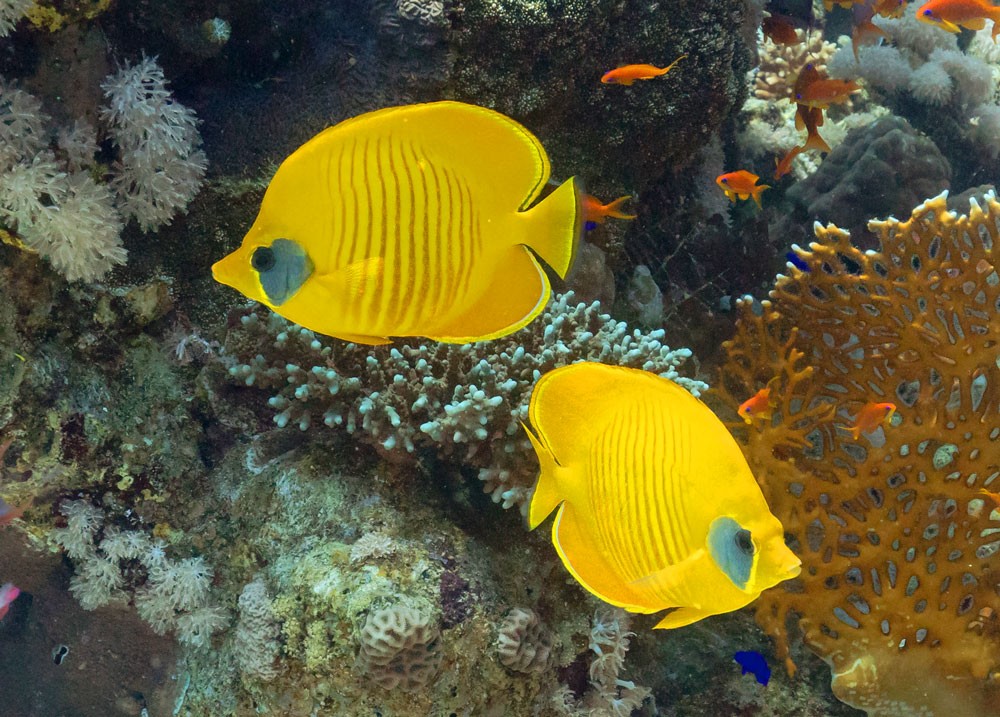
With their disc-shaped bodies and stunning color patterns, Butterflyfish are like floating works of art. They're known for their graceful swimming and are a favorite among reef hobbyists.
Pros:
- Exquisite and vibrant colors, making them highly desirable for marine enthusiasts.
- Graceful and elegant swimmers, adding beauty to the tank.
- Many species have interesting feeding behaviors, such as picking at coral polyps or sponges.
Cons:
- Some butterflyfish can be challenging to feed, as they have specialized dietary needs.
- Require larger tanks with plenty of swimming space and hiding spots.
- Some species may nip at corals or other sessile invertebrates.
Cardinalfish
- Scientific Name: Various genera, including Apogon, Sphaeramia, and Cheilodipterus
- Care Level: Easy to Moderate
- Temperament: Generally peaceful and best kept in groups
- Swimming Level: Middle to Bottom
- Origin: Indo-Pacific region and tropical oceans
- Adult Size: Varies depending on species, but most are around 2 to 4 inches (5 to 10 cm)
- Minimum Tank Size: 20 gallons (75 liters) or larger for a small group
- Water Temperature: 72°F to 80°F (22°C to 27°C)
- pH: 8.1 to 8.4
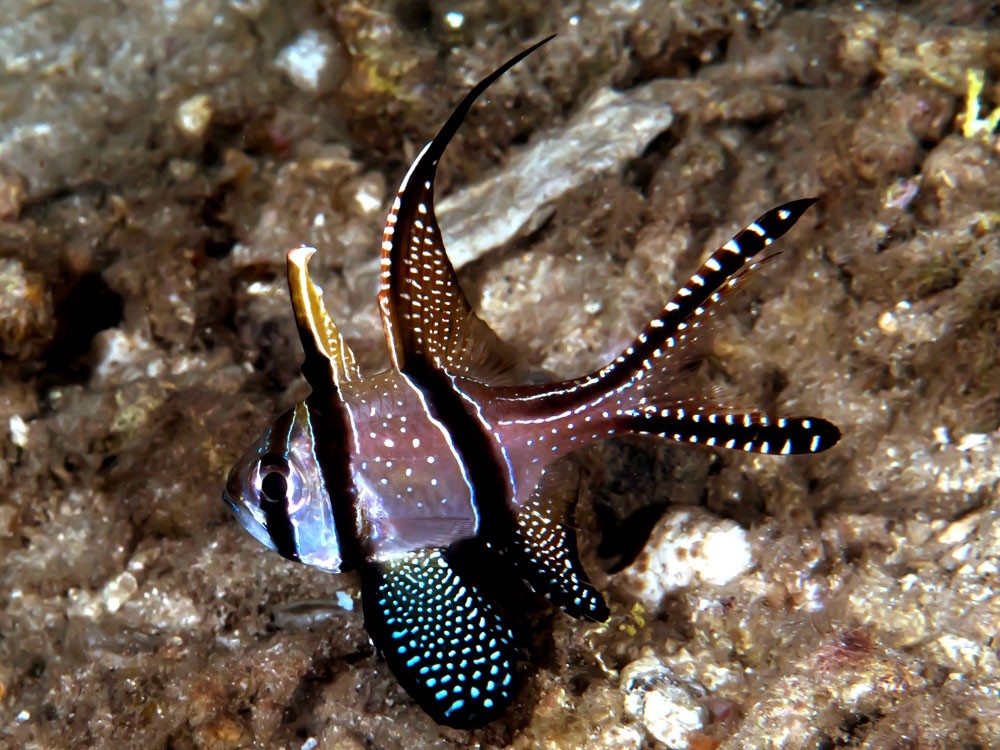
These nocturnal beauties really shine (quite literally!) when the lights go dim. Cardinalfish, especially the Pajama Cardinal, are peaceful, hardy, and add a unique dynamic to a tank.
Pros:
- Peaceful nature and schooling behavior, creating a captivating display in the tank.
- Many species are hardy and adaptable to a range of water conditions.
- Suitable for both reef and fish-only setups.
Cons:
- Sensitive to poor water quality, necessitating regular maintenance and water changes.
- Some species may be susceptible to diseases like Cryptocaryon (marine ich).
- Require appropriate hiding spots and dimly lit areas to feel secure.
Clownfish

- Scientific Name: Amphiprioninae family (e.g., Amphiprion ocellaris, Amphiprion percula)
- Care Level: Easy to Moderate
- Temperament: Generally peaceful, but can be territorial around their host anemone
- Swimming Level: Middle
- Origin: Indo-Pacific region, including the Red Sea and the Great Barrier Reef
- Adult Size: Varies depending on species, but most are around 2 to 4 inches (5 to 10 cm)
- Minimum Tank Size: 20 gallons (75 liters) or larger for a pair
- Water Temperature: 74°F to 82°F (23°C to 28°C)
- pH: 8.1 to 8.4
The stars of the show, thanks to a certain animated movie! Clownfish, like the popular Orange Clownfish, are known for their symbiotic relationship with anemones. They're hardy, active, and full of personality.
Pros:
- Iconic and beloved marine fish, thanks to their association with popular culture.
- Fascinating behaviors, including the symbiotic relationship with anemones.
- Hardy and adaptable, making them suitable for beginners and experienced hobbyists alike.
Cons:
- Some clownfish can be territorial and aggressive, especially when establishing their territory.
- May not host or associate with all types of anemones, leading to compatibility challenges.
- Sensitive to poor water quality and fluctuations in water parameters.
Damselfish
- Scientific Name: Various genera, including Chromis, Dascyllus, and Chrysiptera
- Care Level: Easy to Moderate
- Temperament: Can be territorial and aggressive, especially during breeding
- Swimming Level: Middle to Bottom
- Origin: Indo-Pacific region and tropical oceans
- Adult Size: Varies depending on species, but most are around 2 to 4 inches (5 to 10 cm)
- Minimum Tank Size: 30 gallons (113 liters) or larger for a small group
- Water Temperature: 72°F to 80°F (22°C to 27°C)
- pH: 8.1 to 8.4
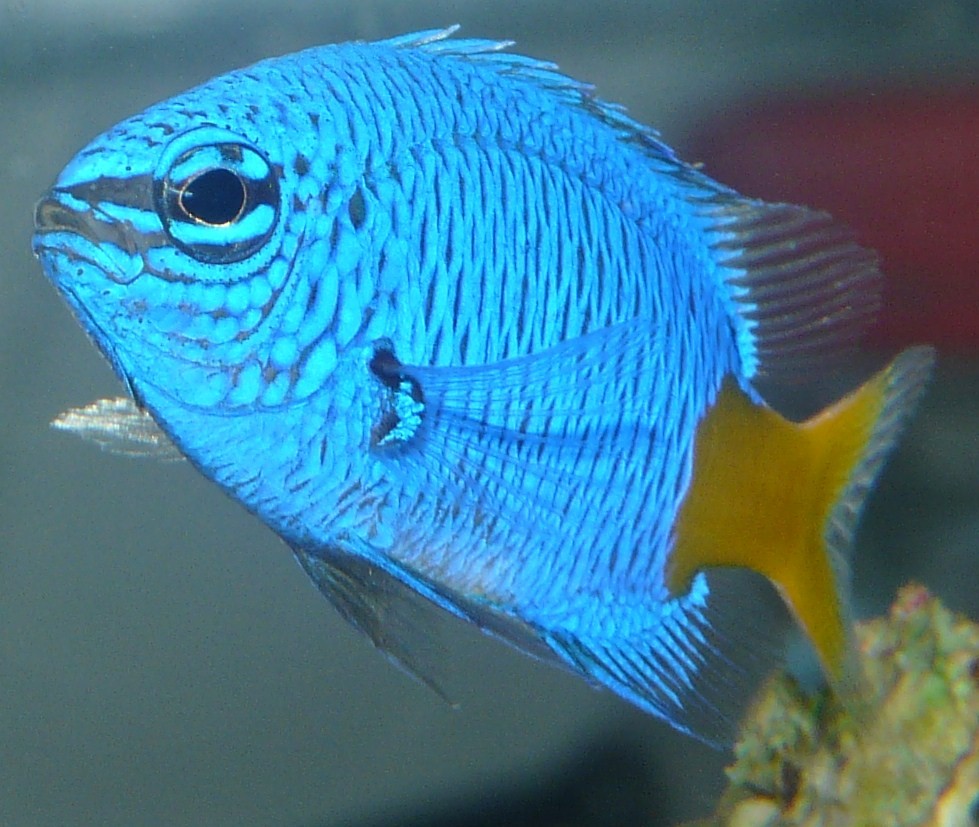
These small, vibrant fish are known for their feisty nature. Damselfish, like the striking Blue Damselfish, can bring a splash of color to any marine tank.
Pros:
- Wide range of colors and patterns available, adding visual appeal to the tank.
- Hardy and adaptable, making them suitable for beginners.
- Some species display interesting behaviors, including territorial defense and nest building.
Cons:
- Some damselfish can be highly territorial and aggressive towards tank mates.
- May nip at the fins of other fish, particularly in smaller tanks.
- Can be prone to stress-related diseases if kept in inappropriate conditions.
Tangs
- Scientific Name: Various species, including Zebrasoma, Paracanthurus, and Acanthurus
- Care Level: Moderate to Experienced
- Temperament: Can be aggressive, especially towards similar species
- Swimming Level: Middle to Top
- Origin: Indo-Pacific region and tropical oceans
- Adult Size: Varies depending on species, but most are around 6 to 12 inches (15 to 30 cm)
- Minimum Tank Size: 125 gallons (473 liters) or larger, depending on the species
- Water Temperature: 72°F to 80°F (22°C to 27°C)
- pH: 8.1 to 8.4
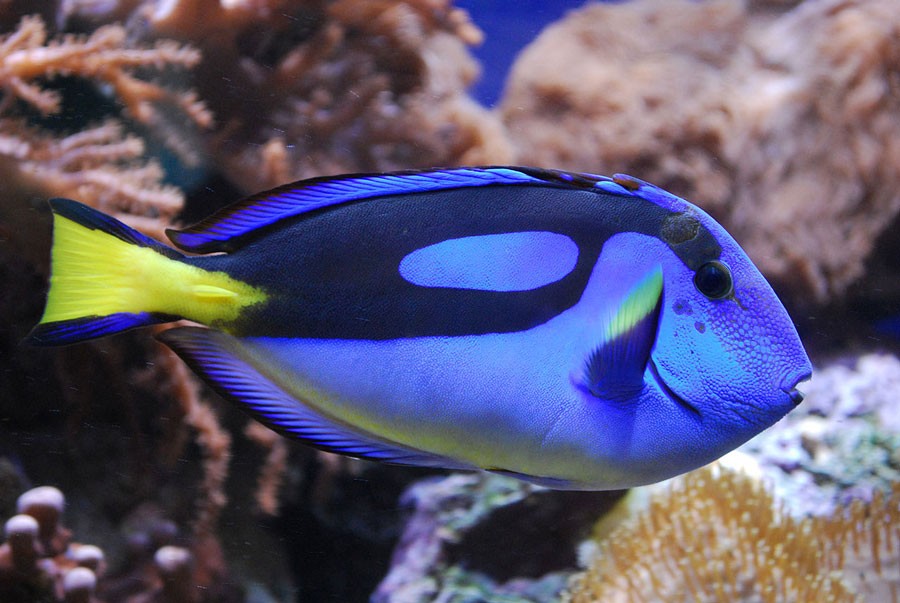
Remember Dory from "Finding Nemo"? That's a Blue Tang! Tangs are known for their laterally compressed bodies, vibrant colors, and the signature 'tang' or spine on their tail.
Pros:
- Vibrant colors and striking patterns, making them visually captivating.
- Many species are efficient algae grazers, helping to control algae growth in the tank.
- Active swimmers, adding energy and movement to the tank.
Cons:
- Some tangs are prone to aggression and may not tolerate conspecifics.
- Require larger tanks with plenty of swimming space and territories.
- Can be sensitive to poor water quality and fluctuations in water parameters.
Rabbitfish
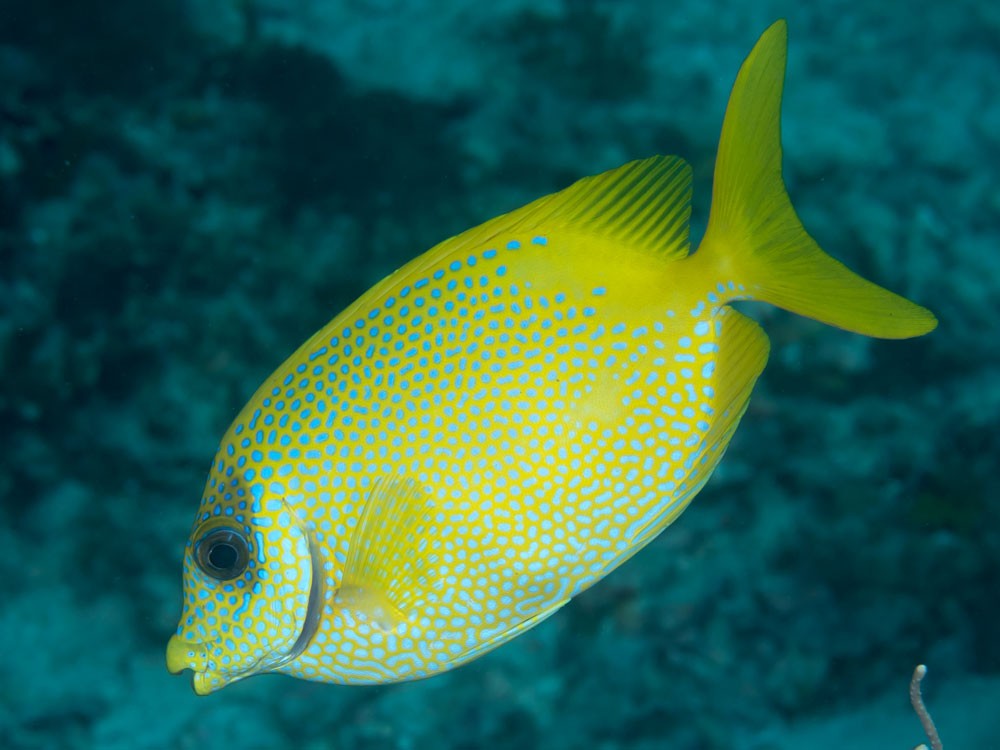
- Scientific Name: Various genera, including Siganus, Sigan, and Lo
- Care Level: Easy to Moderate
- Temperament: Generally peaceful, but some species can be territorial
- Swimming Level: Middle to Bottom
- Origin: Indo-Pacific region and tropical oceans
- Adult Size: Varies depending on species, but most are around 4 to 8 inches (10 to 20 cm)
- Minimum Tank Size: 70 gallons (265 liters) or larger, depending on the species
- Water Temperature: 72°F to 80°F (22°C to 27°C)
- pH: 8.1 to 8.4
Named for their rabbit-like faces, these fish are peaceful grazers, perfect for keeping algae under control in a marine setup. Just watch out for their venomous spines!
Pros:
- Unique and distinctive appearance, often with a peaceful demeanor.
- Many species are excellent algae eaters, aiding in maintaining a clean and healthy tank.
- Can be kept in both reef and fish-only setups.
Cons:
- Some rabbitfish have venomous spines on their dorsal, anal, and pelvic fins.
- Require a well-maintained tank with ample hiding spots and suitable tank mates.
- May be sensitive to certain medications and water treatments.
Pufferfish
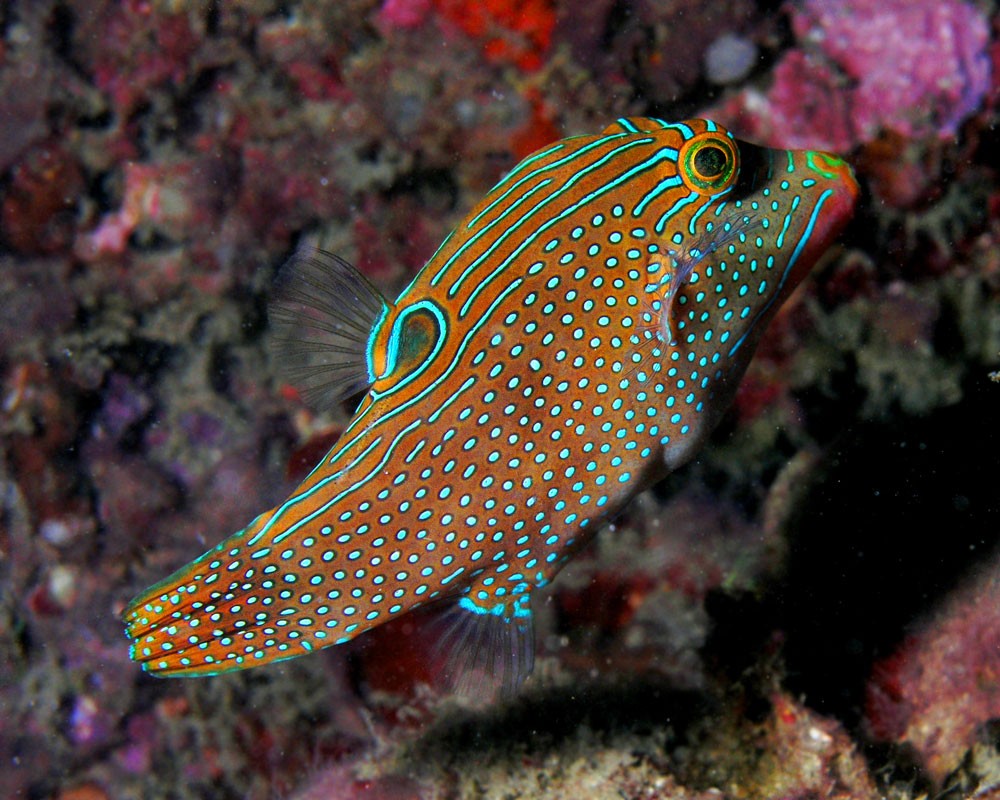
- Scientific Name: Various species, including Arothron, Canthigaster, and Tetraodon
- Care Level: Moderate to Experienced
- Temperament: Can be aggressive and territorial, some are venomous
- Swimming Level: Middle to Bottom
- Origin: Indo-Pacific region and tropical oceans
- Adult Size: Varies depending on species, but most are around 3 to 12 inches (8 to 30 cm)
- Minimum Tank Size: 50 gallons (189 liters) or larger, depending on the species
- Water Temperature: 72°F to 80°F (22°C to 27°C)
- pH: 8.1 to 8.4
These whimsical marine creatures are known for their ability to inflate when threatened. Pufferfish, with their expressive eyes and unique shapes, are a delight to watch.
Pros:
- Quirky and comical appearance, making them highly entertaining to watch.
- Fascinating behavior, including the ability to inflate themselves when threatened.
- Many species are hardy and adaptable to a range of water conditions.
Cons:
- Most pufferfish require a species-specific setup due to their specialized needs.
- Some pufferfish can be aggressive and may nip at the fins of other tank mates.
- Certain species may require a varied diet of live or frozen foods.
Triggerfish
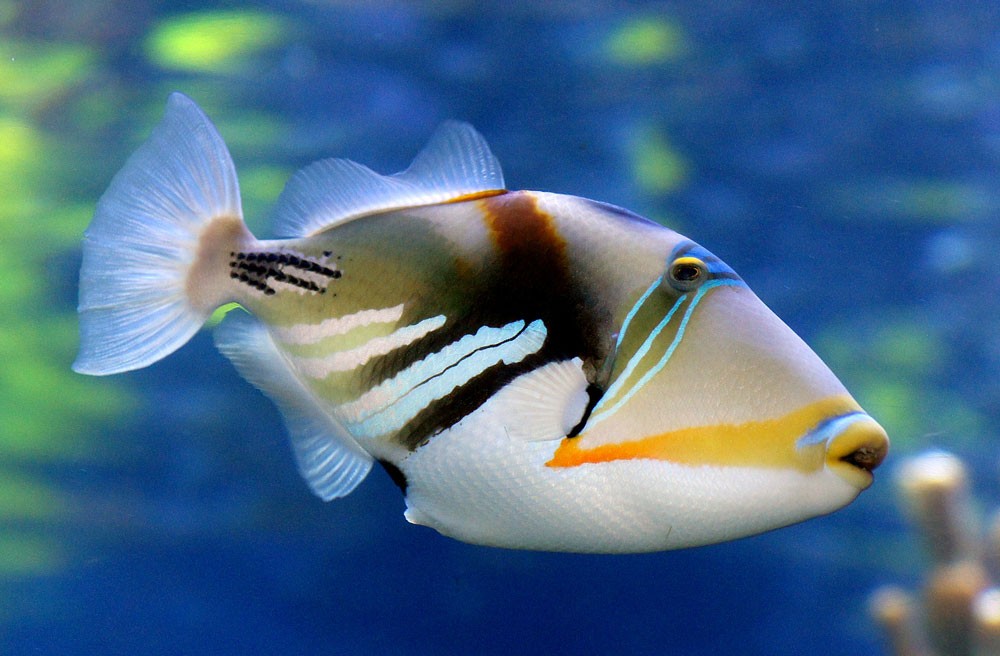
- Scientific Name: Various genera, including Balistoides, Rhinecanthus, and Xanthichthys
- Care Level: Moderate to Experienced
- Temperament: Can be aggressive and territorial, especially during breeding
- Swimming Level: Middle to Bottom
- Origin: Indo-Pacific region and tropical oceans
- Adult Size: Varies depending on species, but most are around 6 to 12 inches (15 to 30 cm)
- Minimum Tank Size: 100 gallons (378 liters) or larger, depending on the species
- Water Temperature: 72°F to 80°F (22°C to 27°C)
- pH: 8.1 to 8.4
With their strong jaws and unique swimming style, Triggerfish are truly one-of-a-kind. Many species, like the Picasso Triggerfish, boast beautiful color patterns.
Pros:
- Unique appearance and distinct behaviors, making them captivating to observe.
- Many species have vibrant colors and interesting patterns.
- Hardy and adaptable, suitable for a variety of marine setups.
Cons:
- Some triggerfish can be aggressive and territorial, especially towards similar species.
- Require larger tanks with plenty of swimming space and suitable hiding spots.
- Can be prone to certain health issues, such as ich and marine velvet.
Lionfish
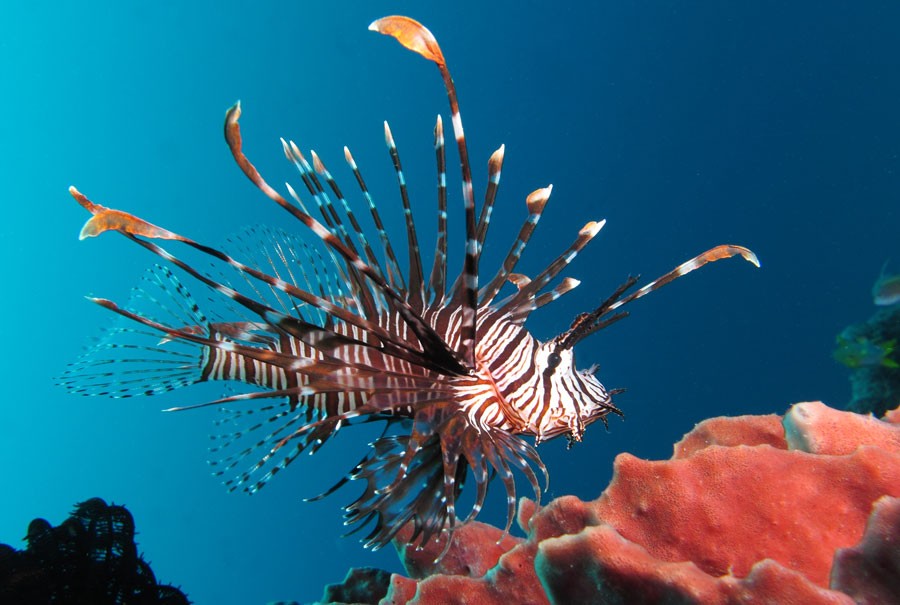
- Scientific Name: Various species, including Pterois, Dendrochirus, and Pteropterus
- Care Level: Moderate to Experienced
- Temperament: Venomous spines, can be aggressive and predatory
- Swimming Level: Middle to Bottom
- Origin: Indo-Pacific region and tropical oceans
- Adult Size: Varies depending on species, but most are around 6 to 15 inches (15 to 38 cm)
- Minimum Tank Size: 100 gallons (378 liters) or larger, depending on the species
- Water Temperature: 72°F to 80°F (22°C to 27°C)
- pH: 8.1 to 8.4
Exotic and dangerous, the Lionfish is a head-turner. With their venomous spines and bold stripes, they're a spectacular sight, but require careful handling.
Pros:
- Striking and dramatic appearance, with flowing fins and venomous spines.
- Command attention as a centerpiece fish in a properly maintained marine aquarium.
- Can be a fascinating addition for experienced marine enthusiasts.
Cons:
- Lionfish have venomous spines that can cause painful stings, requiring caution during handling.
- Require larger tanks with appropriate hiding spots and rock formations.
- Feeding can be challenging, as they typically require a diet of live or frozen foods.
Groupers
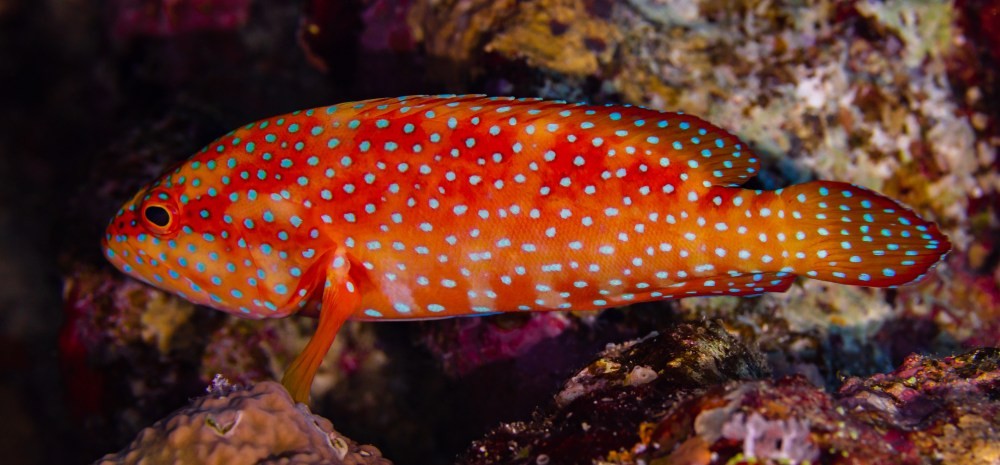
- Scientific Name: Various genera, including Epinephelus, Cephalopholis, and Mycteroperca
- Care Level: Moderate to Experienced
- Temperament: Predatory and can be aggressive, not suitable for all tankmates
- Swimming Level: Bottom
- Origin: Tropical and subtropical regions in the world's oceans
- Adult Size: Varies depending on species, but most are around 12 to 24 inches (30 to 60 cm) or larger
- Minimum Tank Size: 180 gallons (680 liters) or larger, depending on the species
- Water Temperature: 72°F to 80°F (22°C to 27°C)
- pH: 8.1 to 8.4
These are the gentle giants of the marine world. Groupers can grow quite large, and their wide mouths allow them to swallow prey whole!
Pros:
- Impressive size and commanding presence, adding a sense of grandeur to the tank.
- Fascinating behaviors, such as ambush hunting and mouthbrooding in certain species.
- Can be kept as a centerpiece fish in large, well-filtered marine setups.
Cons:
- Most groupers grow large and require spacious tanks to accommodate their size.
- Some species are aggressive and may prey on smaller tank mates.
- Prone to certain health issues, such as bacterial infections and parasitic diseases.
Hawkfish
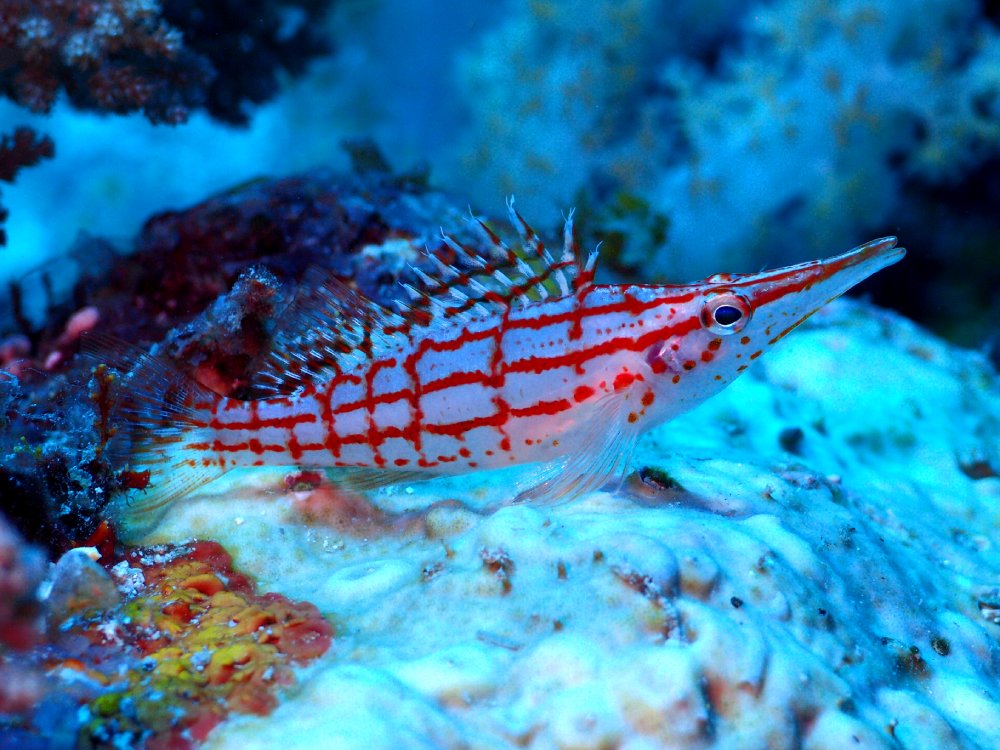
- Scientific Name: Various genera, including Cirrhitichthys, Paracirrhites, and Amblycirrhites
- Care Level: Easy to Moderate
- Temperament: Generally peaceful, but some species can be territorial
- Swimming Level: Middle to Top
- Origin: Indo-Pacific region and tropical oceans
- Adult Size: Varies depending on species, but most are around 2 to 6 inches (5 to 15 cm)
- Minimum Tank Size: 30 gallons (113 liters) or larger, depending on the species
- Water Temperature: 72°F to 80°F (22°C to 27°C)
- pH: 8.1 to 8.4
These intriguing fish get their name from their bird-like hunting style. Perched on high vantage points, Hawkfish keep a close eye on potential prey. They are known for their bright colors and striking patterns.
Pros:
- Unique appearance with perching behaviors, resembling a bird of prey.
- Generally peaceful and suitable for reef and fish-only setups.
- Can add a touch of character and charm to the tank.
Cons:
- Some hawkfish can be territorial and may not tolerate other hawkfish or similar species.
- Require a well-structured tank with plenty of hiding spots and suitable tank mates.
- May leap out of uncovered tanks, so a secure lid is necessary.
Wrasses
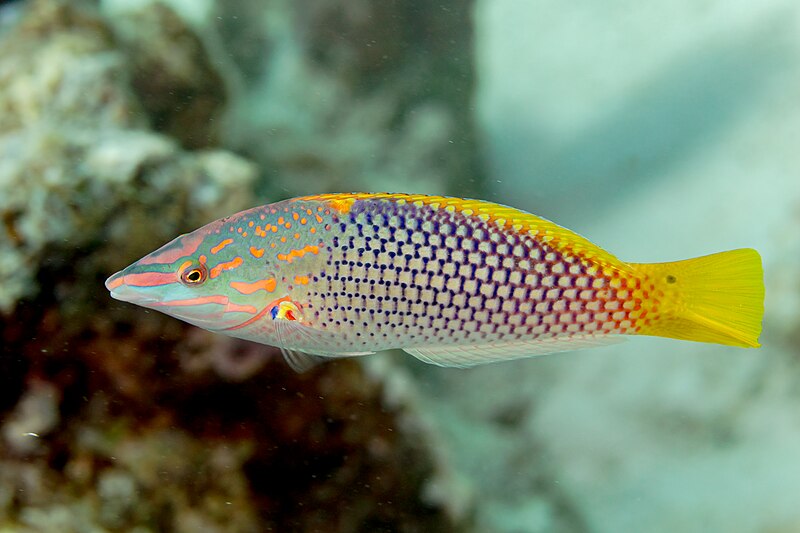
- Scientific Name: Various genera, including Halichoeres, Labroides, and Thalassoma
- Care Level: Easy to Moderate
- Temperament: Generally peaceful, but some species can be territorial or aggressive
- Swimming Level: Middle to Bottom
- Origin: Indo-Pacific region and tropical oceans
- Adult Size: Varies depending on species, but most are around 3 to 6 inches (7.5 to 15 cm)
- Minimum Tank Size: 30 gallons (113 liters) or larger, depending on the species
- Water Temperature: 72°F to 80°F (22°C to 27°C)
- pH: 8.1 to 8.4
The wrasses are a diverse group, boasting a plethora of colors and sizes. They add a splash of color and a dash of activity to any marine aquarium.
Pros:
- Wide variety of species, each with unique colors, patterns, and behaviors.
- Active swimmers, adding energy and movement to the tank.
- Many wrasses are beneficial, as they consume pests like bristleworms and flatworms.
Cons:
- Some wrasses can be aggressive, particularly towards similar species or smaller tank mates.
- Certain species require specific feeding methods, such as picking food from the substrate.
- Sensitive to water quality, necessitating consistent monitoring and maintenance.
Eels
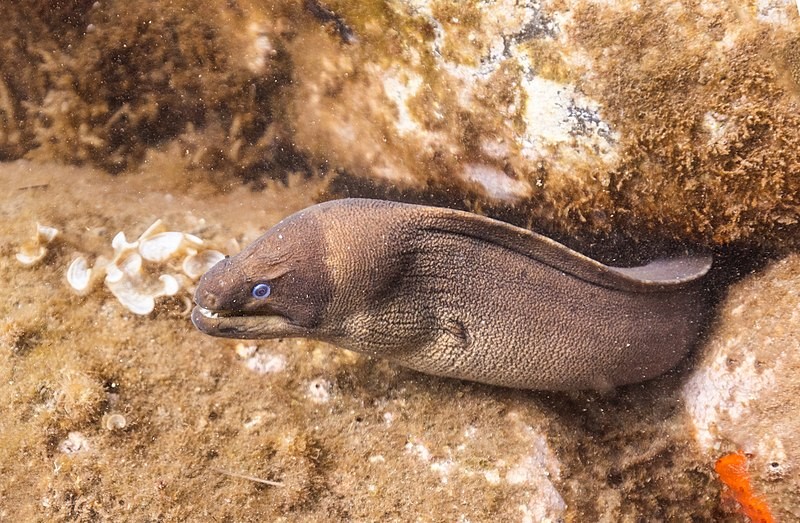
- Scientific Name: Various species, including Gymnothorax, Enchelycore, and Rhinomuraena
- Care Level: Moderate to Experienced
- Temperament: Can be peaceful or aggressive, depending on the species
- Swimming Level: Bottom
- Origin: Indo-Pacific region and tropical oceans
- Adult Size: Varies depending on species, but most are around 12 to 36 inches (30 to 90 cm) or larger
- Minimum Tank Size: 125 gallons (473 liters) or larger, depending on the species
- Water Temperature: 72°F to 82°F (22°C to 28°C)
- pH: 8.1 to 8.4
The elongated bodies and mysterious aura of marine eels add an intriguing touch to any tank. The popular Snowflake Eel, with its unique patterns, is a particular crowd-pleaser.
Pros:
- Fascinating and elongated appearance, adding intrigue and curiosity to the tank.
- Many species have unique behaviors and feeding habits.
- Can be captivating to observe as they explore their surroundings.
Cons:
- Some eels can grow large and require spacious tanks with appropriate hiding spots.
- Certain species can be aggressive and may prey on smaller tank mates.
- Some eels are sensitive to water conditions, necessitating consistent monitoring and maintenance.
Dragonets

- Scientific Name: Various species, including Synchiropus, Callionymus, and Nemateleotris
- Care Level: Moderate to Experienced
- Temperament: Peaceful, but males can be territorial during breeding
- Swimming Level: Bottom
- Origin: Indo-Pacific region and tropical oceans
- Adult Size: Varies depending on species, but most are around 2 to 4 inches (5 to 10 cm)
- Minimum Tank Size: 30 gallons (113 liters) or larger for a small group
- Water Temperature: 72°F to 78°F (22°C to 26°C)
- pH: 8.1 to 8.4
These small, bottom-dwelling fish are known for their stunning coloration and peaceful nature. The Mandarin Dragonet, with its vibrant, psychedelic pattern, is truly a sight to behold.
Pros:
- Unique and colorful appearance, with intricate patterns and flowing fins.
- Peaceful nature makes them suitable for community tanks with appropriate tank mates.
- Fascinating behavior, including hovering and "walking" on their pectoral fins.
Cons:
- Dragonets have specific dietary requirements, including small live or frozen foods.
- Some species are prone to stress and may require a well-established tank.
- Water parameters should be maintained within their preferred range for optimal health.
Squirrelfish
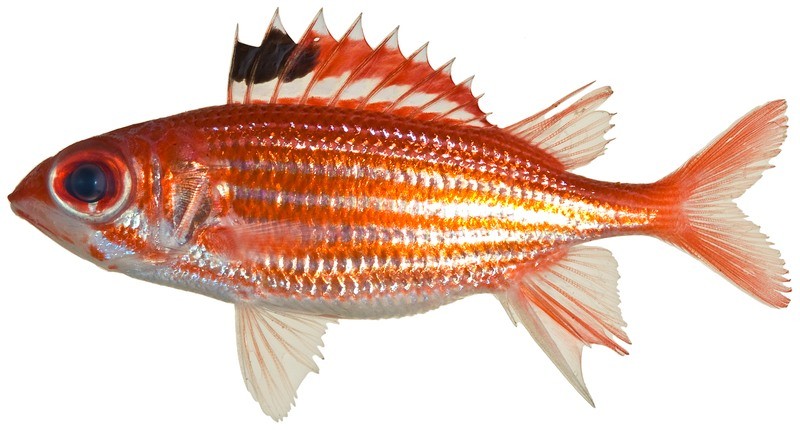
- Scientific Name: Various genera, including Sargocentron, Holocentrus, and Neoniphon
- Care Level: Easy to Moderate
- Temperament: Generally peaceful, but can be shy and nocturnal
- Swimming Level: Bottom to Middle
- Origin: Indo-Pacific region and tropical oceans
- Adult Size: Varies depending on species, but most are around 4 to 8 inches (10 to 20 cm)
- Minimum Tank Size: 50 gallons (189 liters) or larger for a small group
- Water Temperature: 72°F to 80°F (22°C to 27°C)
- pH: 8.1 to 8.4
With their large eyes and spiny fins, Squirrelfish are nocturnal creatures that add a touch of the exotic to any marine tank. They're hardy, peaceful, and adapt well to life in an aquarium.
Pros:
- Distinctive appearance with large eyes and spiny fins.
- Nocturnal behavior adds a touch of the exotic to the tank.
- Generally hardy and adaptable, suitable for a variety of marine setups.
Cons:
- Some squirrelfish can be aggressive and may prey on smaller tank mates.
- Require appropriate hiding spots and dimly lit areas to feel secure.
- May jump out of uncovered tanks, so a secure lid is necessary.
Freshwater vs Saltwater Fish: A Primer
The eternal debate: freshwater or saltwater? When it comes to creating your aquatic oasis, the choice between these two realms can be a perplexing one.
Fear not, my fellow fish enthusiasts, for I am here to guide you through the murky waters and shed light on the key differences between freshwater and saltwater fish. Let's dive right in!
1. Habitat and Water Conditions:
Freshwater fish, as the name suggests, inhabit freshwater environments such as rivers, lakes, and streams. These habitats typically have lower salt content and a pH level around neutral.
On the other hand, saltwater fish, also known as marine fish, call the vast oceans their home. They thrive in water with a higher salinity level and a slightly alkaline pH.
2. Diversity and Colors:
When it comes to diversity, both freshwater and saltwater fish offer a breathtaking array of species. However, saltwater fish are often celebrated for their vibrant colors and striking patterns.
From the mesmerizing hues of tropical reef fish to the vivid palette of coral inhabitants, saltwater fish are nature's living canvases. Freshwater fish, while not lacking in charm, tend to exhibit a more diverse range of body shapes and sizes.
3. Care and Maintenance:
Keeping both freshwater and saltwater fish requires dedication and a thorough understanding of their specific needs. Freshwater aquariums are generally considered more beginner-friendly due to their relatively simpler maintenance requirements.
However, saltwater aquariums demand meticulous attention to water chemistry, filtration systems, and the well-being of delicate marine organisms. The learning curve may be steeper, but the rewards can be truly spectacular.
4. Fish Availability and Cost:
In terms of availability, freshwater fish tend to be more accessible and widely bred in captivity.
This availability often translates to lower costs, making freshwater fish a budget-friendly option for aspiring aquarists.
Saltwater fish, on the other hand, may be more challenging to source and come with a higher price tag, especially for rare or exotic species.
However, advancements in aquaculture have made certain saltwater species more readily available, providing greater opportunities for marine enthusiasts.
5. Compatibility and Tank Setups:
When it comes to tank setups, freshwater and saltwater fish require different equipment and environmental considerations.
Freshwater aquariums can accommodate a wider range of fish species, including peaceful community fish, vibrant schooling species, and specialized species like bettas or cichlids.
Saltwater aquariums, with their intricate coral reefs, often require specialized lighting, filtration systems, and careful attention to the compatibility of fish, invertebrates, and corals.
Check Out Our Aquarium Sizes Guide Here.
Check Out Our Aquarium For Beginners Guide Here.
6. Maintenance and Stability:
Maintaining stable water parameters is essential for the well-being of your fish.
Freshwater aquariums, with their lower sensitivity to fluctuations in water conditions, offer a greater margin for error. However, this doesn't mean you can neglect regular maintenance and water testing.
Saltwater aquariums, with their delicate balance of salinity, pH, and nutrient levels, demand a higher level of vigilance to ensure a healthy and thriving ecosystem.
In the end, the choice between freshwater and saltwater fish comes down to personal preference, commitment, and the level of adventure you seek in your fishkeeping journey.
Whether you opt for the tranquility of freshwater serenity or the awe-inspiring beauty of a saltwater reef, both realms offer their own unique charm and countless opportunities for exploration.
F&Q
1. How often should I feed my fish?
Feeding frequency depends on the specific fish species and their dietary needs. In general, it's recommended to feed most fish once or twice a day, providing an amount they can consume within a few minutes.
Overfeeding can lead to water quality issues, so it's important to strike a balance and monitor your fish's health and appetite.
2. What is the ideal water temperature for my fish?
The ideal water temperature varies depending on the fish species. Tropical freshwater fish typically thrive in temperatures between 75-82°F (24-28°C), while coldwater fish prefer temperatures below 70°F (21°C).
Saltwater fish have specific temperature requirements ranging from 74-82°F (23-28°C), depending on their origin. It's crucial to research the specific temperature preferences of your fish and use a reliable aquarium heater or chiller to maintain stable conditions.
3. How can I prevent my fish tank from getting cloudy?
Cloudy water can be caused by various factors, such as overfeeding, poor filtration, inadequate water changes, or an imbalance in the nitrogen cycle.
To prevent cloudy water, ensure proper filtration, perform regular partial water changes, avoid overfeeding, and monitor water parameters. Additionally, regularly clean your tank and remove any decaying organic matter to maintain optimal water clarity.
4. Can different fish species be kept together in the same tank?
Compatibility among fish species depends on factors such as temperament, size, and water parameters.
Some fish species can coexist peacefully, while others may exhibit aggression or have specific social requirements.
Research each species' compatibility and consider factors like tank size and the specific needs of individual fish before introducing them into a shared habitat. Proper planning and observation are crucial to creating a harmonious and thriving community aquarium.
5. How do I cycle a fish tank?
Cycling a fish tank is the process of establishing a beneficial bacteria colony to break down harmful ammonia and nitrite into less toxic nitrate.
To cycle a tank, introduce a source of ammonia (such as fish food or ammonia solution) and allow the bacteria to develop over several weeks.
Regular water testing is essential to monitor ammonia and nitrite levels. Once ammonia and nitrite readings are consistently at zero, the tank is cycled and ready to accommodate fish.
6. How can I maintain good water quality in my aquarium?
To maintain good water quality, regular maintenance is key. Perform partial water changes every 1-2 weeks to remove accumulated waste and replenish essential minerals.
Test water parameters regularly, including ammonia, nitrite, nitrate, pH, and temperature, and address any issues promptly. Keep filters clean and functional, avoid overstocking, and ensure proper aeration and oxygenation for your fish.
Types Of Fish Conclusion
As we reach the end of our journey on the types of fish for your aquarium, it's time to reflect on the incredible experiences and knowledge we've gained.
From the mesmerizing colors of coral reef fish to the serene beauty of freshwater species, the diversity and wonders of aquarium fish never cease to amaze us.
Throughout this comprehensive guide, we have explored the intricacies of various fish species, their care requirements, and the nuances of their behaviors.
We've learned about the importance of creating optimal living conditions, understanding compatibility among different species, and maintaining a healthy and thriving aquatic ecosystem.
Remember, fishkeeping is a lifelong learning process. Embrace the joy of discovery, seek advice from fellow enthusiasts, and stay informed about the latest advancements in the field.
Through continuous exploration and education, you'll create a thriving aquarium that not only brings beauty to your home but also contributes to the conservation of these remarkable aquatic species.
