

Embarking on the journey to discover the 21 Best Red Aquarium Plants? You’re in for a treat!
These crimson beauties are more than just a visual delight; they’re a testament to nature’s vibrant palette beneath the water’s surface.
In this comprehensive guide, we’ll delve deep into each of these plants, shedding light on their origins, care requirements, and unique features.
Whether you’re an aquascaping pro or a newbie eager to add a splash of color to your tank, this article promises a wealth of knowledge.
By the end, you’ll be equipped to transform your aquarium into a mesmerizing underwater realm, teeming with the best red foliage nature has to offer.
Introduction to Red Aquarium Plants
The world of red aquarium plants is vast and varied. These plants, with their unique shades, don’t just add to the aesthetic appeal of a tank; they play a pivotal role in maintaining a balanced ecosystem.
Their distinctive coloration is a testament to their adaptability to specific light conditions, often indicating their health and vitality.
When we think of aquariums, the first image that often comes to mind is that of lush green plants swaying with the water’s current.
However, introducing red plants can break this monotony, adding depth and contrast to the underwater scene.
Their presence can make other colors in the tank pop, be it the blue of the water, the vibrant hues of the fish, or even the subtle shades of other aquatic plants.
Why Choose Red Aquarium Plants?
Aesthetics and Visual Appeal:
The beauty of red aquarium plants is undeniable. Their vibrant shades add a touch of drama to any aquatic setting. In a world dominated by green, the reds create a contrast that’s both striking and mesmerizing.
It’s like having a piece of autumn underwater, with leaves that remind you of maple trees during fall.
Benefits for Aquatic Life:
Beyond their visual appeal, red plants offer tangible benefits to the aquatic life in your tank. Their leaves and stems, often denser than their green counterparts, provide excellent shelter for smaller aquatic creatures.
Fish, especially the shy ones, find solace among these plants, using them as hiding spots from potential predators or just to take a break from the hustle and bustle of tank life.
Moreover, some species of fish and invertebrates feed on the microorganisms that thrive on the surface of these plants. This makes red plants not just a visual treat but also a functional addition to any aquarium.
Check out a full range of red aquarium plants over on Amazon.
Top 21 Red Aquarium Plants
1. Alternanthera Reineckii

- Size: 4-12 inches
- Tank Placement: Mid-ground, Background
- Origin: South America
- pH: 6.5-7.5
- Care level: Moderate
- Lighting: High
- CO2 requirement: Yes, recommended
- Propagation: Stem cuttings
This plant is a true gem. With its vibrant red leaves, Alternanthera Reineckii can be the star of any aquarium. Native to South America, this plant is versatile and can adapt to various lighting conditions.
While it’s a favorite among experts due to its striking appearance, even beginners can grow it with the right care. Its bushy nature makes it perfect for the mid-ground or background of your tank, where it can truly shine.
2. Rotala Rotundifolia
- Size: 6-15 inches
- Tank Placement: Mid-ground, Background
- Origin: Southeast Asia
- pH: 6-7.5
- Care level: Easy
- Lighting: Medium to High
- CO2 requirement: Beneficial but not mandatory
- Propagation: Stem cuttings
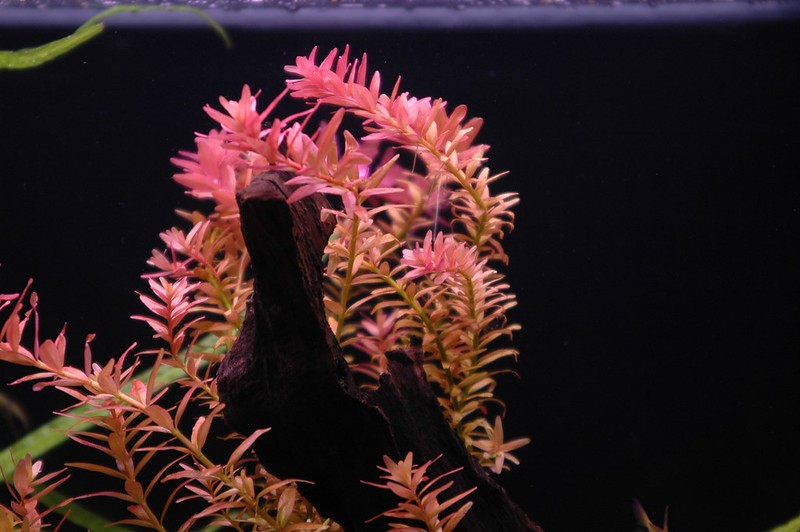
Originating from Southeast Asia, Rotala Rotundifolia is a stem plant known for its slender leaves that turn a beautiful shade of red under optimal lighting. But its beauty isn’t its only asset.
This plant grows rapidly, making it perfect for those who want to see quick results. When planted in clusters, it creates a dense, bushy backdrop, adding depth and dimension to your aquarium.
3. Ludwigia Repens

- Size: 6-20 inches
- Tank Placement: Mid-ground, Background
- Origin: North America
- pH: 6-7
- Care level: Easy
- Lighting: Medium
- CO2 requirement: No, but recommended
- Propagation: Stem cuttings
Ludwigia Repens, with its broad leaves and intense red coloration, is nothing short of spectacular. Native to North and Central America, this plant is relatively easy to care for. It’s a fast grower and can reach impressive heights, making it ideal for the background of your tank.
When paired with lighter-colored plants or against a dark substrate, Ludwigia Repens stands out, drawing the eye and becoming a conversation starter.
4. Echinodorus ‘Red Diamond’

- Size: 8-12 inches
- Tank Placement: Foreground, Mid-ground
- Origin: Cultivar (Amazon River basin origin for genus)
- pH: 6.5-7.5
- Care level: Moderate
- Lighting: Medium
- CO2 requirement: Beneficial but not mandatory
- Propagation: Runners
The Echinodorus ‘Red Diamond’ is a hybrid rosette plant known for its striking combination of red and green leaves. Originating from the Amazon River basin, this plant can grow quite large, making it a perfect centerpiece for any aquarium.
Its broad leaves provide ample shelter for fish, while its deep red hues offer a stunning contrast to the green aquatic landscape. To maintain its vibrant coloration, it’s essential to provide it with a nutrient-rich substrate and adequate lighting.
5. Cryptocoryne Wendtii ‘Red’
- Size: 5-8 inches
- Tank Placement: Foreground, Mid-ground
- Origin: Sri Lanka
- pH: 6-8
- Care level: Easy
- Lighting: Low to Medium
- CO2 requirement: No
- Propagation: Runners
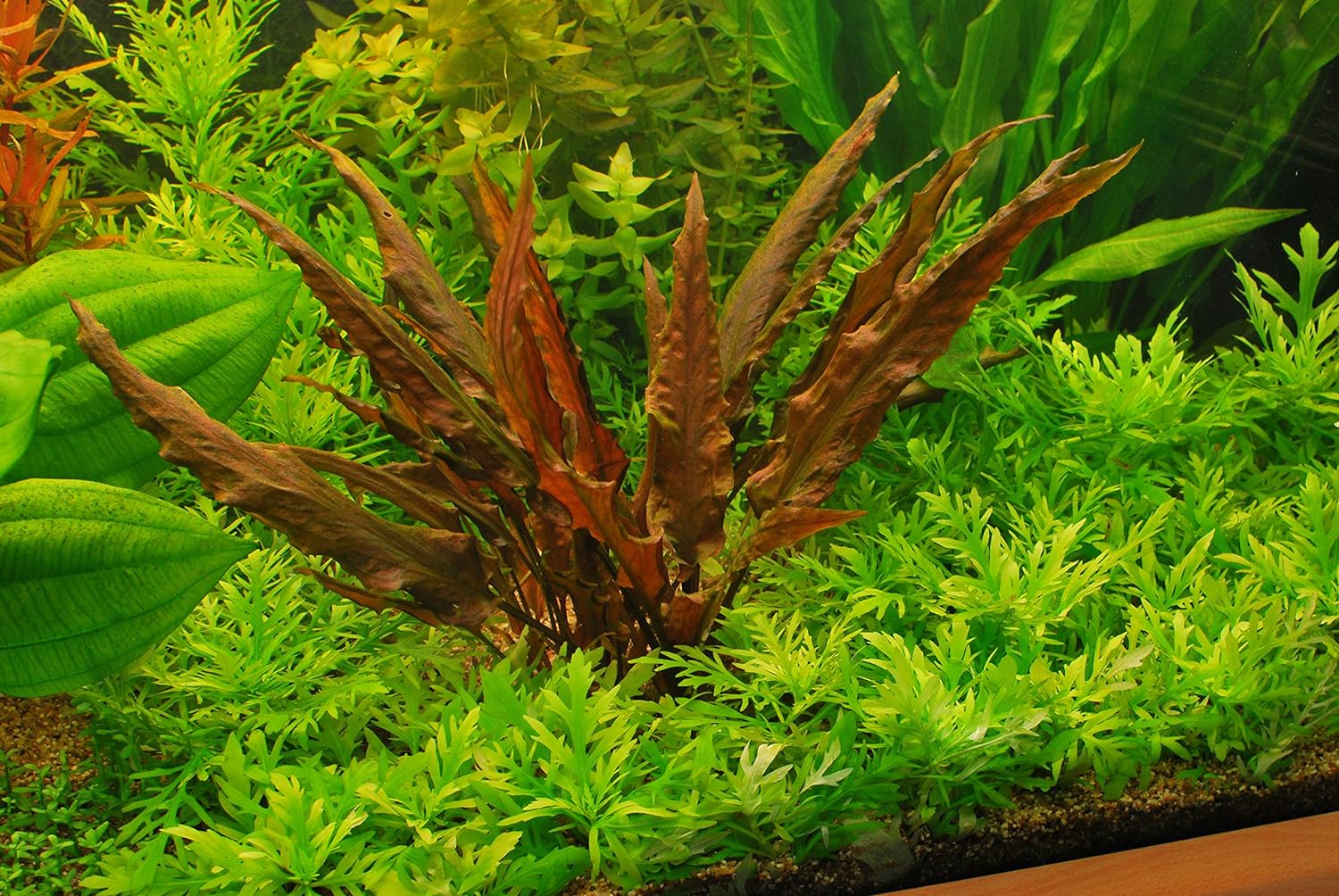
The Cryptocoryne Wendtii ‘Red’ is a versatile plant that’s perfect for both beginners and seasoned aquarists. Its wavy, elongated leaves come in various shades of red, brown, and green, depending on the lighting and nutrient conditions.
Native to Sri Lanka, this plant thrives in low to medium light, making it an excellent choice for those who don’t have high-intensity lighting setups.
Its slow growth rate means it requires minimal maintenance, but its beauty is undeniable, especially when planted in clusters.
6. Barclaya Longifolia

- Size: 8-15 inches
- Tank Placement: Mid-ground, Background
- Origin: Myanmar
- pH: 6-7.5
- Care level: Moderate
- Lighting: Medium
- CO2 requirement: Beneficial but not mandatory
- Propagation: Seeds
This unique bulb plant is a must-have for any red plant enthusiast. Its long, slender leaves can range from green to deep red, depending on the lighting conditions. Native to Myanmar, the Barclaya Longifolia is a rare gem that can add a touch of elegance to any aquarium.
It’s a slow grower, but its delicate appearance and unique leaf structure make it worth the wait. To ensure its optimal growth, provide it with a soft substrate where its bulb can anchor itself.
7. Nymphaea Lotus ‘Red’
- Size: 10-20 inches (leaf spread)
- Tank Placement: Surface (floating leaves)
- Origin: Africa
- pH: 6-7.5
- Care level: Easy
- Lighting: Medium
- CO2 requirement: No
- Propagation: Bulb division
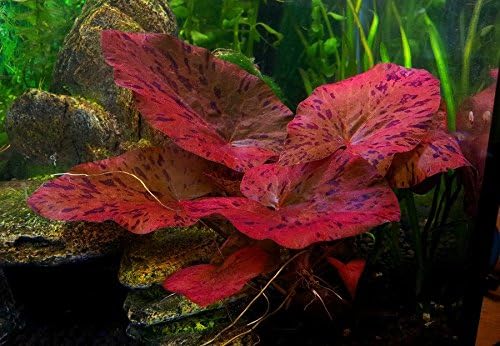
Often referred to as the Red Tiger Lotus, this plant is known for its spectacular lily pads that float on the water’s surface. Its leaves can vary from green to deep red, with some showcasing a beautiful pattern of spots and streaks.
While it’s an undemanding plant, it can quickly become the focal point of any tank, especially when its stunning lily flowers bloom. Regular trimming is essential to prevent it from overshadowing other plants, but its beauty is unparalleled.
8. Limnophila Aromatica
- Size: 8-20 inches
- Tank Placement: Mid-ground, Background
- Origin: Southeast Asia
- pH: 6-7.5
- Care level: Moderate
- Lighting: High
- CO2 requirement: Yes, recommended
- Propagation: Stem cuttings
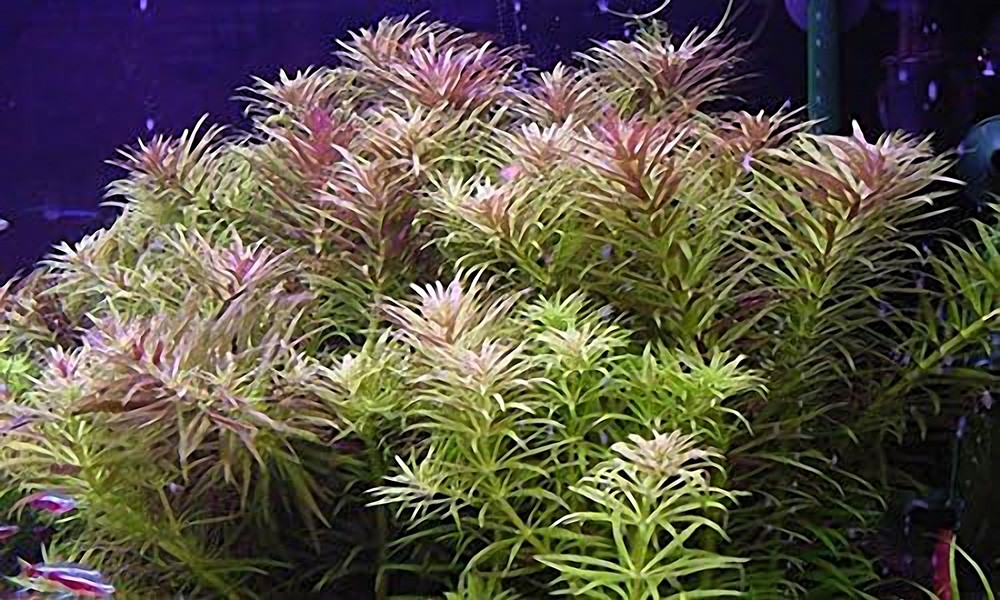
This Southeast Asian native is a favorite among aquascapers for its vibrant purple-red hues and aromatic nature. Limnophila Aromatica has finely pinnate leaves that, under optimal conditions, showcase a gradient of green at the base to a deep red at the tips.
This plant, while stunning, requires a bit of expertise. High lighting, CO2 supplementation, and a nutrient-rich substrate can help it achieve its best coloration. When planted in groups, it creates a dense, colorful bush, adding depth and texture to the aquarium.
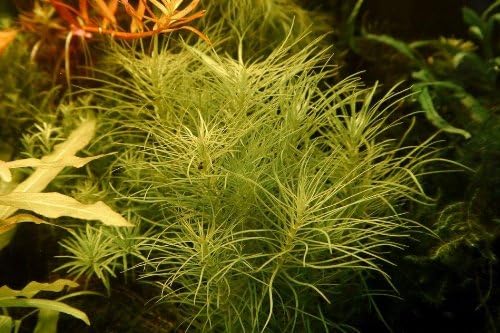
9. Pogostemon Erectus
- Size: 10-25 inches
- Tank Placement: Background
- Origin: India
- pH: 6-7.5
- Care level: Moderate
- Lighting: High
- CO2 requirement: Yes, recommended
- Propagation: Stem cuttings
While primarily green, under the right conditions, Pogostemon Erectus can exhibit beautiful red tips. Originating from India, this plant has a unique needle-like appearance, making it stand out in any aquatic setting.
It’s a fast grower and can reach impressive heights, making it ideal for the background. To bring out its red hues, ensure it receives ample light and nutrients.
10. Rotala Macrandra

- Size: 6-15 inches
- Tank Placement: Mid-ground, Background
- Origin: Southeast Asia
- pH: 5-7
- Care level: Advanced
- Lighting: High
- CO2 requirement: Yes, mandatory
- Propagation: Stem cuttings
Rotala Macrandra is often dubbed the ‘Queen of Red Plants’ due to its intense red coloration. Native to Southeast Asia, this stem plant can be a bit challenging to grow but is well worth the effort.
It requires high lighting, CO2 supplementation, and regular fertilization to maintain its vibrant hues. When cared for, it can become the showstopper of any tank, with its dense, bushy growth and fiery red leaves.
11. Myriophyllum Tuberculatum (Red Myrio)

- Size: 10-20 inches
- Tank Placement: Background
- Origin: Southeast Asia
- pH: 6-7.5
- Care level: Moderate
- Lighting: High
- CO2 requirement: Yes, recommended
- Propagation: Stem cuttings
A captivating plant from Southeast Asia, the Red Myrio is renowned for its feathery, intricate leaves that exhibit a deep red to brownish-red hue. Growing swiftly, it can form a dense, bushy backdrop in an aquarium, offering a stunning contrast to other green plants.
For optimal growth and coloration, it thrives best under high light conditions with CO2 supplementation. Its delicate appearance can add a touch of elegance to any aquatic setting.
12. Cabomba Furcata

- Size: 10-14 inches
- Tank Placement: Mid-ground, Background
- Origin: South America
- pH: 6-7.5
- Care level: Moderate
- Lighting: Medium to High
- CO2 requirement: Beneficial but not mandatory
- Propagation: Stem cuttings
The Red Cabomba, as it’s commonly known, boasts delicate, fan-shaped leaves that transition from a lush green at the base to a deep red at the tips.
Hailing from the waters of Central and South America, this plant is a popular choice among aquarists for its ability to create a contrasting, vibrant backdrop in the aquarium.
Its feathery leaves also provide a perfect hiding spot for small aquatic creatures.
13. Proserpinaca Palustris

- Size: 6-12 inches
- Tank Placement: Mid-ground
- Origin: Americas
- pH: 6-7
- Care level: Moderate
- Lighting: Medium
- CO2 requirement: Yes, recommended
- Propagation: Stem cuttings
Often referred to as the Mermaid Weed, this North American native showcases a unique blend of green and red leaves. As it grows, the plant forms a bushy appearance, making it an excellent choice for the mid-ground section of the tank.
Under the right conditions, its leaves can exhibit a brilliant red hue, especially when exposed to high light.
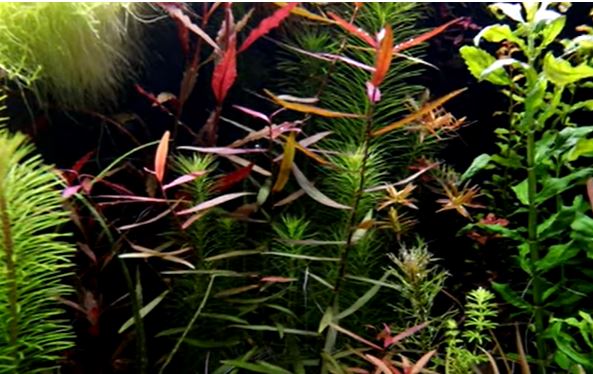
14. Persicaria Sp. ‘Kawagoeanum’
- Size: 6-10 inches
- Tank Placement: Mid-ground
- Origin: Asia
- pH: 6-7.5
- Care level: Moderate
- Lighting: Medium to High
- CO2 requirement: Beneficial but not mandatory
- Propagation: Stem cuttings
This stem plant stands out with its slender, elongated leaves that showcase a gradient of green at the base to a pinkish-red at the tips. When planted in clusters, it can create a dense, colorful bush, adding depth and texture to the aquarium.
It’s particularly striking when placed next to green plants, as the contrast accentuates its vibrant coloration.
15. Ludwigia Sp. ‘Red’

- Size: 4-8 inches
- Tank Placement: Foreground, Mid-ground
- Origin: Cultivar (general genus origin from worldwide locations)
- pH: 6-7.5
- Care level: Easy
- Lighting: Medium
- CO2 requirement: No, but beneficial
- Propagation: Stem cuttings
A variant of the Ludwigia family, this plant is a showstopper with its intense red leaves. Especially under high light conditions, the plant’s color becomes even more pronounced.
Growing at a moderate pace, it can fit well in both the mid-ground and background sections of the tank, providing a splash of color wherever it’s placed.
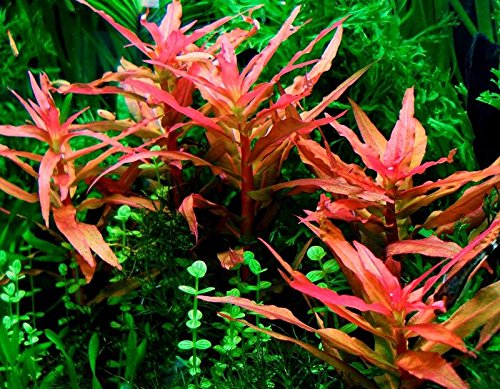
16. Ammannia Gracilis
- Size: 10-20 inches
- Tank Placement: Background
- Origin: Africa
- pH: 6-7
- Care level: Moderate
- Lighting: High
- CO2 requirement: Yes, recommended
- Propagation: Stem cuttings
With its combination of green and red leaves, this stem plant is a visual delight. Under the right conditions, particularly with ample lighting, the red coloration becomes even more vibrant.
Native to the wetlands of Africa, it’s a perfect choice for aquarists aiming to create a dynamic, colorful backdrop in their aquatic setting.
17. Hygrophila Pinnatifida

- Size: 6-10 inches
- Tank Placement: Mid-ground
- Origin: India
- pH: 6-7.5
- Care level: Moderate
- Lighting: Medium
- CO2 requirement: Beneficial but not mandatory
- Propagation: Cuttings and side shoots
This unique plant, native to India, boasts fern-like leaves that can exhibit a reddish-brown hue when exposed to high light. Its versatility is noteworthy; it can be anchored in the substrate or attached to rocks and driftwood.
As it grows, it forms a dense carpet, making it an excellent choice for the foreground or mid-ground of the tank.
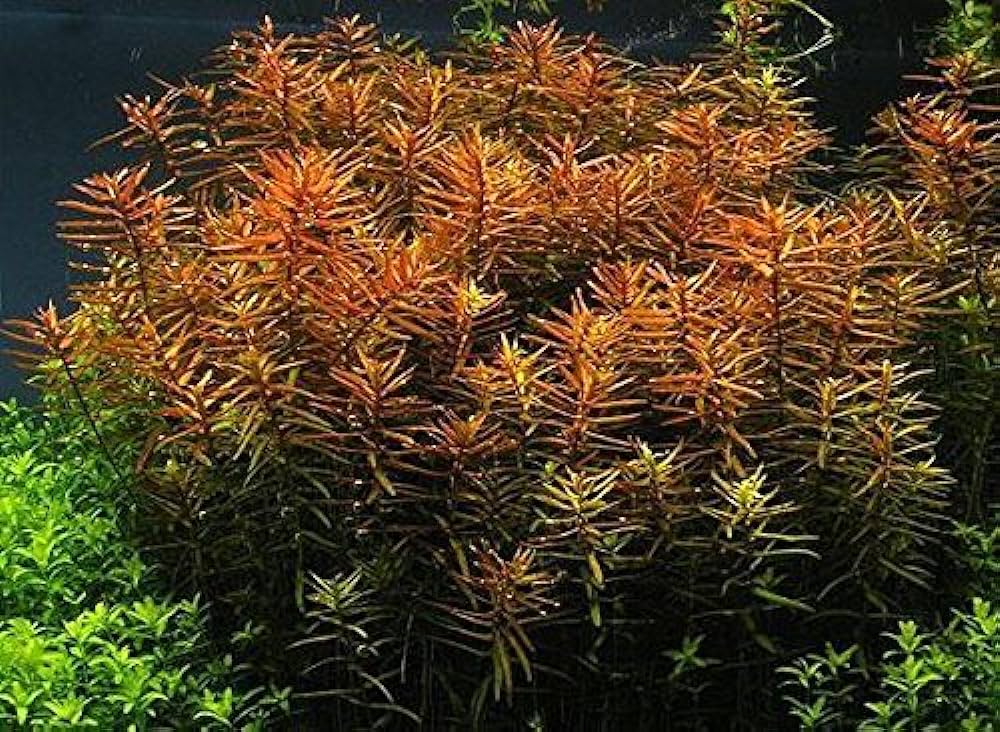
18. Ludwigia Arcuata
- Size: 6-12 inches
- Tank Placement: Mid-ground, Background
- Origin: North America
- pH: 6-7
- Care level: Easy
- Lighting: Medium
- CO2 requirement: No, but beneficial
- Propagation: Stem cuttings
This plant, with its slender, needle-like leaves, is a beauty to behold. Under high light conditions, the leaves can turn a brilliant orange-red, making it a favorite among aquarists.
Its fast growth rate and bushy appearance make it an excellent choice for filling in the mid-ground or background sections of the aquarium.
19. Didiplis Diandra
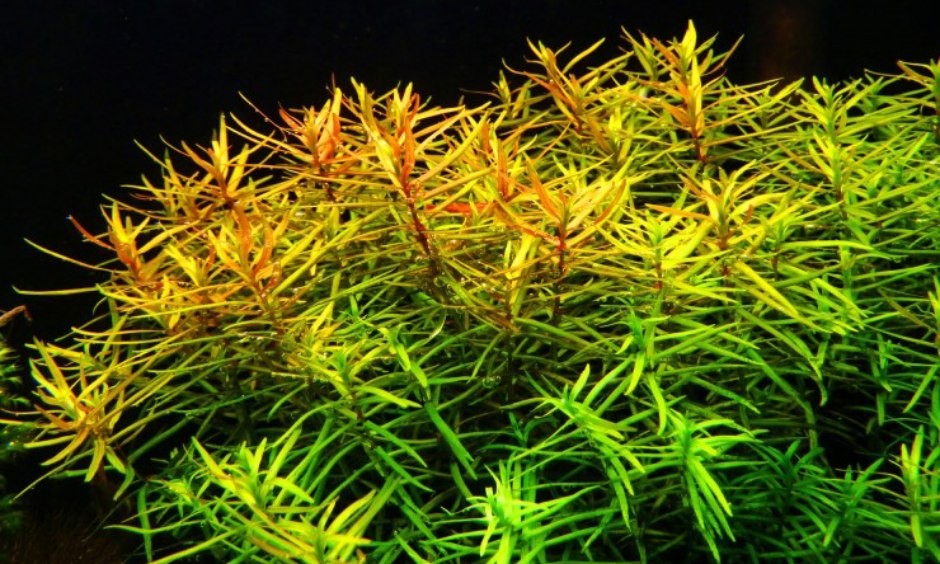
- Size: 4-10 inches
- Tank Placement: Foreground, Mid-ground
- Origin: North America
- pH: 6-7.5
- Care level: Moderate
- Lighting: Medium to High
- CO2 requirement: Yes, recommended
- Propagation: Stem cuttings
Hailing from North America, this plant stands out with its delicate, needle-like leaves. When exposed to high light conditions, the leaves can adopt a reddish hue, adding a touch of color to the tank.
Its intricate appearance makes it a perfect choice for the mid-ground, where it can add texture and depth.
20. Rotala Indica
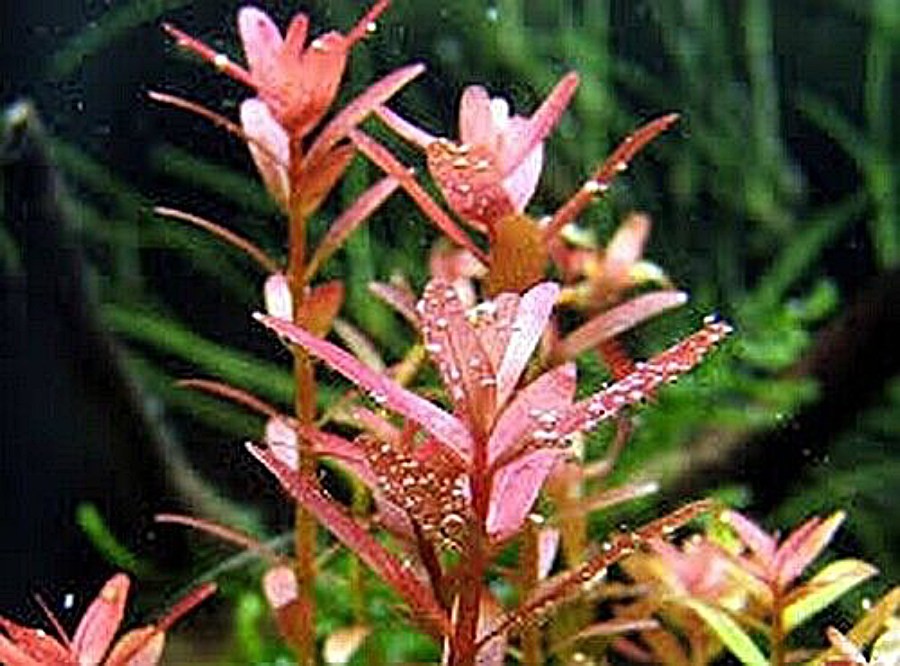
- Size: 8-15 inches
- Tank Placement: Mid-ground, Background
- Origin: Southeast Asia
- pH: 6-7
- Care level: Easy
- Lighting: Medium
- CO2 requirement: No, but beneficial
- Propagation: Stem cuttings
A popular choice among aquarists, this stem plant features rounded leaves that can transition from green to a vibrant red under optimal conditions. Its bushy growth and easy care make it a favorite for both beginners and seasoned aquarists.
21. Nesaea Pedicellata ‘Golden’
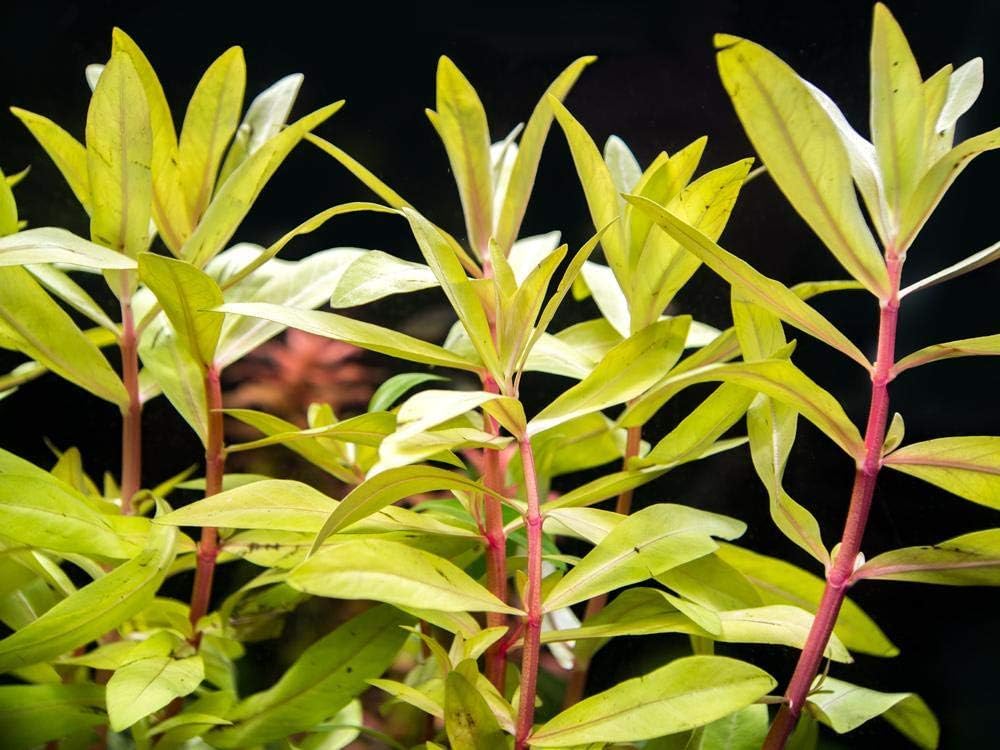
- Size: 6-12 inches
- Tank Placement: Mid-ground
- Origin: West Africa
- pH: 6-7.5
- Care level: Moderate
- Lighting: Medium to High
- CO2 requirement: Yes, recommended
- Propagation: Stem cuttings
This plant is truly a golden gem in the world of red aquarium plants. Its leaves, with their golden-yellow hue complemented by red stems, offer a brilliant contrast to the typical green aquatic landscape.
When placed under high light, the golden color becomes even more pronounced, making it a centerpiece in any aquarium.
Caring for Red Aquarium Plants
Red aquarium plants, while stunning, do require a bit more attention than their green counterparts. Their vibrant coloration is a result of their specific needs, and meeting these can ensure they remain healthy and vibrant.
Lighting Needs:
Light plays a pivotal role in the health and coloration of red plants. These plants have a higher chlorophyll b to chlorophyll a ratio compared to green plants. This means they can absorb blue and red light more efficiently, which is essential for their unique coloration.
Intensity and Duration:
Striking the right balance between light intensity and duration is crucial. Too much light can lead to excessive algae growth, robbing your plants of essential nutrients.
On the other hand, insufficient light can cause your plants to lose their vibrant red hue and turn green. A good rule of thumb is to provide high-intensity light for 6-8 hours a day.
Nutrient Requirements:
Red plants are heavy feeders. They require a rich substrate and benefit from regular fertilization. Iron, in particular, is crucial for these plants. It helps them produce the red pigments that give them their distinctive color.
Regularly testing your water and supplementing with essential nutrients can ensure your red plants remain vibrant and healthy.
Tips for Enhancing the Coloration of Red Plants
While red aquarium plants are naturally vibrant, certain factors can enhance their coloration, making them even more striking:
- Substrate: A nutrient-rich substrate can provide the essential minerals and nutrients these plants need. Iron, in particular, plays a crucial role in enhancing the red pigmentation.
- CO2 Supplementation: While not all red plants require CO2, those that do can showcase brighter and more vibrant hues with adequate CO2 levels.
- Regular Pruning: Regularly trimming and pruning your red plants can not only maintain their shape but also encourage new, vibrant growth. This is especially true for stem plants, which can become even bushier and more colorful with regular trims.
Red Aquarium Plants FAQs
Why are my red aquarium plants turning green?
Insufficient lighting or a lack of essential nutrients, especially iron, can cause red plants to turn green. Ensure they receive adequate light and consider supplementing with iron-rich fertilizers.
How often should I trim my red aquarium plants?
The growth rate varies among plants. However, regular trimming can help maintain the desired shape and size, ensuring your tank looks its best.
Can red plants thrive in a low-tech tank?
Some red plants can adapt to low-tech settings, but most will require high lighting and additional nutrients to maintain their vibrant color.
Do red plants need CO2 supplementation?
While not all red plants require CO2, adding it can enhance their growth and coloration.
Which fish pair well with red aquarium plants?
Brightly colored fish like tetras, guppies, and bettas complement red plants beautifully, creating a visually stunning aquatic environment.
Red Aquarium Plants Conclusion
Exploring the world of the Best Red Aquarium Plants has been a journey of vibrant hues, unique textures, and aquatic wonders.
These plants not only elevate the aesthetics of any tank but also offer a dynamic environment for its inhabitants. As we’ve delved into each plant’s characteristics, it’s evident that the world of aquascaping offers endless possibilities for creativity and beauty.
Whether you’re looking to create a fiery backdrop or introduce subtle red accents, these plants are the key to achieving your vision.
Remember, the beauty of an aquarium lies in its diversity and harmony, and with these red plants, you’re one step closer to creating your underwater masterpiece.
