

Setting up a new aquarium and filling it with your favorite fish is very exciting for newbie aquarists, because fishkeeping is a very fascinating hobby.
When starting out in fishkeeping, there are multiple things you must setup and keep in mind in order for your fish and the environment of your aquarium to stay healthy.
This can become a bit overwhelming, that leads to even experienced hobbyists to neglect or ignore some of the basics maintenance procedures. What happens is, after just a couple of weeks of a new setup, the quality of your tank rapidly declines.
The most likely explanation for this is a term known as ‘New Tank Syndrome’ which describes problems inside of the tank caused by a build-up of toxic compounds.
New Tank Syndrome is extremely common, and can even be an issue in established aquariums. So understanding what it is, what causes New Tank Syndrome, symptoms to look out for, and treatments for New Tank Syndrome are extremely important.
What is New Tank Syndrome?
Before introducing fish into a new aquarium, both cold water and tropical fish tanks need a certain period of time for the nitrogen cycle to become established. This time period can range anywhere from 1-3 months.
New Tank Syndrome happens when too many fish are introduced into the tank too soon. This means their waste accumulates before this cycle has become established, which turns the water toxic.
To get a basic understanding of a nitrogen cycle, take a look at the image below.
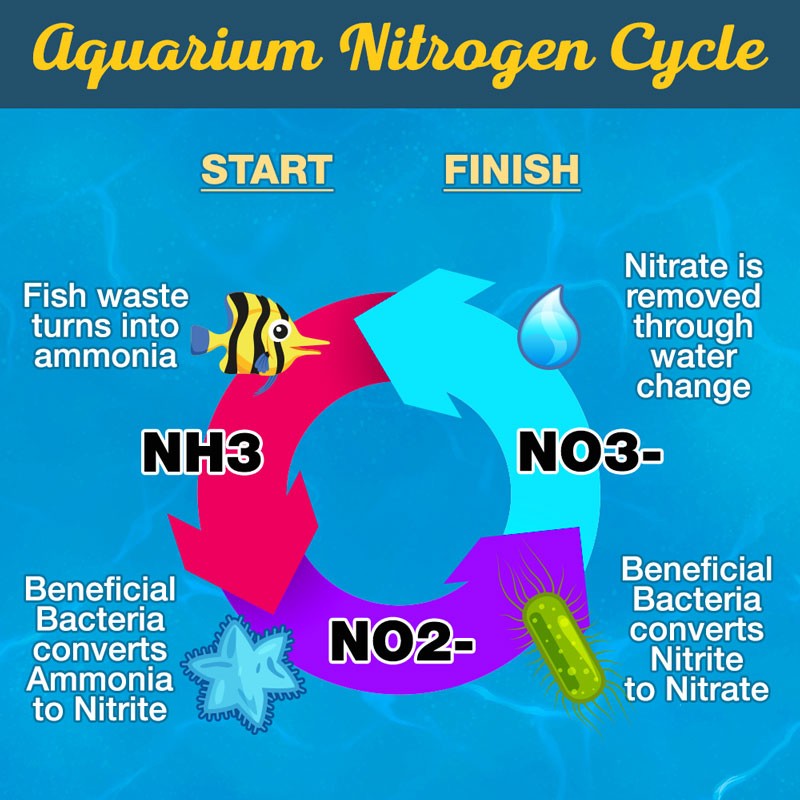
A new aquarium with clean water has little to no nitrifying bacteria to convert ammonia to nitrate. So adding fish into the clean water causes a rapid rise in ammonia that can poison and kill your fish.
Bacteria in water will break down ammonia and nitrite into nitrogen compounds that keep water levels safe, but this process takes time to establish.
Once a tank is cycling properly, harmful waste is consumed where ammonia and nitrites are transformed into less toxic nitrates.
How long does new tank syndrome last?
New tank syndrome lasts between 2 and 12 weeks. It’s important throughout this duration that you test the water for ammonia and nitrite.
This allows you to see when the nitrogen cycle is complete, which means you can then add fish into the tank as the water is completely safe.
New Tank Syndrome Causes
The water inside of an aquarium requires beneficial bacteria that breaks down ammonia an nitrite into harmless nitrogen in order for fish to survive.
This bacteria in a new tank takes time to establish, which means at the start, the levels of ammonia can become high and make the water toxic for your fish.
Here are some of the common reasons that causes an increase in ammonia levels:
- Overstocking fish
- Overfeeding fish
- Cleaning too thoroughly
- Replacing old gravel with new gravel
- Sudden changes in water temperature
- Improper dechlorination of water containing chloramines (i.e., sodium thiosulfate can create a reaction which releases ammonia)
Symptoms of New Tank Syndrome
It’s virtually impossible to spot new tank syndrome just on visual appearance. An aquarium test kit is required to accurately check the safety of the water.
You will also know if the water in your tank is poor quality, if your fish display the following symptoms:
- Lethargy
- Loss of appetite
- Reddened gills
- Hanging at the water surface
- Gasping at the surface
- Sudden deaths of fish
Treatments
Levels of ammonia above 1.0ppm can kill fish. Even levels above 0.00ppm can be dangerous, and action must be taken. Here’s what you can do:
- Test Kit: Always make sure to have a test kit at hand to test for NTS.
- Filter: Check that the filtration system is working correctly, and check for any kinds of dirt and sludge that may cause blockages.
- Do Not Feed Fish: Fish that are sick will not eat, and uneaten food will add to the problem by decomposing into the substrate.
- Partial Water Change: Always use a water conditioner when carrying out water changes. You can even change up to 90% of the water providing you use the same water temperature, hardness, and dechlorinate it correctly.
- Filter Boosting Bacteria: Make sure the product contains bacteria that consumes nitrite and ammonia. This will be added after you have dechlorinated the water.
Top Tips To Avoid New Tank Syndrome

- Slow Cycling: A slow process (1 to 3 months) of building a healthy population of nitrifying bacteria. Start with 1 or 2 hardy fish before you eventually add more delicate species.
- Fishless Cycling: Usually 3 to 5 drops of ammonia per 10 gallons with daily testing of ammonia, nitrite, and nitrate. Reduce to 3 drops of ammonia per day once you start detecting nitrite. Eventually, ammonia and nitrate levels close to 0 along with detectable nitrate means your tank has cycled.
- Seeding a New Tank: This method involves bacteria from an already established tank that help boost the process. Simply clip a piece of browned cotton filter media and place inside the new aquarium. You can also add other elements from an established aquarium such as rocks, plants, substrate, and water.
- Cycling Bacteria: Cycling bacteria is a product that can be purchased which really helps to jumpstart the cycling process. These products do claim that you can add fish almost immediately, but it is advised to wait a while as the bacteria still needs a while to colonize.
- Filter: Choosing the correct filter with the right biological capacity for your tank is important. Also make sure it is plugged, running 24/7, and never wash a filter in tap water. Using a filter from an already established tank also works really well.
- Introduce Fish Gradually: Starting with a strong species of fish before eventually adding more delicate fish is always advised.
- Feeding: In the first few weeks, feed your fish sparingly, once or twice a day, and ensure you remove uneaten food around 5 minutes after feeding.
- Monitor Water Quality: Regularly test the quality of the water, as many water issues are invisible and cannot be detected just by visual examination.
- Regular Water Changes: In new aquariums, a 20% water change helps to dilute toxic waste compounds (nitrite and ammonia). This process can be reduced to 25% just once a month after the filter has had time to mature.
Why does New Tank Syndrome Happen In a mature Tank?
NTS can sometimes happen in mature tanks, due to the following rookie errors:
1. Washing Filter Media In Tap Water
As an aquarium needs nitrifying bacteria to enable fish to survive, washing your filter media with tap water is a bad idea, because the chlorine and chloramine will kill the bacteria.
The correct way to do this procedure is to wash the filter media and sponges in a bucket of dirty tank water.
2. Replacing All Filter Media At The Same Time
NTS can be caused by completely changing all of the filter media, as this will also discard the bacteria. The best solution is to change the filter media in stages over the course of a few weeks.
Before adding the new media into the tank, transfer plenty of bacteria from the old media to the new one first. You can also use some filter boost.
3. Super-Clean
It’s important to keep an aquarium clean, but being too efficient and conducting a super-clean can disrupt the balance if an aquariums ecosystem which is very delicate.
Plants, grass, substrate, decor, water, and all other elements of an aquarium contain beneficial bacteria.
As you can imagine, the process of a super-clean can eliminate too much bacteria which causes a spike in ammonia and nitrite and leads to new tank syndrome.
Learning how to clean an aquarium correctly is important.
Is It Possible To Eliminate New Tank Syndrome?
As levels of ammonia and nitrite take several weeks to fall, there are no short cuts to completely eliminate the process. It’s just a case of following the tips and guidelines laid out in this guide, and being patient with the process.
New Tank Syndrome Conclusion
After reading this guide, you should now know be armed with all of the best tips and tricks to prevent new tank syndrome.
If you have any further questions, feel free to drop them in the comments section below, and we will answer them by using a commonly asked questions section that we will add into this post.
