

Welcome, fellow aquarists! Ready for a breathtaking underwater adventure?
Today, we’re diving into the mesmerizing world of aquarium plants.
These vibrant, living decorations do more than just beautify your aquatic paradise – they’re crucial to a healthy, thriving ecosystem.
You see, aquarium plants provide oxygen, purify water, and offer shelter to your fishy friends.
But with countless plant species to choose from, where do you even begin?
Fear not! In this guide, we’ll explore 11 of the best aquarium plants to suit various tank sizes and fish species.
Let’s get started!
Benefits of Aquarium Plants

They’re not just pretty to look at; they play an essential role in maintaining a healthy, balanced ecosystem for your underwater inhabitants.
Let’s delve into the fantastic benefits of these green marvels.
1. Oxygen Production
It’s no secret – fish need oxygen to survive. Luckily, aquarium plants are natural oxygen factories!
Through photosynthesis, they release vital oxygen into the water. The result? Happier, healthier fish. It’s a win-win!
2. Water Quality Improvement
Aquarium plants are Mother Nature’s water purifiers.
They absorb waste products, like ammonia and nitrites, from the water, effectively reducing harmful toxins.
Plus, they combat algae growth by competing for nutrients.
Cleaner water, happier fish – it’s simple science.
3. Fish Habitat
Your aquatic buddies need places to hide, explore, and breed.
Enter: aquarium plants! These leafy sanctuaries provide shelter, create territorial boundaries, and serve as ideal spawning grounds.
A lush, planted tank means less stress and more natural behaviors for your finned friends.
4. Aesthetic appeal
Let’s not forget the visual impact of aquarium plants.
They add a splash of color, texture, and depth to your underwater world, turning your tank into a living work of art.
With the right plants, you can create a captivating aquascape that’s both soothing and visually stunning.
Best Aquarium Plants
1. Anubias

Meet Anubias, the versatile, hardy favorite of aquarists everywhere!
These plants are perfect for beginners and seasoned hobbyists alike, boasting an ability to thrive in various aquarium conditions.
Let’s dive deeper into this aquatic wonder and explore its pros and cons.
Anubias barteri, Anubias nana, and other popular varieties:
With their thick, dark green leaves and slow growth habits, Anubias species are real eye-catchers.
Anubias barteri is larger and perfect for midground or background planting, while Anubias nana, with its petite stature, is ideal for the foreground.
There are many other varieties too, each with unique shapes and sizes.
Placement, care, and propagation tips:
Anubias prefer low to moderate light, making them excellent additions to shady spots in your tank.
Pro tip: Don’t bury their rhizomes in the substrate! Instead, attach them to driftwood or rocks using fishing line or super glue.
Propagation is a breeze – just snip off a portion of the rhizome with healthy leaves, secure it to a new location, and watch it grow!
Pros of Anubias:
- Low light requirements: Perfect for aquariums without high-intensity lighting.
- Hardy and adaptable: Can survive in a wide range of water conditions.
- Low maintenance: Slow growth means less frequent trimming.
- Algae-resistant: Thick leaves make it difficult for algae to take hold.
- Great for aquascaping: Provides natural hiding spots and visual interest.
Cons of Anubias:
- Slow growth: May not be suitable for aquarists seeking rapid growth and dramatic changes.
- Prone to rhizome rot: Burying the rhizome in substrate can lead to decay.
- Susceptible to snail infestations: Some snail species may feed on Anubias leaves.
2. Java Fern

Say hello to the lush, elegant Java Fern!
This popular, low-maintenance plant brings a touch of the tropics to your aquarium, creating an enchanting aquatic landscape that both you and your fish will adore.
Let’s dive into the fascinating world of Java Fern and explore its pros and cons.
Java Fern and its varieties:
Java Fern (Microsorum pteropus) is a striking plant, characterized by its elongated, bright green leaves that sway gracefully with the water’s current.
Several varieties exist, such as the narrow-leaf, trident, and Windelov, each with its unique leaf shape and growth habit.
These versatile plants are perfect for adding depth and texture to your aquascape.
Anchoring to driftwood or rocks, and care requirements:
Java Fern thrives when attached to driftwood, rocks, or other aquarium decorations, as its roots will naturally anchor themselves.
Just like Anubias, avoid burying the rhizome in substrate to prevent rot.
With its low light and nutrient demands, Java Fern is an ideal choice for beginner aquarists or those seeking a low-maintenance plant option.
Pros of Java Fern:
- Easy to care for: Adapts to a variety of water conditions and lighting levels.
- Hardy and resilient: Can survive in both low and high water flow environments.
- Suitable for many tank sizes: From nano tanks to large aquariums, Java Fern fits right in.
- Aesthetically pleasing: Adds a touch of tropical beauty to your aquascape.
- Fish-friendly: Provides shelter and hiding spots for fish and invertebrates.
Cons of Java Fern:
- Slow growth: May not be ideal for aquarists seeking rapid foliage expansion.
- Rhizome rot risk: Burying the rhizome in substrate can cause decay.
- Potential for leaf die-off: Newcomers to the tank may experience temporary leaf loss, but new growth will emerge with time.
Embrace the tropical allure of Java Fern and transform your aquarium into an enchanting, underwater paradise.
With its many pros, it’s no wonder this captivating plant is a favorite among aquarists worldwide.
3. Cryptocoryne
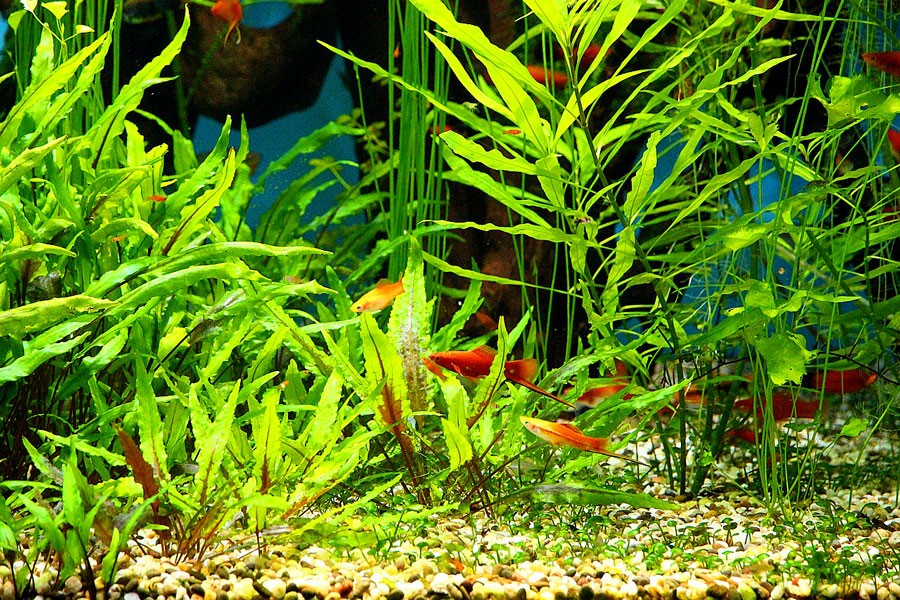
Welcome to the colorful and dramatic world of Cryptocoryne!
These charming underwater plants come in a variety of shapes, sizes, and hues, making them a visually stunning addition to any aquarium.
Ready to learn more? Let’s unravel the mysteries of Cryptocoryne and explore its pros and cons.
Cryptocoryne wendtii, Cryptocoryne parva, and more:
The Cryptocoryne genus boasts a wide array of species, each with its unique charm.
Cryptocoryne wendtii, known for its distinctive, ruffled leaves, is a popular choice among aquarists.
Meanwhile, Cryptocoryne parva, the smallest of the bunch, is perfect for creating a delicate, carpet-like effect.
With so many options, there’s a Cryptocoryne for every taste!
Optimal lighting, substrate, and nutrient conditions:
Cryptocoryne plants prefer low to moderate light, making them ideal for shaded areas in your aquarium.
They’ll appreciate a nutrient-rich substrate to support their root systems, and regular fertilization will help them flourish.
While they can adapt to various water conditions, stability is key to keeping them healthy and happy.
Pros of Cryptocoryne:
- Visually striking: Offers a diverse range of colors, textures, and growth patterns.
- Low light requirements: Thrives in dimly lit or shaded areas of the aquarium.
- Adaptable: Can acclimate to a range of water conditions once established.
- Suitable for various tank sizes: Fits perfectly in both small and large aquariums.
- Territorial markers: Helps to create natural boundaries for fish species.
Cons of Cryptocoryne:
- Crypt melt: Sensitive to sudden changes in water conditions, leading to leaf loss.
- Slower growth: May not be ideal for aquarists seeking rapid plant development.
- Nutrient demands: Requires a nutrient-rich substrate and regular fertilization.
- Inconsistent appearance: Some species may change leaf shape and color based on environmental factors.
Dive into the fascinating world of Cryptocoryne and add a splash of color and intrigue to your aquarium.
While they may require a bit more care than some other plants, their beauty and versatility make them well worth the effort.
4. Amazon Sword

Behold the majestic Amazon Sword!
With its long, lush leaves and impressive size, this plant commands attention and adds a touch of the Amazon rainforest to your aquatic oasis.
Are you ready to discover the wonders of Amazon Sword? Let’s dive in and explore its pros and cons.
Echinodorus genus:
The Amazon Sword belongs to the Echinodorus genus and comes in many varieties, each with its unique growth habits and leaf shapes.
Echinodorus bleheri, also known as the common Amazon Sword, is a popular choice among aquarists.
The Echinodorus ‘Ozelot’ sports striking red and green leaves that add a pop of color to your tank.
Ideal lighting, substrate, and nutrient conditions:
Amazon Sword plants thrive in moderate to high light, so they’ll need a bit more illumination than some other aquatic plants.
A nutrient-rich substrate is essential for their robust root systems, and they’ll benefit from regular fertilization, particularly iron-rich supplements to support their vibrant foliage.
Pros of Amazon Sword:
- Eye-catching: Large, lush leaves create a dramatic focal point in your aquarium.
- Versatile: Suitable for a variety of tank sizes and aquascaping styles.
- Provides shelter: Offers hiding spots and resting areas for fish and invertebrates.
- Oxygen producer: Contributes to a healthy aquatic environment by releasing oxygen.
- Hardy: Once established, Amazon Swords can be quite resilient.
Cons of Amazon Sword:
- Size: Can outgrow smaller tanks, requiring frequent trimming or rehoming.
- High light requirements: Needs more light than some other aquatic plants.
- Nutrient demands: Requires a nutrient-rich substrate and regular fertilization.
- Root competition: May compete with nearby plants for space and nutrients.
Bring the beauty and drama of the Amazon rainforest to your aquarium with the captivating Amazon Sword.
Though it may require a bit more care and attention than some other plants, the results are well worth the effort.
5. Dwarf Hairgrass
Introducing the enchanting Dwarf Hairgrass!
This charming, delicate plant forms lush underwater meadows, creating a serene, natural landscape in your aquarium.
Are you eager to learn more? Let’s explore the world of Dwarf Hairgrass and delve into its pros and cons.
Eleocharis parvula and Eleocharis acicularis:
Dwarf Hairgrass, primarily comprised of Eleocharis parvula and Eleocharis acicularis, is characterized by its fine, needle-like leaves that grow in dense clusters.
This carpeting plant creates a vibrant green lawn, reminiscent of a miniature underwater prairie, perfect for adding depth and contrast to your aquascape.
Ideal lighting, CO2, and substrate conditions:
Dwarf Hairgrass prefers moderate to high lighting levels and benefits from the addition of CO2 to promote dense, healthy growth.
A nutrient-rich substrate is essential for its delicate root system, and frequent trimming will encourage horizontal expansion, creating that sought-after carpet effect.
Pros of Dwarf Hairgrass:
- Natural carpet: Forms a lush, green lawn that adds texture and depth to your tank.
- Provides cover: Offers shelter and foraging opportunities for fish and invertebrates.
- Oxygen production: Contributes to a healthy aquatic environment by releasing oxygen.
- Suitable for various tank sizes: Works well in both nano tanks and larger aquariums.
- Fish-friendly: Small fish and shrimp species especially appreciate its delicate foliage.
Cons of Dwarf Hairgrass:
- High light requirements: Needs more light than some other aquatic plants.
- CO2 supplementation: Benefits from CO2 addition to achieve optimal growth.
- Nutrient demands: Requires a nutrient-rich substrate to support its delicate roots.
- Maintenance: Frequent trimming is necessary to maintain a dense carpet.
Add a touch of whimsy to your aquarium with the delightful Dwarf Hairgrass.
Though it may demand a bit more attention and care than some other plants, the end result—a beautiful underwater meadow—is well worth the effort.
Your fish will thank you!
6. Water Wisteria (Hygrophila difformis)
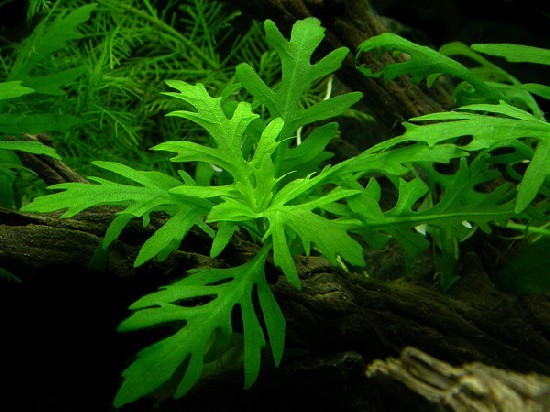
Water Wisteria is an undemanding plant that can thrive in various water parameters, with a temperature range of 70-82°F (21-28°C) and a pH of 6.5-7.5.
It can tolerate both low and high light conditions, though moderate to high light will promote robust growth.
The addition of CO2 is not required but can encourage faster growth and a more vibrant green coloration.
Pros of Water Wisteria:
- Adaptability: Water Wisteria is highly adaptable to a range of conditions, making it an excellent choice for beginners or those with fluctuating tank parameters.
- Shelter and breeding ground: Its dense foliage provides shelter for fish and invertebrates, as well as an ideal breeding ground for egg-laying species and shrimp.
- Nutrient absorption: This fast-growing plant is an efficient nutrient absorber, helping to reduce algae growth and maintain water quality.
- Aesthetics: The intricate, lace-like leaves create an eye-catching focal point and add texture to your aquascape.
- Propagation: Water Wisteria propagates easily through cuttings, allowing you to expand your plant collection quickly.
Cons of Water Wisteria:
- Rapid growth: Due to its fast growth rate, Water Wisteria may require frequent trimming to prevent it from overshadowing other plants or taking up too much space.
- Shedding: In less-than-optimal conditions or when adjusting to a new environment, Water Wisteria may shed some leaves, creating extra maintenance.
- Invasive potential: In certain regions, Water Wisteria is considered invasive. Be responsible and never release it into natural waterways.
Overall, Water Wisteria is an excellent choice for aquarists of all skill levels.
Its adaptability, aesthetic appeal, and ability to provide shelter for aquatic inhabitants make it a fantastic addition to any freshwater aquarium.
However, it’s essential to stay vigilant with maintenance and trimming to prevent it from overgrowing and dominating your aquascape.
Read our full Water Wisteria guide here
7. Ludwigia Repens
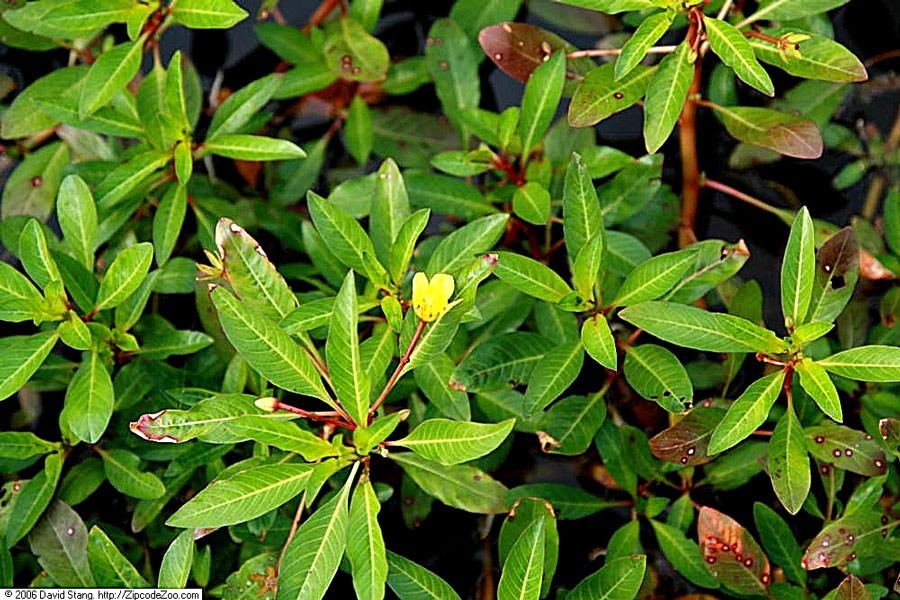
Ludwigia repens can thrive in a wide range of conditions, making it suitable for many aquarium setups.
It prefers a temperature range of 64-82°F (18-28°C) and a pH of 6.0-7.5.
Moderate to high lighting is recommended to promote healthy growth and maintain its vibrant coloration. The addition of iron-rich fertilizers can enhance the red hues in the leaves.
Pros of Ludwigia Repens:
- Aesthetic appeal: The striking red and green leaves of Ludwigia repens make it a visually appealing addition to your aquarium, providing contrast with other green plants.
- Adaptability: Ludwigia repens can grow in various water parameters and lighting conditions, making it a versatile choice for different tank setups.
- Easy propagation: This plant propagates easily through cuttings, allowing you to expand your collection or share with fellow hobbyists.
- Shelter: Ludwigia repens offers shelter to fish and invertebrates, providing them with a safe haven and additional hiding spots.
Cons of Ludwigia Repens:
- Demanding coloration: To maintain its striking red hues, Ludwigia repens requires higher lighting and iron supplementation, which may not suit all aquarists’ preferences or setups.
- Pruning: Regular pruning is necessary to prevent Ludwigia repens from overshadowing other plants or overtaking the aquarium.
- Fragile leaves: The leaves of Ludwigia repens can be somewhat delicate and may break or fall off if handled roughly during maintenance or planting.
Ludwigia repens, with its vivid red and green leaves, can bring a stunning visual impact to any aquarium.
This adaptable plant can be an excellent choice for aquarists looking to add some color to their underwater gardens.
However, to maintain its vibrant appearance, proper care must be taken, including sufficient lighting, iron supplementation, and regular pruning.
8. Java Moss (Taxiphyllum barbieri)

Java Moss is an undemanding plant that can adapt to various water parameters.
It grows best in a temperature range of 59-86°F (15-30°C) and a pH of 5.0-8.0.
Low to moderate lighting is sufficient for growth, although higher light levels can result in denser moss.
Java Moss doesn’t require CO2 supplementation but can benefit from added nutrients in the form of liquid fertilizers.
Pros of Java Moss:
- Low-maintenance: Java Moss is an easy-to-grow plant, making it an excellent choice for beginners or those with limited time for aquarium upkeep.
- Versatile: This moss can be attached to hardscape elements, such as rocks or driftwood, or left to float, offering various aquascaping possibilities.
- Shelter and breeding ground: Java Moss provides a perfect hiding place for fish, shrimp, and fry, protecting them from predators and stress.
- Nutrient absorption: Java Moss can absorb excess nutrients in the water, helping to maintain water quality and reduce algae growth.
- Easy propagation: Java Moss propagates effortlessly through fragmentation, allowing you to share it with fellow hobbyists or use it in multiple tanks.
Cons of Java Moss:
- Slow growth: Java Moss grows slowly, which may be a downside for aquarists looking to achieve a desired look quickly.
- Tendency to trap debris: The dense growth of Java Moss can trap debris and detritus, requiring regular maintenance to keep it looking clean and healthy.
- Possible hitchhikers: Java Moss can sometimes harbor unwanted pests or algae, so it’s essential to inspect and, if necessary, treat it before adding it to your aquarium.
Java Moss, with its low-maintenance nature and versatile uses, is an ideal plant for aquarists of all experience levels.
Its ability to provide shelter and improve water quality makes it a valuable addition to any aquarium.
However, it’s crucial to be aware of the potential for trapped debris and hitchhikers and to manage these issues with regular care and inspection.
Read our full Java Moss guide here
9. Vallisneria
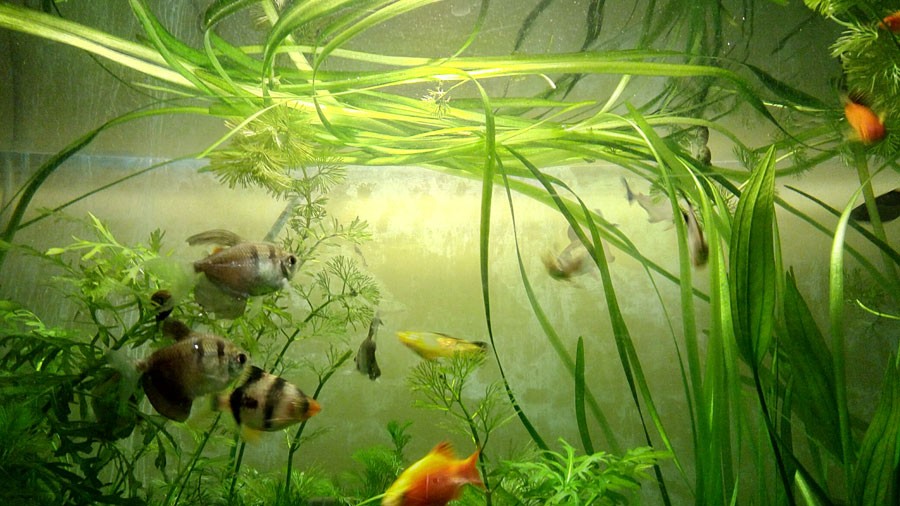
Vallisneria is an adaptable plant that can thrive in a wide range of water conditions.
It prefers a temperature range of 64-82°F (18-28°C) and a pH of 6.0-9.0.
Moderate lighting is sufficient for growth, and the addition of CO2 is not necessary, although it can promote faster growth.
Vallisneria comes in various species, including the popular Vallisneria spiralis and Vallisneria americana, differing in leaf width and overall size.
Pros of Vallisneria:
- Rapid growth: Vallisneria grows quickly, allowing you to achieve your desired aquascape in a relatively short time.
- Easy care: This plant requires minimal maintenance, making it suitable for beginner aquarists or those with busy schedules.
- Oxygenation: Vallisneria’s rapid growth helps oxygenate the water, contributing to a healthier environment for aquatic inhabitants.
- Fish-friendly: The plant’s long leaves provide an ideal hiding place and spawning ground for fish, as well as a grazing area for herbivorous species.
- Nutrient absorption: Vallisneria can help remove excess nutrients from the water, reducing the risk of algae blooms.
Cons of Vallisneria:
- Overgrowth: Due to its rapid growth, Vallisneria may require regular trimming to prevent it from overtaking the tank or blocking light from reaching other plants.
- Propagation control: Vallisneria reproduces through runners, which can lead to uncontrolled growth if not managed properly.
- Substrate preference: Vallisneria prefers a nutrient-rich substrate, so choosing the right substrate is essential to ensure its optimal growth.
Vallisneria is an attractive and low-maintenance aquatic plant that can bring life and depth to any aquarium.
Its rapid growth rate and oxygenation properties make it a valuable addition to a healthy aquatic environment.
However, to maintain a balanced aquascape, it’s essential to monitor Vallisneria’s growth and propagation and choose an appropriate substrate for optimal results.
10. Bacopa Caroliniana
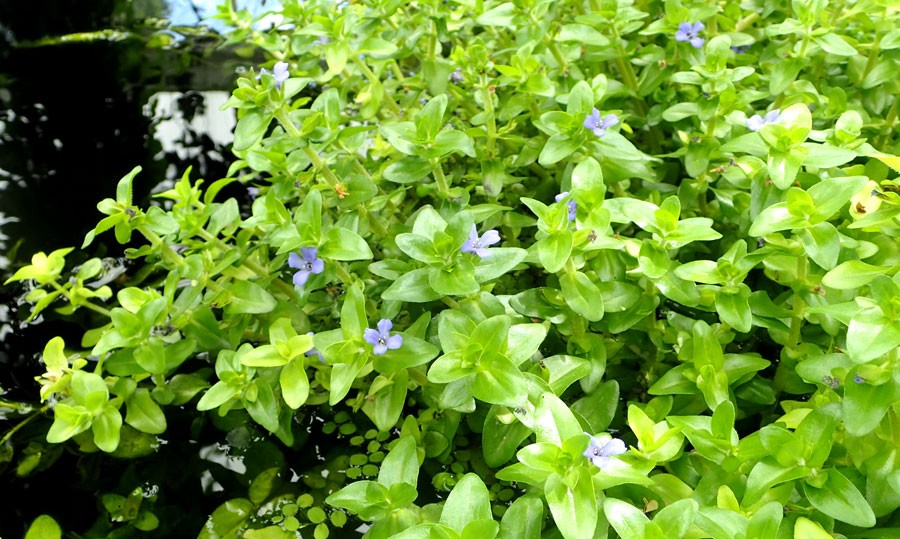
Bacopa caroliniana is a hardy plant that can adapt to a variety of water conditions.
It thrives in a temperature range of 68-82°F (20-28°C) and a pH of 6.0-7.5.
Moderate to high lighting is ideal for its growth, and while it can grow without CO2 supplementation, adding CO2 will promote faster and healthier growth.
The plant emits a unique lemony scent when its leaves are crushed, giving it the nickname “lemon Bacopa.”
Pros OF Bacopa Caroliniana:
- Hardy and adaptable: Bacopa caroliniana can tolerate a wide range of water conditions, making it suitable for various aquarium setups.
- Aesthetic appeal: The plant’s round leaves and sturdy stems add a unique visual element to any aquascape.
- Oxygenation: Bacopa caroliniana’s growth helps oxygenate the water, contributing to a healthier environment for aquatic inhabitants.
- Low-maintenance: This plant requires minimal care, making it an excellent choice for beginner aquarists or those with limited time for aquarium maintenance.
- Easy propagation: Bacopa caroliniana can be propagated through stem cuttings, allowing you to share it with fellow hobbyists or use it in multiple tanks.
Cons OF Bacopa Caroliniana:
- Lighting requirements: Bacopa caroliniana needs moderate to high lighting to grow optimally, which may require additional investment in suitable lighting equipment.
- Growth rate: This plant has a slower growth rate compared to some other aquatic plants, which may be a downside for those looking to achieve a specific look quickly.
- Potential for melting: Bacopa caroliniana may occasionally experience “melting,” or leaf loss, when introduced to new water conditions. However, the plant usually recovers and continues to grow after adapting to its new environment.
Bacopa caroliniana is an attractive, hardy, and low-maintenance plant that can bring a unique aesthetic to your aquarium.
Its adaptability and oxygenation properties make it a valuable addition to any aquatic environment.
However, it’s essential to provide adequate lighting and be aware of potential melting during initial acclimation to ensure the plant thrives in your aquarium.
11. Cabomba

Cabomba is a fast-growing plant that thrives in a temperature range of 72-82°F (22-28°C) and a pH of 6.0-7.5.
It requires moderate to high lighting and benefits from CO2 supplementation.
While Cabomba can grow in both soft and hard water, it tends to prefer softer water conditions.
It can be planted in the substrate or left to float, providing shelter and spawning areas for fish and invertebrates.
Pros of Cabomba:
- Aesthetic appeal: Cabomba’s delicate, fan-shaped leaves create an enchanting underwater landscape, adding visual interest to your aquarium.
- Fast growth: With proper care and adequate lighting, Cabomba can grow rapidly, filling in empty spaces in your aquascape.
- Oxygenation: Cabomba’s growth helps oxygenate the water, contributing to a healthier environment for your aquatic inhabitants.
- Versatility: Cabomba can be used in various aquarium setups, including planted tanks, community tanks, and breeding tanks.
- Shelter and spawning sites: The dense foliage of Cabomba offers hiding spots and spawning areas for fish and invertebrates, making it an excellent choice for breeders.
Cons of Cabomba:
- Maintenance: Due to its fast growth, Cabomba may require frequent trimming to prevent it from overtaking the aquarium or blocking light for other plants.
- Lighting requirements: Cabomba needs moderate to high lighting to grow optimally, which may necessitate additional investment in appropriate lighting equipment.
- Fragile leaves: The delicate leaves of Cabomba can be easily damaged by boisterous fish or during tank maintenance. It’s essential to handle the plant gently and consider its compatibility with your fish species.
- Potential invasiveness: Cabomba is considered invasive in some regions, so check local regulations before adding it to your aquarium or disposing of trimmings.
Cabomba is an eye-catching, fast-growing plant that can enhance the visual appeal of your aquarium.
It also provides valuable oxygenation and shelter for your aquatic inhabitants.
However, it’s crucial to provide proper lighting, handle it with care, and be mindful of its potential invasiveness to ensure the plant thrives in your aquarium.
Plant Selection Criteria: Matching Plants to Your Tank
Tank size
Finding the perfect aquatic plants for your aquarium can be an exciting adventure!
One crucial factor to consider when making your selection is tank size.
Here, we’ll explore how to choose the best plants for small, medium, and large aquariums.
Small Aquariums (Nano Tanks)
In these cozy spaces, it’s essential to select plants that won’t outgrow their environment.
Look for slow-growing, compact species like Cryptocoryne parva, Anubias nana, or Marimo moss balls.
Floating plants, such as Salvinia or Duckweed, can also provide a beautiful touch without overwhelming your petite tank.
Medium Aquariums
With more room to play, medium-sized tanks offer greater flexibility when choosing plants.
You can mix and match a variety of species to create a dynamic aquascape.
Consider combining hardy, low-maintenance plants like Java Fern and Anubias with carpeting species, like Dwarf Hairgrass or Monte Carlo, for a lush, layered effect.
Large Aquariums
The sky’s the limit when it comes to big tanks!
Tall, striking plants like Amazon Sword and Vallisneria make excellent focal points.
Cryptocoryne species can fill in mid-ground areas with their colorful foliage.
Don’t forget about carpeting plants and floating species to add texture and depth throughout the entire aquascape.
Remember, it’s not just about size; consider each plant’s growth habits, light requirements, and nutrient needs to ensure a harmonious, thriving aquatic environment.
With a bit of planning and research, you can create a stunning underwater world tailored to your tank’s specific dimensions.
Lighting
Let there be light! Lighting plays a crucial role in the health and vitality of your underwater garden.
By understanding the various light requirements of aquatic plants, you can create an environment where they thrive.
Ready to illuminate your knowledge? Let’s dive in!
Low Light Plants
If your aquarium receives limited light, or if you prefer not to invest in high-powered lighting systems, low light plants are your best friends.
These species, like Anubias, Java Fern, and Marimo moss balls, can survive and even flourish in less intense illumination.
Ideal for beginners or low-tech tanks, these hardy plants add beauty and charm without the need for extra equipment.
Medium Light Plants
For aquarists looking to dabble in more diverse plant species, medium light plants offer a wider range of possibilities.
Cryptocoryne, Amazon Sword, and Vallisneria thrive in moderate lighting conditions, adding color, texture, and interest to your aquatic landscape.
While these plants may require slightly more care and attention than low light plants, they reward you with a stunning underwater world.
High Light Plants
Craving an aquatic masterpiece? High light plants like Dwarf Hairgrass, Rotala, and Ludwigia may be the answer.
These species require intense lighting and often additional CO2 supplementation to achieve optimal growth.
While they may demand more maintenance and equipment, high light plants can transform your aquarium into a vibrant, breathtaking aquascape.
Before selecting plants, assess the lighting capabilities of your aquarium, and choose species that align with those conditions.
By doing so, you’ll create a harmonious, healthy environment where your aquatic plants can flourish.
Let the light guide you to the perfect underwater garden!
Fish compatibility
A thriving aquarium is a delicate balance of plant life and aquatic creatures, living together in perfect harmony.
But how can you ensure that your plants and fish are compatible? Fear not, fellow aquarist!
We’re here to guide you through the process of selecting plants that will coexist peacefully with your finned friends.
Peaceful Fish Species
For plant-friendly tanks, consider adding peaceful fish species, such as Tetras, Guppies, and Corydoras.
These small, non-aggressive fish appreciate the shelter provided by plants and are less likely to nibble on their leaves.
Additionally, they help maintain a clean environment by consuming algae and detritus.
Plant-Destructive Fish
Beware of plant-eating fish like Goldfish, Silver Dollars, and some Cichlids, which can decimate your underwater garden.
If your heart is set on these species, opt for sturdy plants like Java Fern, Anubias, or Bolbitis, which are less likely to be consumed.
Alternatively, consider artificial plants that can withstand the appetite of your plant-loving fish.
Delicate Plants And Invertebrates
Small fish species and invertebrates, such as shrimp and snails, often thrive in planted tanks.
These critters benefit from the hiding spots and foraging opportunities provided by delicate plants like Dwarf Hairgrass, Rotala, or Cryptocoryne species.
Creating a densely planted environment will encourage these creatures to breed and flourish.
Plant Protection
To deter fish from uprooting or damaging your plants, consider adding barriers like rocks or driftwood around their base.
Additionally, provide your fish with ample hiding spots using decorations or hardscape materials, reducing their reliance on plants for shelter.
By carefully considering the needs and habits of your aquatic species, you can create a peaceful, thriving underwater community.
Remember, the key to a successful aquarium is harmony between its inhabitants, both above and below the water’s surface.
Happy planting and happy fish-keeping!
Frequently Asked Questions
Is it better to have live plants in aquarium?
Absolutely, live plants offer numerous benefits in an aquarium:
- Maintaining water quality by absorbing nitrates, ammonia, and other waste products.
- Produce oxygen, which is essential for your fish and other aquatic inhabitants.
- Provide natural shelter, hiding spots, and breeding grounds.
While artificial plants can offer some of these advantages, live plants contribute to a more balanced and self-sustaining ecosystem within your tank.
Do aquarium plants absorb fish waste?
Yes, aquarium plants do absorb fish waste, which is a key benefit of having live plants in your tank.
Fish waste primarily consists of ammonia, nitrites, and nitrates, which can be harmful if allowed to accumulate.
Live plants absorb these waste products as essential nutrients, helping to maintain water quality and creating a healthier environment for your fish.
Additionally, plants contribute to a more balanced and natural ecosystem, making them a valuable addition to your aquarium.
What are the disadvantages of aquatic plants?
While aquatic plants offer numerous benefits, there are some disadvantages to consider as well:
- Maintenance: Live plants require regular care, such as trimming and pruning, to prevent overgrowth and maintain a visually appealing tank. Some species may need more attention than others, depending on their growth rate and requirements.
- Nutrient balance: Aquatic plants need proper nutrients to thrive. You may need to supplement their diet with fertilizers, which could add extra cost and time to your fishkeeping routine.
- Lighting: Many plants have specific lighting requirements, which might necessitate investing in specialized aquarium lights to ensure their health and growth.
- Compatibility: Some fish species may nibble on or uproot live plants, causing damage and reducing their benefits in the tank. It’s essential to choose compatible fish and plant species to maintain harmony in the aquarium.
- Potential pests: Live plants can occasionally introduce pests, such as snails or algae, which may require additional management efforts to keep the tank balanced and healthy.
Despite these drawbacks, the advantages of live aquatic plants generally outweigh the potential downsides, and with proper care, they can significantly enhance your aquarium’s ecosystem.
Can water be too hard for aquarium plants?
Yes, water can be too hard for certain aquarium plants.
Water hardness refers to the concentration of dissolved minerals, primarily calcium and magnesium, in the water.
Some aquatic plants prefer soft water with lower mineral content, while others can tolerate or even thrive in harder water.
High water hardness can lead to stunted growth, yellowing leaves, or other health issues in sensitive plant species.
If you plan on keeping plants that require soft water, it’s essential to test your water hardness and, if necessary, take steps to soften it using methods like reverse osmosis or peat filtration.
It’s always best to research the specific requirements of the plants you want to keep and match them to your aquarium’s water conditions for optimal growth and health.
Best Aquarium Plants Conclusion
And there you have it, fellow aquarists! A comprehensive guide to selecting the best aquarium plants for your underwater paradise.
From tank size and lighting requirements to fish compatibility and maintenance, we’ve covered the essentials to help you make informed decisions on your aquatic plant journey.
Remember, the key to success is balance and harmony.
By carefully considering your tank’s unique characteristics and your own level of expertise, you can create a thriving, beautiful environment that both you and your aquatic inhabitants will adore.
As you embark on this exciting adventure, don’t forget to enjoy the process!
Aquatic gardening is an art form, a living canvas that evolves and changes over time.
Embrace the challenges, celebrate the triumphs, and above all, relish the opportunity to connect with the natural world in your very own home.
Here’s to your underwater oasis, and happy planting!
Research And Resources Used For This Post
- “The 101 Best Freshwater Nano Species” by Mark Denaro and Rachel O’Leary, TFH Publications, Inc., 2014.
- “Ecology of the Planted Aquarium: A Practical Manual and Scientific Treatise” by Diana Walstad, Echinodorus Publishing, 2013.
- “Encyclopedia of Aquarium Plants” by Peter Hiscock, Barron’s Educational Series, 2003.
- “The Simple Guide to Planted Aquariums” by Terry Anne Barber and Rhonda L. Wilson, TFH Publications, 2006.
- “Aquarium Plants: Comprehensive Coverage, from Growing Them to Perfection to Choosing the Best Plant for Your Aquarium” by Peter Hiscock, Interpet Publishing, 2005.
- “Aquascaping: A Step-by-Step Guide to Planting, Styling, and Maintaining Beautiful Aquariums” by George Farmer, Skyhorse Publishing, 2020.
- “Sunken Gardens: A Step-by-Step Guide to Planting Freshwater Aquariums” by Karen A. Randall, Timber Press, 2016.
- Practical Fishkeeping Magazine (https://www.practicalfishkeeping.co.uk/)
- Aquatic Plant Central (http://www.aquaticplantcentral.com/)
- The Planted Tank Forum (https://www.plantedtank.net/forums/)
- Tropica Aquarium Plants (https://tropica.com/en/)
- Advanced Aquarist (https://www.advancedaquarist.com/)
- The International Aquatic Plants Layout Contest (https://en.iaplc.com/)
- The Aquatic Gardener’s Association (https://www.aquatic-gardeners.org/)
