


Finding the best aquarium filter can be a daunting task given the plethora of options available in the market.
Whether you're a seasoned aquarist or just starting out, the importance of a reliable filtration system cannot be overstated.
In this comprehensive guide, we'll delve deep into various types of aquarium filters, their advantages, and what makes them stand out.
From canister filters for large tanks to sponge filters for smaller setups, we've got you covered.
By the end of this post, you'll have a clearer understanding of what to look for in an aquarium filter and which one suits your needs the best.
Why is a Good Aquarium Filter Essential?
Maintaining Water Clarity
Clear water is the first thing anyone notices when they look at an aquarium. It's the window through which we admire the beauty of the aquatic world.
But achieving and maintaining this clarity is no easy feat. Over time, uneaten food, fish waste, plant debris, and other particulates can cloud the water, making it murky and unattractive.
A good aquarium filter efficiently removes these particulates, ensuring that the water remains crystal clear. It acts as the primary defense against turbidity, continuously circulating the water and trapping debris.
This not only enhances the aesthetic appeal of the tank but also ensures that light can penetrate deeper, which is especially crucial for planted aquariums.
Ensuring Fish Health
But an aquarium filter's job isn't just about aesthetics. At its core, it's about ensuring the health and well-being of the tank's inhabitants. Fish, like all living beings, produce waste.
This waste, if not removed, breaks down into ammonia, which is highly toxic to fish. Over time, ammonia can convert into nitrites and then nitrates, both of which can be harmful in high concentrations.
A robust aquarium filter hosts beneficial bacteria that break down these harmful chemicals through a process called the nitrogen cycle.
These bacteria convert ammonia to nitrites and then to nitrates, which are less toxic and can be absorbed by plants or removed through water changes. In essence, a good filter acts as a mini-ecosystem, ensuring that the water remains safe for fish.
Reducing Maintenance Effort
Anyone who's had an aquarium knows that maintenance can be a chore. Regular water changes, substrate cleaning, and balancing water parameters are all part and parcel of fish-keeping.
However, a reliable aquarium filter can significantly reduce this effort.
By continuously removing debris and breaking down harmful chemicals, a filter reduces the frequency of water changes needed.
It also means less time spent scrubbing algae off the walls or vacuuming the substrate. In short, a good filter gives you more time to enjoy your aquarium and less time maintaining it.
Best Aquarium Filter
Best Overall Aquarium Filter
Penn-Plax Cascade 610 Fully Submersible Internal Filter

Tank Details:
- Size: Suitable for aquariums up to 160 gallons.
- Filter Media: Internal mechanism.
The Penn-Plax Cascade 610 is a fully submersible internal filter designed to fit snugly into aquarium corners.
Its design ensures optimal water circulation without creating strong currents that can stress fish. With a flow rate of 160 gallons per hour, it's suitable for aquariums up to 160 gallons, making it versatile for various tank sizes.
The filter's internal mechanism ensures that the water remains clear, free from debris, and safe for the tank's inhabitants.
Whether you have a freshwater or saltwater setup, the Penn-Plax Cascade 610 is a reliable choice that combines efficiency with ease of use.
Pros
Cons
Best Budget Aquarium Filter
Tetra Whisper IQ Power Filter 20 Gallons

Tank Details:
- Size: Suitable for aquariums up to 20 gallons.
- Filter Media: Typically these filters come with a combination of sponge or mesh media and activated carbon.
The Tetra Whisper IQ Power Filter is a testament to the fact that budget-friendly doesn't mean compromising on quality.
Designed for aquariums up to 20 gallons, this filter boasts a flow rate of 130 gallons per hour.
The "Stay Clean Technology" ensures that the water remains clear and free from debris. One of the standout features of this filter is its quiet operation, living up to the "Whisper" in its name.
While it's gentle on the ears, it's robust in performance, making it an excellent choice for those on a budget.
Pros
Cons
Best Aquarium Filter For Small Tanks
Aqueon QuietFlow E Internal Power Filter Extra Smal

Tank Details:
- Size: Suitable for aquariums up to 3 gallons.
- Filter Media: These filters come with a combination of sponge or mesh media and activated carbon.
For those with small tanks, especially those housing delicate species or bettas, a gentle yet effective filtration system is paramount.
The Aqueon QuietFlow E Internal Power Filter is designed specifically for small tanks up to 3 gallons. Its compact design ensures it doesn't take up much space, while its "QuietFlow" technology ensures silent operation.
The filter provides efficient mechanical, chemical, and biological filtration, ensuring clear and healthy water for your aquatic pets.
The filter's internal mechanism ensures optimal water circulation without creating strong currents that can stress small fish.
Pros
Cons
Best Aquarium Filter For Large Tanks
Marineland Penguin Bio-Wheel Power Filter 150 GPH, Multi-Stage Aquarium Filtration
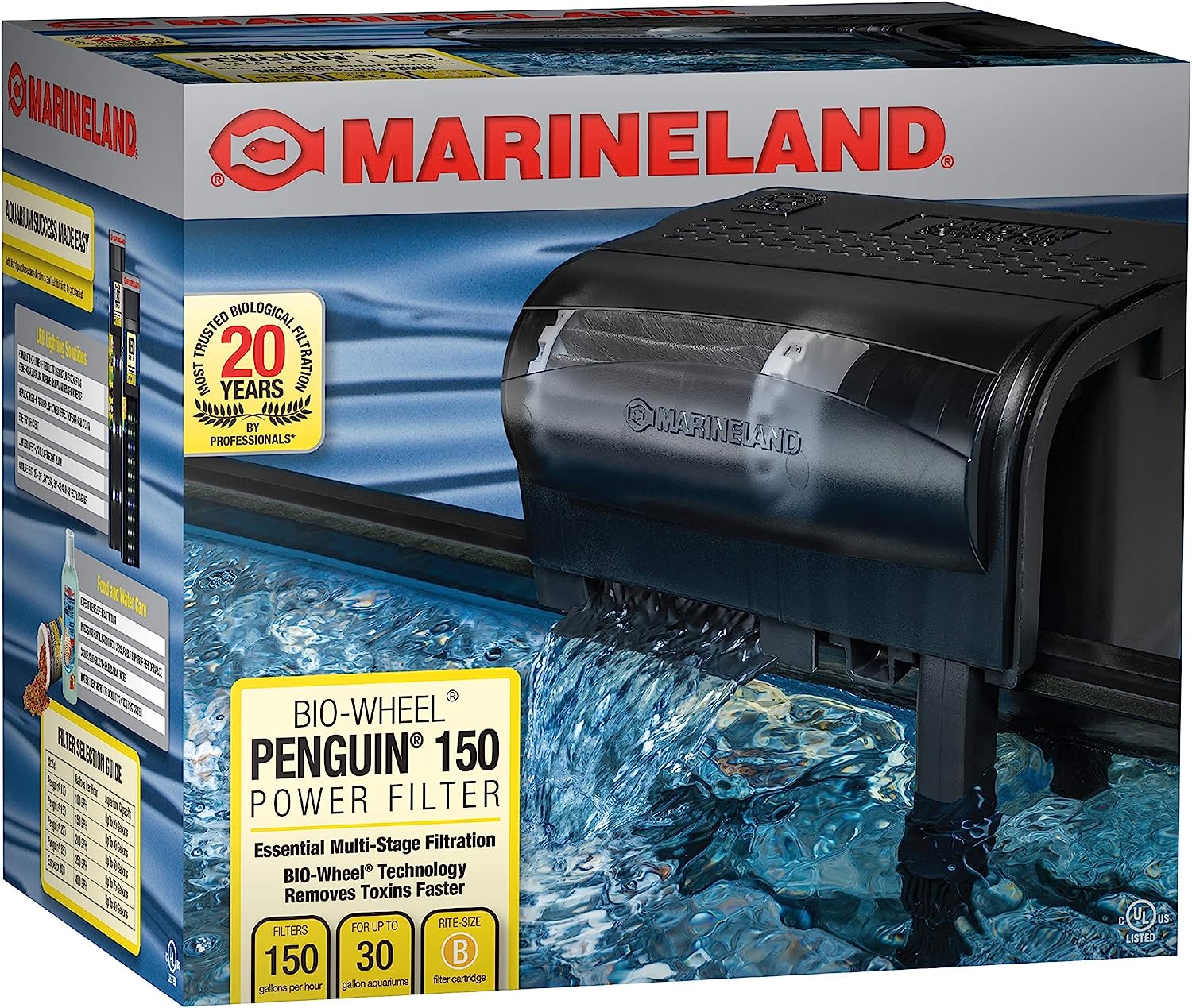
Tank Details:
- Size: 20 - 75 gallon (Various options)
- Filter Media: Multi-stage filtration including mechanical, chemical, and biological stages.
For large tanks, the filtration demands are significantly higher, and the Marineland Penguin Bio-Wheel Power Filter is up to the task.
With a flow rate of 150 gallons per hour, it's designed to handle the rigorous filtration needs of larger aquariums.
The multi-stage filtration process ensures that the water remains clear, free from debris, and safe for the tank's inhabitants.
The Bio-Wheel technology is a standout feature, providing superior biological filtration by promoting the growth of beneficial bacteria.
This filter not only ensures optimal water quality but also operates quietly, ensuring a peaceful environment for both the fish and the aquarist.
Pros
Cons
Best Under-Gravel Aquarium Filter
Penn-Plax Clear-Free Premium Under Gravel Aquarium Filter

Tank Details:
Under-gravel filters have been a staple in the aquarium hobby for decades, and the Penn-Plax Clear-Free Premium Under Gravel Filter stands out among them.
Designed for tanks ranging from 20 to 29 gallons, this filter provides a unique method of filtration where water is drawn through the gravel, which acts as the filter media.
This not only ensures efficient mechanical filtration but also promotes the growth of beneficial bacteria within the gravel bed.
The result is clear, clean water and a thriving biological ecosystem. Especially for those who appreciate the aesthetics of a clear tank bottom without visible equipment, this under-gravel filter is a top choice.
Pros
Cons
Best Bio-Media Aquarium Filter
Fluval BioMax Biological Material Remover, 500 g - Biological Filter
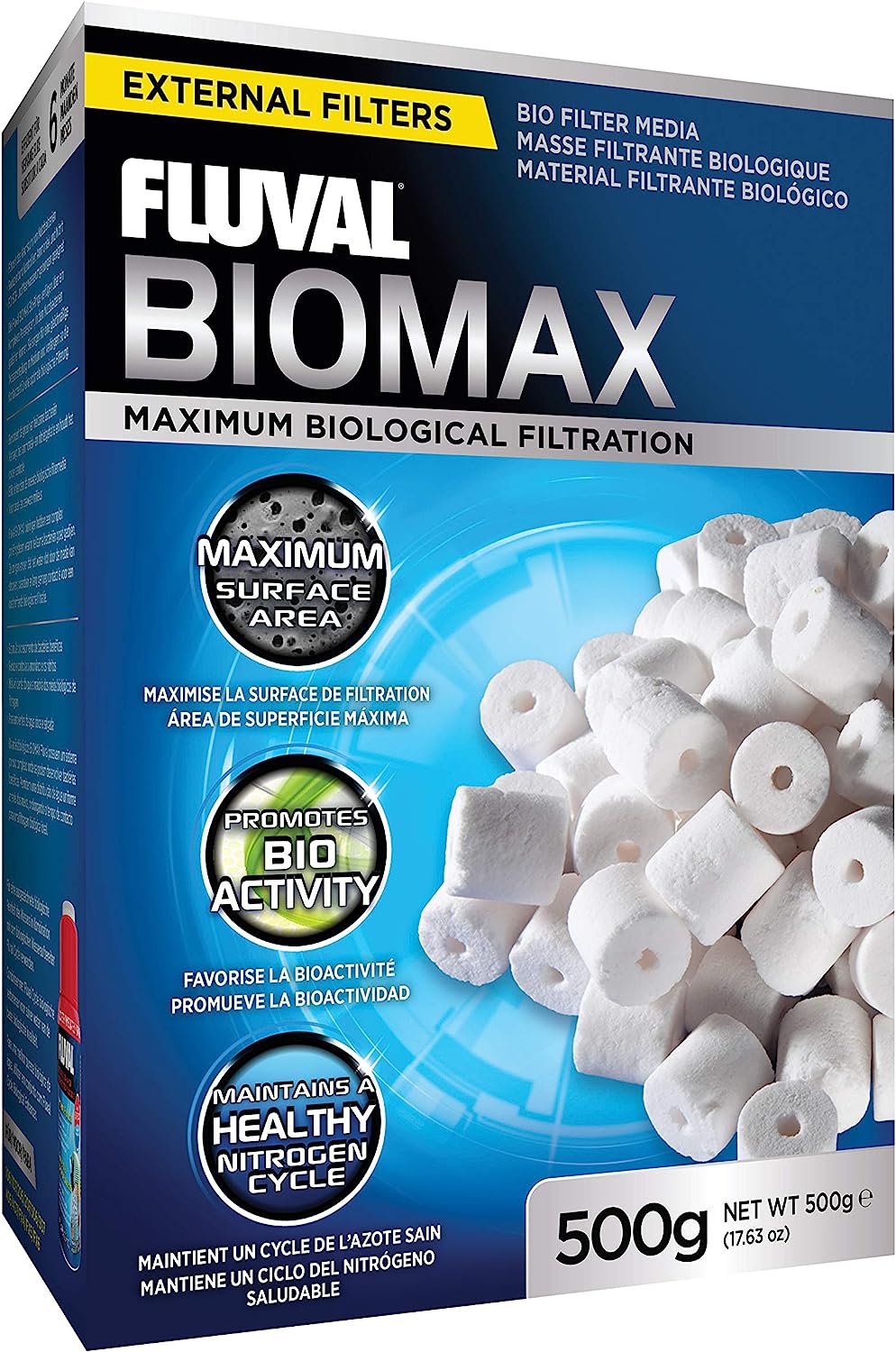
Tank Details:
Bio-media is all about promoting the growth of beneficial bacteria to break down harmful toxins in the aquarium, and Fluval's BioMax Biological Material Remover is a top contender in this category.
Designed with a complex porous structure, it provides an optimal environment for beneficial bacteria to thrive.
This ensures efficient biological filtration, which is crucial for maintaining a healthy nitrogen cycle in the tank.
The Fluval BioMax is not just about function; it's also about longevity. Its durable structure ensures it lasts longer, providing consistent biological filtration over time.
Pros
Cons
Best Canister Aquarium Filter
Penn-Plax Cascade All-in-One Aquarium Canister Filter

Tank Details:
The Penn-Plax Cascade All-in-One Aquarium Canister Filter is a powerhouse when it comes to filtration for larger tanks.
With a flow rate of 265 gallons per hour, it's designed to handle tanks up to 100 gallons. The multi-stage filtration process ensures that the water remains clear, free from debris, and safe for the tank's inhabitants.
The Cascade 1000 offers mechanical, chemical, and biological filtration, ensuring a comprehensive cleaning process.
Its robust build and efficient performance make it a top choice for aquarists looking for a reliable canister filter.
Pros
Cons
Best Sponge Aquarium Filter
Pawfly 3 Pack Aquarium Nano Bio Sponge Filter
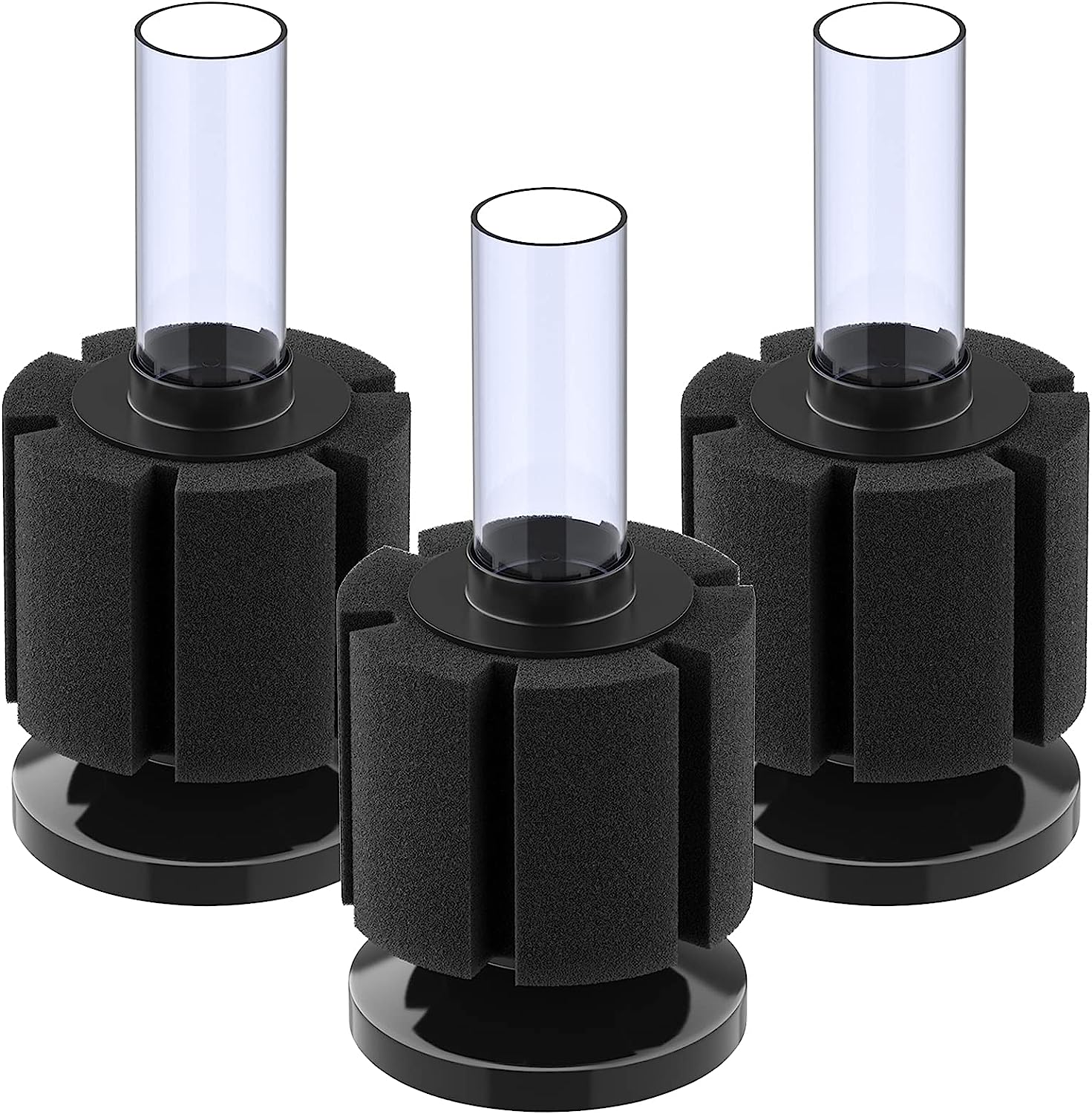
Tank Details:
Sponge filters are renowned for their simplicity and effectiveness, especially in smaller tanks or breeding setups.
The Pawfly Nano Bio Sponge Filter is a perfect example of this. Designed for tiny fish tanks up to 10 gallons, it offers gentle filtration, making it ideal for bettas, fry, shrimp, and other small fish.
The sponge not only mechanically filters the water but also provides a surface for beneficial bacteria to colonize, ensuring effective biological filtration.
This filter is particularly suitable for those who want a non-intrusive, quiet filtration system that doesn't create strong currents.
Pros
Cons
Aquarium Filter Buyers Guide
Types of Aquarium Filters
The world of aquarium filters is vast and varied. Depending on their functionality, filters can be broadly categorized into three types. Let's delve deeper into each one.
Mechanical Filters
Mechanical filters are the first line of defense in any aquarium setup. They physically trap and remove debris from the water, ensuring clarity. Imagine them as the sieves or strainers of the aquarium world.
How They Work:
Water is passed through a medium, often a sponge or foam, which traps particulate matter. Over time, this medium can get clogged and needs to be cleaned or replaced.
Pros:
- Effective at removing visible debris.
- Easy to clean and maintain.
- Suitable for almost all aquarium setups.
Cons:
- They don't address chemical or biological impurities.
- The filter medium needs regular cleaning to prevent it from becoming a source of pollution.
Recommendation:
While mechanical filters are essential, they're most effective when combined with other filtration methods.
They ensure the water remains clear, but for a holistic approach to water purification, you'd need to look beyond just mechanical filtration.
Biological Filters
Nature has its way of maintaining balance, and biological filters leverage this natural process. They are the unsung heroes of the aquarium world, working silently to ensure the water remains safe for fish.
How They Work:
Beneficial bacteria colonize the filter media. These bacteria break down harmful waste products like ammonia and nitrites, converting them into less harmful nitrates.
This process, known as the nitrogen cycle, is vital for any aquarium.
Pros:
- Provides a natural way to detoxify water.
- Essential for maintaining a stable and healthy aquarium environment.
- Once established, they require minimal intervention.
Cons:
- Takes time to establish. A new aquarium needs to be "cycled" to ensure a healthy bacterial colony.
- Sensitive to changes in water parameters. A sudden spike in toxins can harm the bacterial colony.
Recommendation:
Biological filtration is non-negotiable for any aquarium. Whether you have a small betta tank or a large reef setup, ensuring a healthy bacterial colony is paramount.
Chemical Filters
While mechanical and biological filters address physical and biological impurities, sometimes there are chemicals in the water that need attention. That's where chemical filters come into play.
How They Work:
Chemical filters use media like activated carbon, resins, or zeolites to adsorb unwanted chemicals from the water.
For instance, activated carbon is excellent at removing odors, discoloration, and even some medications.
Pros:
- Effective at removing specific chemical contaminants.
- Can clear out odors, discoloration, and residues from medications.
- Useful for both freshwater and saltwater setups.
Cons:
- The filter media needs regular replacement as it gets saturated over time.
- Not always necessary unless there's a specific chemical issue to address.
Recommendation:
While not always essential, having chemical filtration as a backup can be beneficial. It's especially useful after medicating an aquarium or if you're battling persistent water discoloration or odors.
Factors to Consider When Buying an Aquarium Filter
Choosing the right filter is paramount to the health and beauty of your aquarium. But with so many options available, how do you decide? Here are some key factors to consider:
Size of Your Aquarium
The size of your tank plays a pivotal role in determining the type and capacity of the filter you need.
Large Aquariums:
For larger tanks, you need a filter with a higher flow rate to ensure that the entire volume of water is circulated and cleaned efficiently. Canister filters are a popular choice for larger setups due to their high capacity and versatility.
Small to Medium Aquariums:
For smaller tanks, hang-on-back (HOB) filters or internal filters might suffice. They're compact, easy to maintain, and provide adequate filtration for tanks up to 40 gallons.
Nano Tanks:
For tiny tanks or bowls, sponge filters powered by an air pump can be ideal. They provide gentle filtration, which is perfect for delicate species like bettas or shrimp.
Type of Fish You Own
The inhabitants of your tank can influence the type of filter you need.
Messy Eaters:
Fish like goldfish or cichlids are known for being messy. They produce more waste, which means you'll need a filter with robust mechanical and biological filtration capabilities.
Delicate Species:
For species that prefer calm waters, like bettas or certain types of shrimp, a filter with a gentle flow is essential. Sponge filters or filters with adjustable flow rates are ideal for such setups.
Maintenance Level
How hands-on do you want to be with your aquarium maintenance?
High Maintenance:
If you're someone who enjoys regular interaction with your tank and doesn't mind frequent cleaning, then certain types of filters, like HOBs, might be suitable. They're easy to access and clean but might require more frequent attention.
Low Maintenance:
For those who prefer a more hands-off approach, canister filters or larger external filters might be the way to go. They have a higher capacity, which means they can go longer between cleanings. However, when they do need maintenance, it might be a more involved process.
Budget
While we all want the best for our aquatic friends, budget constraints are real. Thankfully, there's a wide range of filters available at various price points.
Budget-Friendly:
Sponge filters, internal filters, and some HOBs can be quite affordable. They're effective and can be a great starting point for beginners.
Mid-Range to High-End:
Canister filters, sump filters, or advanced HOBs with multiple filtration stages fall in this category. They're an investment but offer superior performance and versatility.
Additional Features
Modern aquarium filters come with a plethora of features. Some have UV sterilizers built-in, which can help combat algae blooms and pathogens.
Others might have adjustable flow rates, multiple intake/outflow options, or even digital monitoring systems.
While these features can be beneficial, it's essential to weigh their utility against the cost and your specific needs.
What To Look For In an Aquarium Filter
hoosing the right aquarium filter can be a daunting task, especially with the myriad of options available.
While we've discussed the types of filters and their functionalities, let's break down some specific features and aspects you should consider when making your choice.
Filter Media Type
The type of media a filter uses plays a crucial role in its effectiveness. Different media types target various impurities, so understanding them can help you make an informed decision.
Mechanical Media:
This includes sponges, pads, and floss. They physically trap debris and particulates. Ensure the filter you choose has easily accessible and replaceable mechanical media.
Biological Media:
Ceramic rings, bio-balls, and sponges serve as homes for beneficial bacteria. A good filter should have ample space for biological media to ensure efficient breakdown of harmful toxins.
Chemical Media:
Activated carbon, resins, and zeolites help remove specific chemical impurities. If you're concerned about odors, discoloration, or medication residues, ensure your filter supports chemical media.
Gallon Capacity
Every filter is designed to handle a specific volume of water. It's essential to choose a filter that matches or exceeds your aquarium's capacity.
For instance, if you have a 50-gallon tank, your filter should be rated for at least 50 gallons, if not more. Over-filtering is generally not an issue, but under-filtering can lead to inadequate water purification.
Noise
The tranquility of an aquarium can quickly be disrupted by a noisy filter. While most modern filters are designed to operate quietly, it's always a good idea to check reviews or test the filter, if possible, for noise levels.
This is especially important if your aquarium is in a bedroom or a quiet study area.
Installation
A filter should not only be efficient but also user-friendly. Consider how the filter installs onto or into your aquarium. Some filters, like hang-on-back models, are straightforward and require minimal setup.
Others, like canister filters, might need a bit more effort in terms of installation and hose routing. Ensure the filter you choose comes with clear instructions and is compatible with your aquarium's design.
F&Q
How often should I replace the filter media?
It varies based on the type of media and the filter's workload. Mechanical media like sponges or pads should be cleaned regularly and replaced when worn out. Chemical media like activated carbon lose their effectiveness over time and should be replaced roughly every 4-6 weeks. Biological media, however, can last for years unless it gets damaged.
Can I use tap water in my aquarium?
While tap water is convenient, it often contains chlorine or chloramines, which are harmful to fish. Always use a water conditioner to neutralize these chemicals before adding tap water to your aquarium.
Is it normal for the water to become cloudy after setting up a new filter?
Yes, it's called a bacterial bloom. When a new filter is set up, beneficial bacteria start colonizing the filter media, leading to a temporary cloudiness. It should clear up in a few days as the filter matures.
Do I need to turn off my filter during feeding time?
It's not necessary, but some aquarists prefer to do so to prevent food from getting sucked into the filter immediately. If you choose to turn it off, remember to turn it back on after a short while.
How do I know if my filter is too strong for my fish?
If you notice your fish struggling against the current or getting sucked towards the filter intake, it might be too strong. Look for filters with adjustable flow rates or consider adding baffles to reduce the flow.
Conclusion
Selecting the best aquarium filter is crucial for the health and well-being of your aquatic pets.
A good filter not only keeps the water clean but also ensures a stable environment for the fish. We hope this guide has provided you with valuable insights and has made the decision-making process easier for you.
Remember, the best filter is the one that caters to your specific needs and the requirements of your tank.
Always prioritize the health of your aquatic life and choose wisely. Happy fishkeeping!
