

Diving into the world of aquarium flower plants is akin to discovering a hidden underwater treasure.
These aren’t just any plants; they’re a blend of nature’s artistry and aquatic charm, bringing life, color, and vibrancy to your watery haven.
For those who’ve gazed at an aquarium and marveled at the delicate blossoms swaying gracefully amidst the fish, you’ve witnessed the magic these plants can conjure.
In this comprehensive guide, you’ll embark on a journey through the enchanting realm of aquatic flora.
From understanding their significance in an aquarium ecosystem to exploring the top 17 must-have flowering plants for your tank, we’ve got you covered.
Whether you’re a seasoned aquarist or a newbie eager to dip your toes into aquascaping, by the end of this read, you’ll be equipped with the knowledge to transform your aquarium into a blooming underwater paradise.
So, let’s dive in and let the aquatic botanical adventure begin!
Introduction to Aquarium Flower Plants
The world beneath the water’s surface is enchanting, to say the least. Among the most captivating sights in this submerged wonderland are the flowering plants that sway gracefully with the water’s rhythm.
These aren’t your garden-variety blooms; they’re specially adapted to thrive in aquatic environments. They not only add a splash of color and texture to your aquarium but also play a crucial role in creating a balanced ecosystem.
Aquarium flower plants come in a variety of shapes, sizes, and colors.
From the delicate white blossoms of the Amazon Sword to the fiery red petals of the Red Tiger Lotus, there’s a flowering plant to suit every aquarist’s taste.
But before we delve into the specifics, let’s understand why you might want to introduce these beauties into your tank.
Why Opt for Flowering Plants in Your Aquarium?
Aesthetic Appeal
The primary reason many aquarists turn to flowering plants is their undeniable beauty. These plants can transform an ordinary aquarium into a visual masterpiece.
The vibrant colors, intricate patterns, and delicate petals of flowering plants add depth and layers to the underwater landscape.
Imagine the contrast of fiery red blooms against a backdrop of lush green leaves, or the elegance of white flowers floating gracefully on the water’s surface.
It’s like having a piece of art right in your living room.
Moreover, flowering plants can be strategically placed to create focal points within the aquarium.
By playing with plant heights, colors, and placements, you can design a dynamic and visually stimulating environment that captures the viewer’s attention from every angle.
Natural Habitat Simulation
Beyond aesthetics, flowering plants serve a functional purpose. In the wild, many aquatic creatures, especially fish, naturally reside among flowering plants.
These plants offer shelter, breeding grounds, and sometimes even food. By introducing flowering plants into your aquarium, you’re recreating a slice of the natural habitat of your aquatic pets.
This not only makes them feel more at home but can also influence their behavior, making them more active and vibrant.
For instance, certain species of fish prefer laying their eggs on the underside of broad leaves.
Others might use the dense foliage of flowering plants as hiding spots, darting in and out, which can be a delightful sight for the observer.
Benefits to Water Quality
Flowering plants aren’t just pretty to look at; they’re also hard workers. They play a pivotal role in maintaining the water quality of your aquarium.
Through the process of photosynthesis, they absorb carbon dioxide and release oxygen, ensuring your aquatic pets have a steady supply of fresh O2.
Additionally, these plants absorb excess nutrients from the water, especially nitrates, which can be harmful in large quantities.
By doing so, they help in preventing the overgrowth of algae, which can otherwise cloud your aquarium and deprive your fish of essential oxygen.
Top 17 Aquarium Flower Plants
1. Amazon Sword

- Common Name: Amazon Sword
- Scientific Name: Echinodorus grisebachii
- Tank Size (minimum): 20 gallons (~75 liters)
- Difficulty: Moderate
- Lighting: Moderate to high
- Optimal pH: 6.5 – 7.5
- Optimal Hardness: Soft to moderately hard water (3 – 12)
- Optimal Temperature: 72 – 82 °F (22 – 28 °C)
- Substrate: Nutrient-rich substrate recommended
- Can Float: No
- Can Be Grown Emersed: Yes
- Size: Up to 16 inches (40 cm) in height
- Growth Rate: Moderate
- Placement in Tank: Midground to background
- Fertilizer: Beneficial, especially root tabs
- CO2: Not mandatory but can boost growth
- Propagation: By plantlets or rhizome division
The Amazon Sword, scientifically known as Echinodorus, is a favorite among both novice and experienced aquarists.
Native to the Amazon River Basin, this plant boasts broad, lance-shaped leaves that can reach impressive lengths, making it an ideal background plant.
Why it’s a top pick:
The Amazon Sword is not just about its majestic appearance. Its broad leaves provide excellent cover for fish, especially those that are shy or are breeding.
Moreover, when well-taken care of, the Amazon Sword produces beautiful white flowers that emerge right above the water’s surface, adding a touch of elegance to your tank.
Care Tips:
While the Amazon Sword is relatively easy to care for, it does have some specific requirements. It thrives in a well-lit aquarium, so ensure it gets ample light.
Additionally, a nutrient-rich substrate can promote robust growth. Regular pruning of older leaves will encourage the plant to produce fresh ones.
2. Aponogeton Ulvaceus

- Common Name: Aponogeton Ulvaceus
- Scientific Name: Aponogeton ulvaceus
- Tank Size (minimum): 20 gallons (~75 liters)
- Difficulty: Moderate
- Lighting: Moderate
- Optimal pH: 6.5 – 7.5
- Optimal Hardness: Soft to moderately hard water (3 – 12)
- Optimal Temperature: 72 – 82 °F (22 – 28 °C)
- Substrate: Nutrient-rich substrate recommended
- Can Float: No
- Can Be Grown Emersed: No
- Size: Up to 20 inches (50 cm) in height
- Growth Rate: Fast
- Placement in Tank: Background
- Fertilizer: Beneficial
- CO2: Not mandatory but can boost growth
- Propagation: By seeds or bulb division
The Aponogeton Ulvaceus is a sight to behold with its unique bulb shape and wavy-edged leaves.
Native to Madagascar, this plant can grow quite tall, making it suitable for medium to large aquariums.
Why it’s a top pick:
Apart from its aesthetic appeal, the Aponogeton Ulvaceus is known for its rapid growth rate. When in bloom, it produces lovely white flowers that float on the water’s surface, connected by a thin stalk to the plant base.
The contrast of the delicate flowers against the wavy leaves is truly mesmerizing.
Care Tips:
This plant requires a dormant period once a year, during which it might lose its leaves. But don’t fret!
With proper care, it’ll bounce back in no time. It prefers moderate lighting and a nutrient-rich substrate.
Also, ensure the water temperature is kept between 72°F to 78°F for optimal growth.
3. Red Tiger Lotus

- Common Name: Red Tiger Lotus
- Scientific Name: Nymphaea zenkeri
- Tank Size (minimum): 15 gallons (~60 liters)
- Difficulty: Moderate
- Lighting: Moderate to high
- Optimal pH: 6.0 – 7.5
- Optimal Hardness: Soft to moderately hard water (3 – 12)
- Optimal Temperature: 72 – 82 °F (22 – 28 °C)
- Substrate: Nutrient-rich substrate recommended
- Can Float: No
- Can Be Grown Emersed: Yes
- Size: Up to 12 inches (30 cm) in height
- Growth Rate: Moderate
- Placement in Tank: Midground to background
- Fertilizer: Beneficial
- CO2: Not mandatory but can boost growth
- Propagation: By seeds or bulb division
If you’re looking to make a bold statement with your aquarium, the Red Tiger Lotus (Nymphaea zenkeri) is the way to go.
With its deep red leaves and stunning flowers, it’s a showstopper.
Why it’s a top pick:
The Red Tiger Lotus is versatile. You can either let it grow tall with lily-like leaves floating on the surface, or you can trim it to keep it short, showcasing its underwater foliage.
When it blooms, it produces beautiful white or pink flowers that add a pop of color to your tank.
Care Tips:
The Red Tiger Lotus prefers bright lighting to maintain its vibrant color. It’s also a heavy root feeder, so a nutrient-rich substrate is essential.
While it can tolerate a range of water conditions, keeping the water temperature between 72°F to 82°F is ideal.
4. Water Wisteria
- Common Name: Water Wisteria
- Scientific Name: Hygrophila difformis
- Tank Size (minimum): 10 gallons (~40 liters)
- Difficulty: Easy
- Lighting: Moderate
- Optimal pH: 6.5 – 7.5
- Optimal Hardness: Soft to moderately hard water (3 – 12)
- Optimal Temperature: 70 – 82 °F (21 – 28 °C)
- Substrate: Nutrient-rich substrate recommended
- Can Float: No
- Can Be Grown Emersed: Yes
- Size: Up to 20 inches (50 cm) in height
- Growth Rate: Fast
- Placement in Tank: Midground to background
- Fertilizer: Beneficial
- CO2: Not mandatory but can boost growth
- Propagation: By cutting or stem division
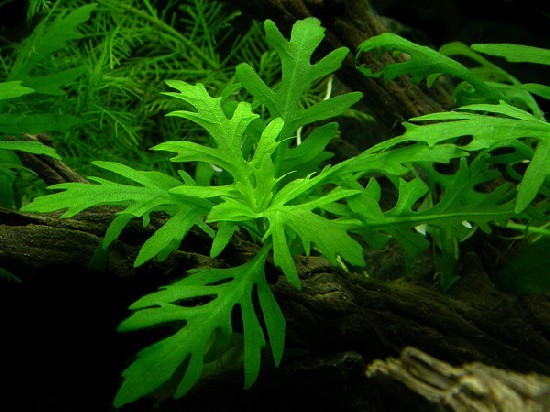
The Water Wisteria (Hygrophila difformis) is a versatile and hardy plant, making it perfect for beginners.
Its finely divided, fern-like leaves provide a delicate appearance, and it can adapt to various conditions.
Why it’s a top pick:
Water Wisteria is not only beautiful but also beneficial. Its dense foliage offers shelter for fish and invertebrates.
Moreover, it’s a fast grower, which means it can help in controlling algae by consuming excess nutrients.
Care Tips:
Water Wisteria is adaptable and can thrive in a range of lighting conditions, from low to high.
However, brighter lighting will promote denser growth. It’s not very demanding in terms of nutrients, but a well-fertilized substrate can boost its growth.
5. Madagascar Lace Plant
- Common Name: Madagascar Lace Plant
- Scientific Name: Aponogeton madagascariensis
- Tank Size (minimum): 30 gallons (~115 liters)
- Difficulty: Advanced
- Lighting: Moderate to high
- Optimal pH: 6.5 – 7.5
- Optimal Hardness: Soft to moderately hard water (3 – 12)
- Optimal Temperature: 68 – 78 °F (20 – 26 °C)
- Substrate: Nutrient-rich substrate recommended
- Can Float: No
- Can Be Grown Emersed: No
- Size: Up to 24 inches (60 cm) in height
- Growth Rate: Moderate
- Placement in Tank: Background
- Fertilizer: Beneficial
- CO2: Beneficial for optimal growth
- Propagation: By seeds or tuber division
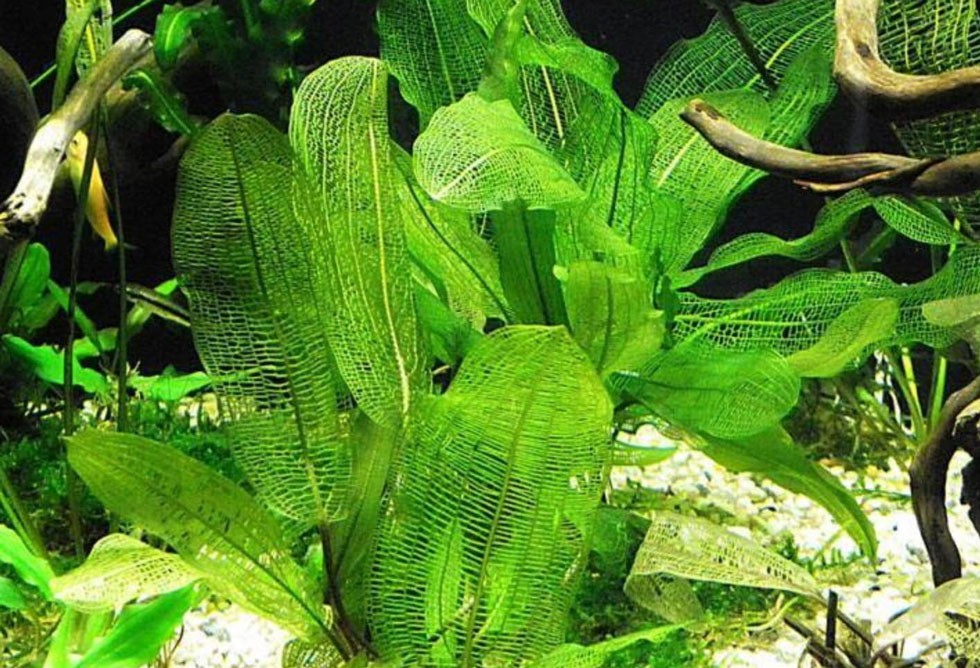
The Madagascar Lace Plant (Aponogeton madagascariensis) is truly one of the most unique and captivating aquatic plants.
Native to Madagascar, as its name suggests, it’s renowned for its lace-like, perforated leaves and delicate white flowers.
Why it’s a top pick:
This plant is a conversation starter. Its intricate leaves are unlike any other aquatic plant, making it a centerpiece in many aquariums.
When it blooms, the Madagascar Lace Plant produces a long stalk with a white flower that floats on the water’s surface, adding to its charm.
Care Tips:
While stunning, this plant can be a bit challenging to care for. It requires moderate to high lighting and a nutrient-rich substrate.
It also goes through a dormant period, shedding its leaves, but with proper care, it will regrow. Regular fertilization and CO2 supplementation can be beneficial.
6. Banana Plant
- Common Name: Banana Plant
- Scientific Name: Nymphoides aquatica
- Tank Size (minimum): 10 gallons (~40 liters)
- Difficulty: Easy
- Lighting: Low to moderate
- Optimal pH: 6.0 – 7.5
- Optimal Hardness: Soft to moderately hard water (3 – 12)
- Optimal Temperature: 68 – 82 °F (20 – 28 °C)
- Substrate: Nutrient-rich substrate recommended
- Can Float: No
- Can Be Grown Emersed: No
- Size: Up to 6 inches (15 cm) in height
- Growth Rate: Moderate
- Placement in Tank: Foreground to midground
- Fertilizer: Beneficial, especially root tabs
- CO2: Not needed
- Propagation: By tubers or seeds
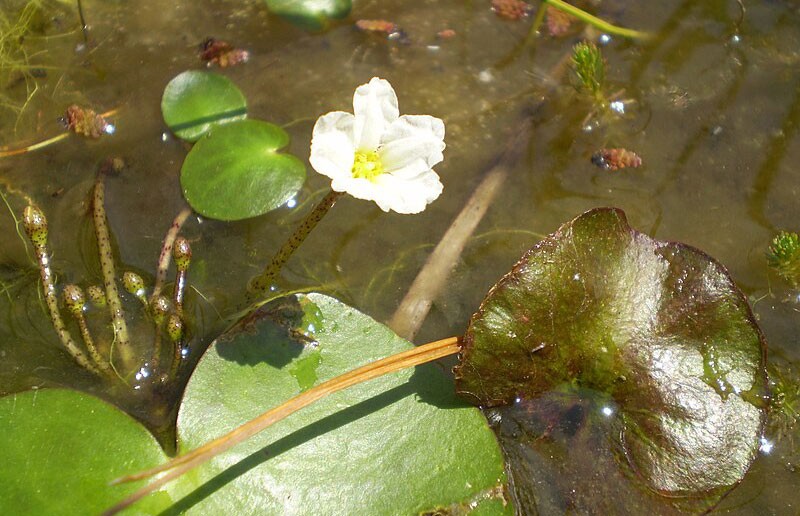
The Banana Plant (Nymphoides aquatica) gets its quirky name from the banana-like tubers at its base.
It’s a fascinating addition to any aquarium, with its broad, lily-like leaves and small white flowers.
Why it’s a top pick:
Apart from its unique appearance, the Banana Plant is relatively easy to care for, making it suitable for beginners.
Its floating leaves provide shade for fish, and its flowers, though short-lived, are a delightful sight.
Care Tips:
This plant prefers moderate lighting. Ensure the “bananas” or tubers are not fully buried in the substrate, as they can rot.
Instead, let them sit on top of the substrate. The Banana Plant isn’t very demanding but will benefit from occasional fertilization.
7. Dwarf Lily

- Common Name: Dwarf Lily
- Scientific Name: Nymphaea stellata
- Tank Size (minimum): 10 gallons (~40 liters)
- Difficulty: Moderate
- Lighting: Moderate to high
- Optimal pH: 5.5 – 7.5
- Optimal Hardness: Soft to moderately hard water (3 – 12)
- Optimal Temperature: 72 – 82 °F (22 – 28 °C)
- Substrate: Nutrient-rich substrate recommended
- Can Float: Partially (leaves can float while roots remain anchored)
- Can Be Grown Emersed: Yes
- Size: Up to 12 inches (30 cm) in height
- Growth Rate: Moderate
- Placement in Tank: Midground
- Fertilizer: Beneficial, especially root tabs
- CO2: Not mandatory but can boost growth
- Propagation: By bulbs or rhizome division
The Dwarf Lily (Nymphaea stellata) is a compact aquatic plant that brings a touch of elegance to any aquarium.
With its star-shaped leaves and pink or red flowers, it’s a visual treat.
Why it’s a top pick:
The Dwarf Lily is versatile. Depending on the lighting, its leaves can either float on the surface or remain submerged.
Its flowers are a beautiful sight, emerging from the water on slender stalks.
Care Tips:
This plant thrives in moderate to high lighting conditions. A nutrient-rich substrate can promote robust growth.
While it can adapt to various water conditions, a temperature range of 72°F to 82°F is ideal.
8. Water Lettuce

- Common Name: Water Lettuce
- Scientific Name: Pistia stratiotes
- Tank Size (minimum): 10 gallons (~40 liters)
- Difficulty: Easy
- Lighting: Low to moderate
- Optimal pH: 6.0 – 7.5
- Optimal Hardness: Soft to moderately hard water (3 – 12)
- Optimal Temperature: 70 – 80 °F (21 – 27 °C)
- Substrate: Not necessary (floating plant)
- Can Float: Yes
- Can Be Grown Emersed: Yes
- Size: Up to 10 inches (25 cm) in diameter
- Growth Rate: Fast
- Placement in Tank: Surface
- Fertilizer: Not mandatory
- CO2: Not needed
- Propagation: By offshoots or division
Water Lettuce (Pistia stratiotes) is a floating plant known for its rosette of velvety leaves.
While it doesn’t produce prominent flowers, its lush green foliage is a sight to behold.
Why it’s a top pick:
Water Lettuce is excellent for providing shade in the aquarium, which can be beneficial for fish and other aquatic life.
Its dense roots also offer shelter and breeding grounds for small fish and invertebrates.
Care Tips:
Being a floating plant, Water Lettuce doesn’t require substrate. It prefers calm waters and moderate lighting.
Regularly thin out the plants to prevent them from covering the entire water surface, which can deprive the water of oxygen.
9. Water Hyacinth
- Common Name: Water Hyacinth
- Scientific Name: Eichhornia crassipes
- Tank Size (minimum): 20 gallons (~75 liters) (Note: This plant can quickly overtake smaller tanks)
- Difficulty: Easy
- Lighting: Moderate to high
- Optimal pH: 6.5 – 7.5
- Optimal Hardness: Soft to moderately hard water (3 – 12)
- Optimal Temperature: 64 – 86 °F (18 – 30 °C)
- Substrate: Not necessary (floating plant)
- Can Float: Yes
- Can Be Grown Emersed: Yes
- Size: Up to 3 feet (1 meter) in spread
- Growth Rate: Fast
- Placement in Tank: Surface
- Fertilizer: Not mandatory
- CO2: Not needed
- Propagation: By offshoots or division
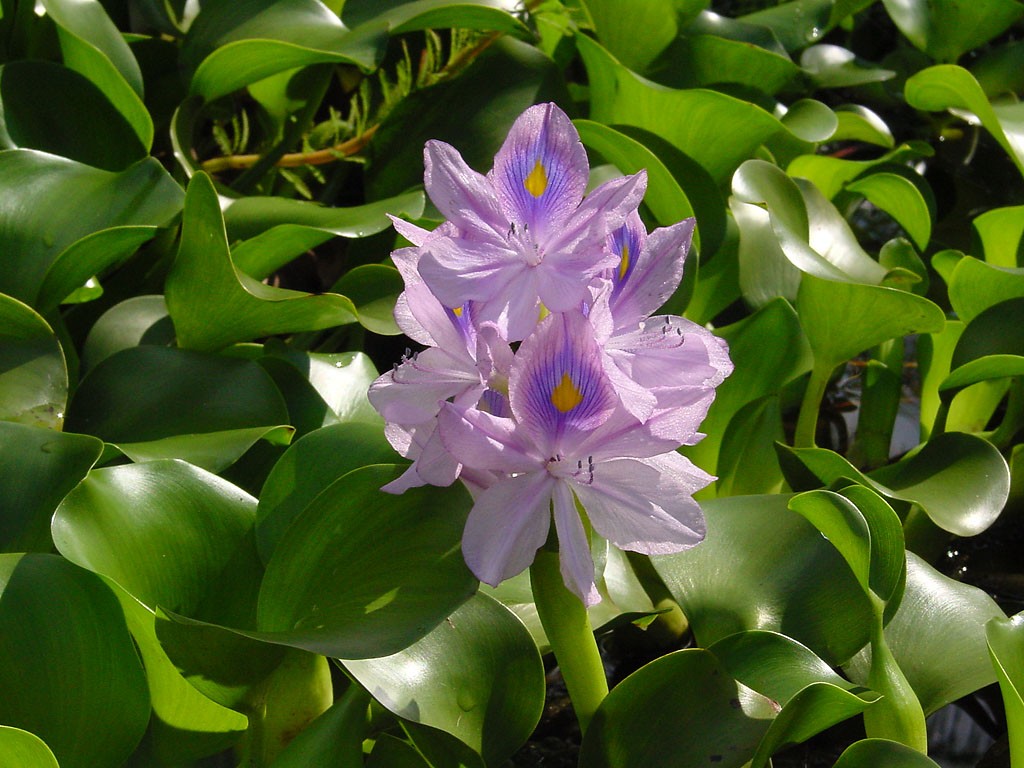
Water Hyacinth (Eichhornia crassipes) is another floating plant with glossy green leaves and striking lavender flowers.
Why it’s a top pick:
Its beautiful flowers and rapid growth rate make it popular among aquarists. The dense root system provides a habitat for beneficial bacteria, aiding in water filtration.
Care Tips:
Water Hyacinth prefers full sunlight, so it’s best suited for open aquariums or ponds. It can be invasive, so regular pruning is essential to keep it in check.
10. Anubias

- Common Name: Anubias
- Scientific Name: Anubias barteri
- Tank Size (minimum): 10 gallons (~40 liters)
- Difficulty: Easy
- Lighting: Low to moderate
- Optimal pH: 6.0 – 7.5
- Optimal Hardness: Soft to moderately hard water (3 – 12)
- Optimal Temperature: 72 – 82 °F (22 – 28 °C)
- Substrate: Not necessary (attaches to surfaces)
- Can Float: No
- Can Be Grown Emersed: Yes
- Size: Varies by species; typically up to 12 inches (30 cm) in height
- Growth Rate: Slow
- Placement in Tank: Foreground to midground
- Fertilizer: Not mandatory
- CO2: Not needed
- Propagation: By rhizome division
Anubias is a versatile and hardy plant, making it a favorite among many aquarists.
Its thick, dark green leaves are a perfect backdrop, and when it flowers, it produces a unique spadix and spathe, similar to peace lilies.
Why it’s a top pick:
Anubias is not only visually appealing but also incredibly hardy. It can thrive in a variety of conditions, making it suitable for both beginners and seasoned aquarists.
Its slow growth rate means it requires minimal maintenance.
Care Tips:
Anubias prefers low to medium lighting. It can be attached to rocks or driftwood or planted in the substrate, but ensure the rhizome is not buried to prevent rot.
While it’s not demanding, occasional fertilization can boost its health.
11. Java Fern

- Common Name: Java Fern
- Scientific Name: Microsorum pteropus
- Tank Size (minimum): 10 gallons (~40 liters)
- Difficulty: Easy
- Lighting: Low to moderate
- Optimal pH: 6.0 – 7.5
- Optimal Hardness: Soft to moderately hard water (3 – 12)
- Optimal Temperature: 68 – 82 °F (20 – 28 °C)
- Substrate: Not necessary (attaches to surfaces)
- Can Float: No
- Can Be Grown Emersed: Yes
- Size: Up to 13.5 inches (35 cm) in height
- Growth Rate: Slow to moderate
- Placement in Tank: Midground to background
- Fertilizer: Not mandatory
- CO2: Not needed
- Propagation: By rhizome division
Java Fern (Microsorum pteropus) is another staple in the aquarium hobby. With its long, narrow leaves and unique growth pattern, it adds depth and texture to any setup.
Why it’s a top pick:
Java Fern is incredibly adaptable. It can grow in various lighting conditions and water parameters. When it blooms, it produces tiny white flowers, adding a touch of elegance.
Care Tips:
This plant prefers low to medium lighting. It’s best attached to rocks or driftwood, as its rhizome shouldn’t be buried. Java Fern is relatively undemanding, but a nutrient-rich environment can promote healthier growth.
12. Hornwort

- Common Name: Hornwort
- Scientific Name: Ceratophyllum demersum
- Tank Size (minimum): 15 gallons (~60 liters)
- Difficulty: Easy
- Lighting: Low to high
- Optimal pH: 6.0 – 7.5
- Optimal Hardness: Soft to hard water (3 – 20)
- Optimal Temperature: 59 – 86 °F (15 – 30 °C)
- Substrate: Not necessary (can float or anchor)
- Can Float: Yes
- Can Be Grown Emersed: No
- Size: Up to 10 feet (3 meters) in length
- Growth Rate: Fast
- Placement in Tank: Background or floating
- Fertilizer: Not mandatory
- CO2: Not needed
- Propagation: By cutting or segment division
Hornwort (Ceratophyllum demersum) is a free-floating plant known for its feathery appearance. It doesn’t produce prominent flowers but is valued for its dense foliage.
Why it’s a top pick:
Hornwort is a fast grower, making it excellent for new aquariums as it helps prevent algae by consuming excess nutrients. Its dense foliage provides shelter and breeding grounds for aquatic life.
Care Tips:
Hornwort is adaptable and can thrive in various lighting conditions. Being a floating plant, it doesn’t require substrate.
Regular pruning will keep its growth in check and maintain a balanced look in the aquarium.
13. Vallisneria

- Common Name: Vallisneria or Eelgrass
- Scientific Name: Vallisneria spiralis
- Tank Size (minimum): 10 gallons (~40 liters)
- Difficulty: Easy
- Lighting: Moderate
- Optimal pH: 6.5 – 8.5
- Optimal Hardness: Moderately hard to hard water (8 – 20)
- Optimal Temperature: 64 – 82 °F (18 – 28 °C)
- Substrate: Sand or fine gravel
- Can Float: No
- Can Be Grown Emersed: No
- Size: Up to 3 feet (1 meter) in height
- Growth Rate: Moderate
- Placement in Tank: Background
- Fertilizer: Root tabs can be beneficial
- CO2: Not mandatory but can boost growth
- Propagation: By runners
Vallisneria, often referred to as “Val,” produces long, ribbon-like leaves that sway beautifully with the water’s current. It occasionally produces small white flowers.
Why it’s a top pick:
Vallisneria is perfect for creating a “jungle” look in your aquarium. Its tall leaves are excellent for background placement, providing a dense green backdrop.
Care Tips:
Val prefers moderate lighting and a nutrient-rich substrate. It’s a fast grower, so occasional trimming might be necessary. Ensure a stable water temperature between 68°F to 82°F for optimal growth.
14. Water Sprite

- Common Name: Water Sprite or Indian Fern
- Scientific Name: Ceratopteris thalictroides
- Tank Size (minimum): 10 gallons (~40 liters)
- Difficulty: Easy
- Lighting: Low to moderate
- Optimal pH: 6.0 – 7.5
- Optimal Hardness: Soft to moderately hard water (3 – 12)
- Optimal Temperature: 68 – 82 °F (20 – 28 °C)
- Substrate: Not necessary (can float or anchor)
- Can Float: Yes
- Can Be Grown Emersed: Yes
- Size: Up to 12 inches (30 cm) in height
- Growth Rate: Fast
- Placement in Tank: Midground to background or floating
- Fertilizer: Beneficial
- CO2: Not needed
- Propagation: By cutting or plantlets
Water Sprite (Ceratopteris thalictroides) is a versatile plant with delicate, fern-like leaves. It can be planted or left to float, producing small white flowers when mature.
Why it’s a top pick:
Water Sprite is excellent for providing cover for fish and invertebrates. Its dense roots, when floating, also act as a filter, trapping debris and providing a habitat for beneficial bacteria.
Care Tips:
This plant is adaptable and can grow in low to high lighting conditions. While it’s not demanding, a nutrient-rich environment can promote faster growth and healthier leaves.
15. Rotala

- Common Name: Rotala Rotundifolia
- Scientific Name: Rotala rotundifolia
- Tank Size (minimum): 10 gallons (~40 liters)
- Difficulty: Moderate
- Lighting: High
- Optimal pH: 6.5 – 7.5
- Optimal Hardness: Soft to moderately hard water (3 – 12)
- Optimal Temperature: 72 – 82 °F (22 – 28 °C)
- Substrate: Nutrient-rich substrate recommended
- Can Float: No
- Can Be Grown Emersed: Yes
- Size: Up to 15 inches (38 cm) in height
- Growth Rate: Fast
- Placement in Tank: Midground to background
- Fertilizer: Beneficial, especially liquid fertilizers
- CO2: Beneficial for optimal growth and coloration
- Propagation: By cutting or stem division
Rotala is a stem plant known for its slender leaves and pink or red hues. When in bloom, it produces tiny pink or white flowers.
Why it’s a top pick:
Rotala adds a splash of color to any aquarium. Its vibrant hues contrast beautifully against green plants, making it a focal point in many setups.
Care Tips:
Rotala prefers high lighting to maintain its color. Regular trimming will encourage bushier growth and maintain its shape.
A nutrient-rich substrate and CO2 supplementation can boost its health and vibrancy.
16. Amazon Frogbit (Limnobium laevigatum)

- Common Name: Amazon Frogbit
- Scientific Name: Limnobium laevigatum
- Tank Size (minimum): 10 gallons (~40 liters)
- Difficulty: Easy
- Lighting: Low to moderate
- Optimal pH: 6.0 – 7.5
- Optimal Hardness: Soft to moderately hard water (3 – 12)
- Optimal Temperature: 64 – 84 °F (18 – 29 °C)
- Substrate: Not necessary (floating plant)
- Can Float: Yes
- Can Be Grown Emersed: No
- Size: Up to 20 inches (50 cm) in spread
- Growth Rate: Moderate to fast
- Placement in Tank: Surface
- Fertilizer: Not mandatory
- CO2: Not needed
- Propagation: By offshoots or division
Amazon Frogbit is a popular floating plant native to Central and South America. With its smooth, round leaves and delicate white flowers, it’s a favorite among aquarists.
Why it’s a top pick:
Amazon Frogbit is not only visually appealing but also serves as a natural filter, absorbing excess nutrients from the water.
Its long, feathery roots provide shelter for small fish and invertebrates, making it a functional and beautiful addition to any aquarium.
Care Tips:
Being a floating plant, Amazon Frogbit prefers calm waters without much surface agitation. It thrives under moderate lighting and can quickly cover the surface of the tank if not regularly pruned.
Ensure it doesn’t overshadow submerged plants, depriving them of essential light.
17. Cryptocoryne Wendtii
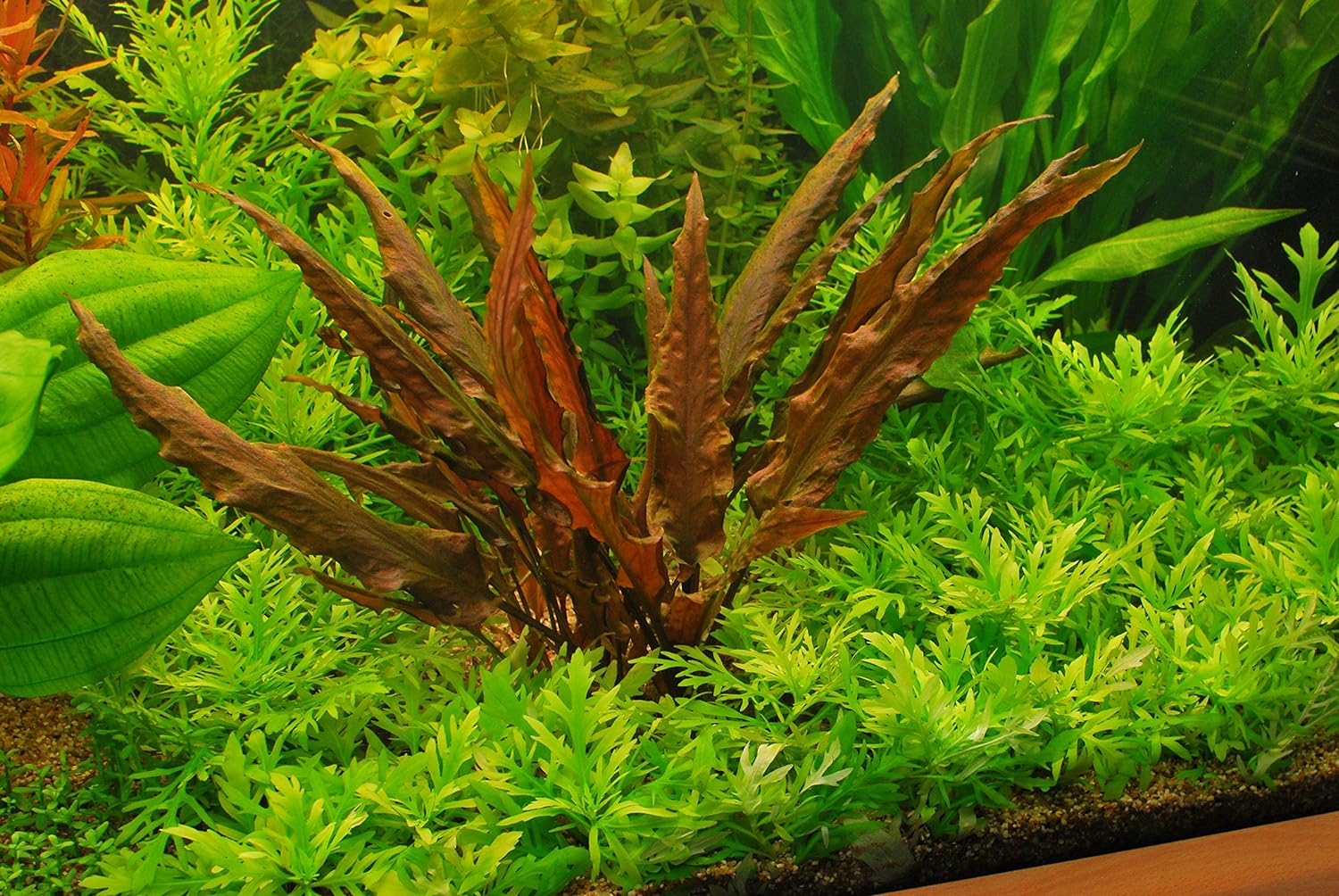
- Common Name: Cryptocoryne Wendtii or Crypto
- Scientific Name: Cryptocoryne wendtii
- Tank Size (minimum): 10 gallons (~40 liters)
- Difficulty: Easy to moderate
- Lighting: Low to moderate
- Optimal pH: 6.0 – 8.0
- Optimal Hardness: Soft to moderately hard water (3 – 12)
- Optimal Temperature: 72 – 82 °F (22 – 28 °C)
- Substrate: Nutrient-rich substrate recommended
- Can Float: No
- Can Be Grown Emersed: Yes
- Size: Up to 6 inches (15 cm) in height
- Growth Rate: Moderate
- Placement in Tank: Foreground to midground
- Fertilizer: Beneficial, especially root tabs
- CO2: Not needed
- Propagation: By rhizome division
Cryptocoryne Wendtii, commonly known as “Crypto,” is a versatile aquatic plant originating from Sri Lanka. With its ruffled, elongated leaves that can vary from green to reddish-brown, it adds depth and texture to any aquascape.
Why it’s a top pick:
Crypto is known for its adaptability. It can thrive in various lighting and water conditions, making it suitable for both beginners and seasoned aquarists.
When it blooms, it produces a unique, tubular spathe, adding to its charm.
Care Tips:
Cryptocoryne Wendtii prefers low to medium lighting and a nutrient-rich substrate. It’s known to undergo “Crypt melt,” where it sheds its leaves when introduced to new conditions.
However, with patience and proper care, it will regrow and flourish.
Caring for Your Aquarium Flower Plants
Having a lush, vibrant aquatic garden is every aquarist’s dream. But to achieve this, it’s essential to understand the care requirements of your plants.
Just like terrestrial plants, aquatic plants have specific needs that, when met, ensure they thrive and bloom beautifully.
Light Requirements
Light is fundamental for the growth of all aquarium plants, including aquatic ones. It’s crucial for photosynthesis, a process where plants convert light into energy.
The type, duration, and intensity of light your plants receive can significantly impact their health and growth.
Different plants have different light requirements:
- Low light plants like Java Fern and Anubias can thrive even in dimly lit aquariums. They’re perfect for beginners or for aquariums without specialized lighting.
- Medium light plants like Amazon Sword and Vallisneria require a bit more light but are still relatively easy to care for.
- High light plants like Rotala and Red Tiger Lotus require intense lighting to maintain their vibrant colors and growth rate.
Tip: Invest in a good quality aquarium light with a timer. This ensures your plants receive a consistent amount of light every day, mimicking the natural day-night cycle.
Nutrient Needs
Just like light, nutrients are vital for plant growth. In the absence of essential nutrients, plants can exhibit stunted growth, pale leaves, or even fail to flower.
Macronutrients like nitrogen, phosphorus, and potassium are required in larger amounts. They’re usually present in the water column, but sometimes supplementation might be necessary.
Micronutrients like iron, manganese, and zinc are required in trace amounts but are equally crucial. A deficiency can lead to yellowing of leaves, poor growth, and other issues.
Tip: Consider using root tabs or liquid fertilizers to provide your plants with the necessary nutrients. However, always follow the manufacturer’s instructions to avoid over-fertilization, which can lead to algae outbreaks.
Pruning and Maintenance
Regular maintenance ensures your aquatic garden remains healthy and looks its best. Overgrown or dead leaves can overshadow other plants, depriving them of light and nutrients.
Pruning is essential to maintain the shape and size of your plants. Regularly trim overgrown stems or leaves using aquarium scissors. This not only keeps your plants in check but also encourages bushier growth.
Removing dead or yellowing leaves is crucial. They can decay in the water, leading to ammonia spikes and other water quality issues.
Tip: When pruning, ensure you make clean cuts to avoid damaging the plant. Also, remove any trimmed or dead plant matter from the aquarium to maintain water quality.
Aquarium Flower Plants FAQs
- How often should I change the water in a planted aquarium?
While plants help improve water quality, regular water changes are still essential. A general rule is to change 10-20% of the water weekly. - Can I add CO2 to boost plant growth?
Yes, CO2 supplementation can significantly boost plant growth, especially for high-light plants. However, ensure you have a proper diffusion method and monitor CO2 levels to avoid harming aquatic life. - Do flowering plants need a substrate?
While some plants, like floating plants, don’t require a substrate, most aquatic plants benefit from a nutrient-rich substrate that provides essential nutrients for root growth. - How do I deal with algae in a planted tank?
Regular maintenance, avoiding over-fertilization, and ensuring proper lighting can help prevent algae. Introducing algae-eating fish or invertebrates can also help control its growth. - Can I mix different types of plants in my aquarium?
Absolutely! Mixing different plants can create a diverse and visually appealing environment. Just ensure all plants have similar light and nutrient requirements.
Aquarium Flower Plants Conclusion
As we surface from the depths of our exploration into aquarium flower plants, it’s evident that these underwater jewels are more than just a visual delight.
They are the silent nurturers of your aquatic ecosystem, providing not only aesthetic appeal but also ensuring a balanced, healthy environment for all inhabitants of your watery world.
From the lush, broad leaves of the Amazon Sword to the delicate, floating blossoms of the Aponogeton Ulvaceus, each plant we’ve explored brings something unique to the table – or rather, the tank!
Embarking on your aquascaping journey, you’ll find that the knowledge you’ve soaked up here will be your anchor.
Whether it’s understanding the nuanced care needs of each plant, appreciating their individual beauty, or implementing the tips and tricks to ensure they flourish, you’re now equipped to navigate through the captivating endeavor of enhancing your aquarium with flowering plants.
But remember, the world of aquatic plants is vast and ever-expanding. There’s always more to explore, more to learn, and more to experience.
So, let this guide be your starting point, your springboard into the endless possibilities that await in the world of aquascaping.
May your aquarium be ever-blooming, and may your aquatic adventures be ever-thrilling!
